
This story is a collaboration with Popular Mechanics.
On January 15, 1947, 22-year-old Elizabeth Short, a Massachusetts-born woman whose death would be turned into one of Hollywood’s most durable myths, was found brutally murdered in a vacant lot near Leimert Park in Los Angeles, California, her nude, posed body cut in half and severely mutilated. Short’s killer had also drained her corpse of blood and scrubbed it clean.
“It was pretty gruesome,” Brian Carr, a detective with the Los Angeles Police Department who worked on Short’s case, later said. “I just can’t imagine someone doing that to another human being.”
In the press, Short became known as “The Black Dahlia,” and her case “took on a life of its own,” Carr said. “Early on, I think for two months it was front-page news in all the local papers every day.”
Nearly 80 years later, the Black Dahlia murder is still generating books, podcasts, television treatments, and new claims from people convinced that the case has one more secret left to give up. The killer was never found, and no one has produced public proof that settles who committed one of the most infamous unsolved murders in Los Angeles history.
In 2026, the case picked up a sharper and more testable question: whether new claims about possible physical evidence can survive forensic scrutiny.
In July, the team behind the in-development docuseries Deconstructing Dahlia claimed it had found a concealed room in a 1940s Los Angeles motel that may have been the place where Short was killed. People first reported the claim on July 1, 2026, and Los Angeles Magazine followed days later with more detail: the team says it spent more than 60 hours dismantling the room, found original plaster beneath later drywall and paint, documented close to 40 suspected blood samples, and submitted samples for advanced ancient-DNA testing. The team also says the motel had not yet opened to the public when Short was killed.
That is a major claim, not a solved case. Public reporting has not established that the samples are human, from 1947, from Short, uncontaminated, or accepted by law enforcement. Still, the FBI’s public case summary says there was no blood at the Leimert Park discovery site, which points to the long-standing problem at the center of the investigation: Short was killed somewhere else. If a true bloodshed location could be verified, it would change the shape of the case.
The same fight has moved into the archives. On March 24, Talestorm Productions and the Justice Cannot Be Silenced Foundation launched a petition demanding that the LAPD release Short’s complete, unredacted autopsy report and other case-file materials, including alleged stamp-DNA and fingerprint records. Los Angeles Magazine later reported that the LAPD had not publicly responded to the petition.
For any updated version of the Black Dahlia story, that matters: the mystery now turns as much on access to old records as on the lure of a new suspect.
Who Was Elizabeth Short?
Elizabeth Short was born July 29, 1924, in Boston, Massachusetts, to parents Cleo and Phoebe Mae Short. As a young girl in Medford, her imagination was kindled by motion pictures. In Black Dahlia, Red Rose: The Crime, Corruption, and Cover-Up of America’s Greatest Unsolved Murder, Piu Eatwell writes that Short and her fellow schoolgirls went and saw the latest movies and reenacted their favorite scenes. Short did so with such flair and passion that she was frequently compared to actress Deanna Durbin, a popular teen star in the 1930s.
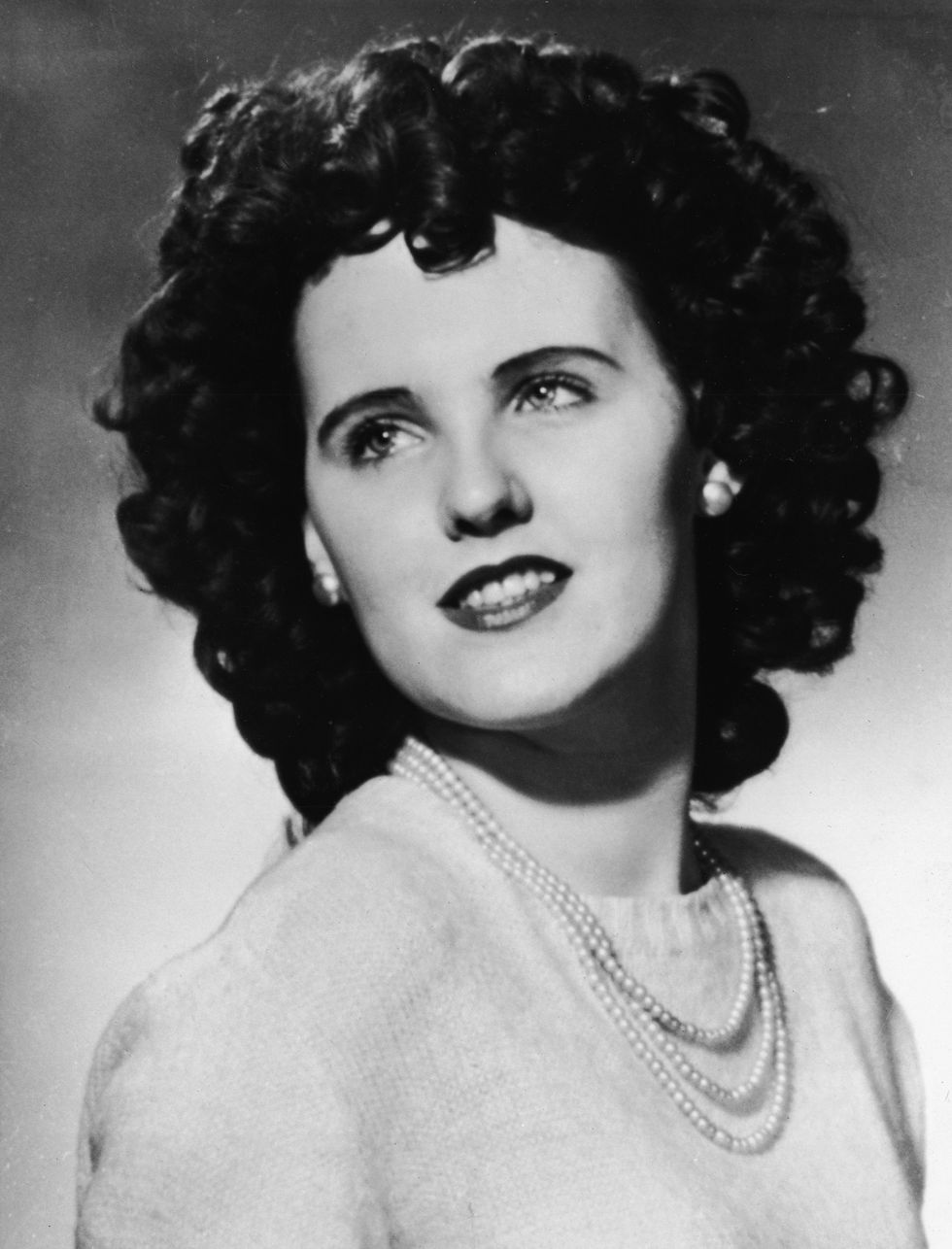
It might sound like Short was destined for Hollywood, but her journey was far from straightforward and had its share of hardships. At the age of 18, she first moved to California to live with her father, who had earlier left her family to start a new life on the west coast. Following a disagreement, she got involved with an Air Force sergeant at Camp Cook who, according to Brenda Haugen’s Black Dahlia: Shattered Dreams, was abusive to her.
After Short was arrested for underage drinking in 1943, she landed in Florida, where she met Major Matthew Michael Gordon Jr. She reportedly agreed to marry Gordon, but tragically, he died in a plane crash in August 1945 before they could tie the knot. Although Gordon’s mother later claimed that her son and Short were never engaged, this came out only after Short’s death, by which time her reputation had already been damaged in the intense media scrutiny that followed.
Following this tragic loss, Short set out for Los Angeles, hoping to start over in Hollywood.
How Did Elizabeth Short Die?
“Only a surgeon could have killed her.”
That was the assessment made, before Short’s brutally desecrated corpse had even been identified. Helena Katz’s Cold Cases reveals the LAPD was so convinced of this fact that it conducted background checks of the entire student body of nearby USC Medical School. The idea became one of the case’s durable assumptions, even as the murder itself remained unsolved.

On January 15, 1947, a local female resident found Short’s nude, bisected body lying just off the sidewalk. Her stark, white skin was “offset by jet-black hair,” Biography previously noted. Her body was pale partly because it had been carefully cleaned and drained of blood. The FBI’s public case summary says there was no blood at the discovery site, one reason investigators have long believed the lot was where Short’s body was left, not where she was killed. Short’s killer also carved a smile into her face by cutting the sides of her mouth, making it clear the corpse had been prepared to be discovered.
Short’s body was even found carefully posed, her upper half with arms raised above her head, reminiscent of surrealist artist Man Ray’s 1934 photograph “Minotaur.”


Short’s face, beyond the mouth cuts, was still clearly visible, albeit with injuries consistent with “repeated blows.” And though the LAPD of the 1940s didn’t have the modern tools of DNA testing, police were able to procure fingerprints from the corpse.
As Biography previously mentioned, “...an editor at the Examiner suggested sending fingerprints via the paper’s ‘Soundphoto’— an early fax machine—to an office in Washington, D.C., where they could be relayed to the FBI.” By the evening of January 16, authorities had matched the prints to those of 22-year-old Elizabeth Short, who had previously been fingerprinted during her underage drinking arrest.
How Did Elizabeth Short Become The Black Dahlia?
The press had identified the victim, but they were hungry for more. As both Haugen and Eatwell describe, one reporter sought extra details by reaching out to Short’s mother, Phoebe. The reporter misled her, claiming Short had “won a beauty contest” and they needed background information for their coverage. It was only after Phoebe provided all the details they sought that the reporters disclosed the tragic news of her daughter’s death.

The initial nickname given in connection to the crime referred to the unidentified assailant as “The Werewolf Killer.” However, this moniker didn’t last. It might have been because the werewolf reference lacked specificity or intrigue. Or maybe because, by then, werewolves had lost their appeal in Hollywood.
But one reporter got wind of a nickname Short had allegedly picked up in Long Beach. She was known among acquaintances as the “Black Dahlia,” a reference to both her penchant for wearing black dresses and the 1946 crime film The Blue Dahlia. The nickname did what newspaper shorthand often does: it made a person easier to sell and harder to see clearly.
Short wasn’t able to challenge the labels the press gave her. After her murder, the story changed from a young woman trying to make a life in Los Angeles into the portrait of a “fast girl” with loose morals. Newspapers insinuated that she may have been a prostitute, and, in a tantalizing twist for the 1940s media, suggested that she might have been a lesbian. The theory that Short was killed as part of a “lesbian love triangle” was disproven in front of a Los Angeles County grand jury, but that didn’t stop newspapers from exploiting the fear surrounding homosexuality at the time.
How Did Police Hunt for the Black Dahlia’s Killer?
The press and the police meticulously analyzed every detail of Short’s life. They initially interrogated Robert “Red” Manley, a married man who had an affair with Short and was the last known person to see her after dropping her off at the Biltmore Hotel a week before her death. While his alibi held up, and Manley was exonerated of any suspicion, his affair with Short became headline fodder for every Los Angeles newspaper.

Then came a moment that, in a Hollywood picture, would have been the Act II breakthrough that blew the whole case wide open. In late January 1947, an envelope arrived at the Examiner’s office with the words “Heaven is Here!” in cut-out letters from newspaper movie ads. The envelope contained Short’s birth certificate and Social Security card, as well as an old address book with the name “Mark Hansen” on the front cover.
But real life in L.A. didn’t work out like the movies. Police contacted 75 men from the address book, including its apparent owner Hansen, a prominent nightclub owner. More letters containing cut-out words arrived, mocking law enforcement, but none were definitively linked to the actual killer. Both men and women came forward with confessions to the Black Dahlia murder, but consistently provided incorrect details under questioning.
And in 1949, a scandal involving coerced confessions sparked public outrage and possibly led to a diminished intensity in the once unyielding hunt for the murderer.
But that doesn’t mean there aren’t still prominent suspects.
Who Killed the Black Dahlia?
At the height of the Black Dahlia Murder investigation, police considered myriad suspects, and amateur sleuths have continued to delve into LAPD records and personal archives seeking new insights. However, these independent investigations often give rise to far-fetched theories attempting to weave every unconventional notion into a tidy, conclusive package.
In the whirlwind of investigative journalism, books, and podcasts, names that were once prominent in the daily newspapers, such as Mark Hansen (linked by the address book) and Leslie Dillon (caught up in the “false confession” scandal) now find company with, or are sometimes implicated alongside, newer suspects.
Amateur sleuths have taken a keen interest in Dr. Patrick S. O’Reilly, a surgeon and acquaintance of Hansen, who appeared on a 1951 list of suspects. They’ve been actively probing deeper into his background for further information, discovering that not only did O’Reilly allegedly beat his secretary nearly to death “for no other reason than to satisfy his sexual desires without intercourse,” according to Los Angeles district attorney files, but that “O’Reilly” wasn’t even his real name; there’s allegedly no evidence that the sadistic surgeon existed before 1924.
Meanwhile, in The Black Dahlia Files: The Mob, the Mogul, and the Murder That Transfixed Los Angeles, Donald H. Wolfe presents a theory that involves both Los Angeles Times publisher Norman Chandler and infamous mobster Bugsy Siegel.
For years, one of the most culturally prominent Black Dahlia suspects has been Dr. George Hodel, thanks to books, podcasts, and even a television series. Implicated by his own son, former LAPD detective Steve Hodel, in his book Black Dahlia Avenger: The True Story, George Hodel was a Hollywood doctor with prominent friends like director John Huston and the artist Man Ray.
Hodel became a suspect in the Black Dahlia investigation in 1949, after he’d stood trial for sexually assaulting his own daughter, for which he was acquitted. The doctor found out that the LAPD had even taken the step of placing a wiretap in his home. The transcripts from these recordings captured Hodel saying, “Supposin’ I did kill the Black Dahlia. They can’t prove it now.”
Steve Hodel’s theory has resulted in several books, as well as the TNT television series I Am the Night and its companion podcast Root of Evil. But not everyone is sold on his assertions. “Fellow researcher Larry Harnisch poked holes in his assessments,” Biography notes, “...and Hodel’s credibility took a hit when he also claimed that his dad was the Zodiac Killer.”
That challenge grew louder in 2026. William J. Mann’s Black Dahlia: Murder, Monsters, and Madness in Midcentury Hollywood, published January 2026, argues for a more victim-centered, less sensationalized view of Short and presents a suspect theory outside the George Hodel orbit. Whatever an editor makes of Mann’s conclusion, the book belongs in the updated story because it pushes against two habits that have shaped the case for decades: treating Short as a noir symbol first and a person second, and letting the loudest suspect theory stand in for proof.
Another 2026 project, Killer in the Code: Solving The Black Dahlia & Zodiac Cases, takes the modern-tech route, promoting cold-case consultant Alex Baber’s claim that cryptology, genealogy, AI, and traditional research point to one suspect in both cases. That belongs in the story as a sign of where Black Dahlia media has gone, not as an official investigative breakthrough.
Older material still feeds the case. In 2018, a woman named Sandi Nichols uncovered a letter her grandfather, a former police informant, wrote in 1949 that asserted the Black Dahlia was killed by a man named “GH,” adding fuel to the George Hodel fire.
But the current test is harder than another suggestive initial or another theory with a famous name attached. The Deconstructing Dahlia claim will only matter if the evidence can clear the unglamorous hurdles of a cold case: verified samples, clean chain of custody, reliable comparison DNA, independent records, and some sign that law enforcement considers the material meaningful.
The Black Dahlia case endures partly because the press made Short impossible to forget. That same machinery did damage: it flattened her into a symbol, gave shaky theories decades to grow, and made every new claim sound like the missing reel from a Hollywood thriller.
Now the case has entered a more exacting phase. The question is not whether people will keep looking. The question is whether any new claim can survive the boring, necessary work of proof: lab results, records, timelines, chain of custody, and evidence that can be tested outside the machinery of true-crime promotion.
Until then, the answer remains where it has been since January 1947: somewhere between a body left in a Los Angeles lot, a case file not fully open to the public, and a culture that still can’t stop looking.
Michale Natale is a News Editor for the Hearst Enthusiast Group. As a writer and researcher, he has produced written and audio-visual content for more than fifteen years, spanning historical periods from the dawn of early man to the Golden Age of Hollywood. His stories for the Enthusiast Group have involved coordinating with organizations like the National Parks Service and the Secret Service, and travelling to notable historical sites and archaeological digs, from excavations of America’ earliest colonies to the former homes of Edgar Allan Poe.


