1867-1919
Who Was Madam C.J. Walker?
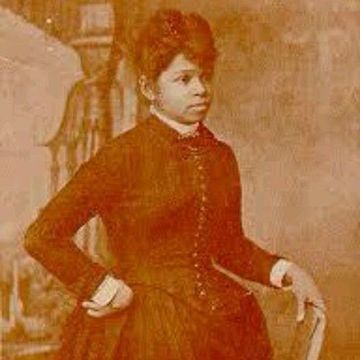
Entrepreneur and inventor Madam C.J. Walker created a line of hair products care for African American women after suffering from a scalp ailment that resulted in her own hair loss. The Louisiana native promoted her products by traveling around the country giving demonstrations and eventually established the Madam C.J. Walker Manufacturing Company in 1908 to manufacture cosmetics and train sales beauticians. Walker's business acumen led her to become the first female self-made millionaire in the United States. She was also known for her philanthropic endeavors, including a donation toward the construction of an Indianapolis YMCA in 1913.
Quick Facts
FULL NAME: Sarah Walker (née Breedlove)
BORN: December 23, 1867
DIED: May 25, 1919
BIRTHPLACE: Delta, Louisiana
SPOUSES: Moses McWilliams (1882-1887), John Davis (1894-1903), and Charles Joseph Walker (1906-1912)
CHILD: A'Lelia Walker
ASTROLOGICAL SIGN: Capricorn
Childhood and Family
Sarah Breedlove was born on December 23, 1867, on a cotton plantation near Delta, Louisiana. Her parents, Owen and Minerva Breedlove, were enslaved and recently freed, and Walker was their fifth child and the first in her family to be born into freedom. She had five siblings, including an older sister named Louvinia and four brothers: James, Alexander, Solomon, and Owen Jr.
Walker's mother died in 1874 and her father passed away the following year, both due to unknown causes, leaving her an orphan at the age of 7. After her parents' passing, she was sent to live with Louvinia and her abusive brother-in-law, Jesse Powell. In 1877, the three moved to Vicksburg, Mississippi, where she picked cotton and worked as household servant.
At age 14, Walker married a man named Moses McWilliams to escape the mistreatment she endured from her brother-in-law and soon gave birth to their daughter, A'Lelia, in June 1885. When Moses died two years later, she and her daughter moved to St. Louis, where her brothers had established themselves as barbers.
There, Walker found work as a washerwoman, earning $1.50 a day—enough to send her daughter to the city's public schools. She also attended public night school herself whenever she could. While St. Louis, Walker met her second husband, John Davis, who she wed in 1894. Their tumultuous marriage lasted only nine years before the two separated in 1903.
Madam C.J. Walker Manufacturing Company
After Walker developed a severe scalp condition that caused her to lose much of her hair, she began to experiment with both home remedies and store-bought hair care treatments in an attempt to improve her condition.
In 1904, she started working as a sales agent for Black hair care entrepreneur Annie Turnbo Malone, who became her mentor. The following year, Walker moved to Denver, Colorado to launch her own hair care business and soon married her third husband, Charles Joseph Walker, who worked in advertising.
Charles helped her create advertisements for a hair care treatment for African American women she was perfecting and encouraged her to use the more recognizable name “Madam C.J. Walker,” by which she was thereafter known.
In 1907, Walker and her husband traveled around the South and Southeast promoting her products and giving lecture demonstrations of her “Walker Method”—involving her own formula for pomade, brushing, and the use of heated combs.
As profits continued to grow, Walker opened a factory and a beauty school in Pittsburgh in 1908, and by 1910, when Walker transferred her business operations to Indianapolis, the Madam C.J. Walker Manufacturing Company had become wildly successful, with profits that were the modern-day equivalent of several million dollars.
Walker Agents
In Indianapolis, the company not only manufactured cosmetics but also trained sales beauticians. These “Walker Agents” became well known throughout the Black communities of the United States. In turn, they promoted Walker's philosophy of “cleanliness and loveliness” as a means of advancing the status of African Americans.

A relentless innovator, Walker organized clubs and conventions for her representatives, which recognized not only successful sales, but also philanthropic and educational efforts among African Americans.
Later Years in Harlem
In 1912, Walker and Charles divorced, and she traveled throughout Latin America and the Caribbean promoting her business and recruiting others to teach her hair care methods. During this time, her daughter helped facilitate the purchase of property in Harlem, New York, recognizing that the area would be an important base for future business operations.
In 1916, upon returning from her travels, Walker moved to her new townhouse in Harlem. From there, she would continue to operate her business, while leaving the day-to-day operations of her factory in Indianapolis to its forelady.
Philanthropy
Walker quickly immersed herself in the social and political culture of the Harlem Renaissance. She founded philanthropies that included educational scholarships and donations to homes for the elderly, the NAACP, and the National Conference on Lynching, among other organizations focused on improving the lives of African Americans.
She also donated the largest amount of money by an African American toward the construction of a YMCA in Indianapolis, Indiana in 1913.
Villa Lewaro Estate
In 1918, at Irvington-on-Hudson—about 20 miles north of New York City in the Hudson Valley—Walker built an Italianate mansion she called Villa Lewaro. It was designed by Vertner Tandy, an accomplished African American architect. Villa Lewaro was a gathering place for many luminaries of the Harlem Renaissance, and was designated a National Historic Landmark in 1976.
Death and Legacy
On May 25, 1919, Walker died of hypertension at her Villa Lewaro estate. She was 51 years old. Walker left one-third of her estate to her daughter, who would also become well-known as an important part of the Harlem Renaissance, and the remainder to various charities. Her funeral took place at Villa Lewaro, and she was buried at Woodlawn Cemetery in the Bronx, New York.
In 1927, the Walker Building, an arts center that Walker had begun work on before her death, was opened in Indianapolis. An important African American cultural center for decades, it is now a registered National Historic Landmark.
Several decades later, the Madam C. J. Walker Manufacturing Company ceased operations in July 1981. The company was eventually purchased by Sundial Brands in 2013 and relaunched as Madam C.J. Walker Beauty Culture at Sephora retailers three years later before once again being rebranded as MADAM by Madam C.J. Walker in 2022.
In 1998, the United States Postal Service issued a stamp of Walker as part of its “Black Heritage” series. Her life was later portrayed in the 2020 Netflix series Self Made, starring actor Octavia Spencer as Walker.
Quotes
- I want the great masses of my people to take a greater pride in their personal appearance and to give their hair proper attention.
- There would be no hair growing business today had I not started it.
- You might say that I was the first and caused others to awaken to the sense of their duty in helping deserving causes for the benefit of the race.
- I am a woman who came from the cotton fields of the South. From there I was promoted to the washtub. From there I was promoted to the cook kitchen. And from there I promoted myself into the business of manufacturing hair goods and preparations.
- This is the greatest country under the sun. But we must not let our love of country, our patriotic loyalty cause us to abate one whit in our protest against wrong and injustice.
- One night I had a dream, and in that dream a big black man appeared to me and told me what to mix up for my hair. I made up my mind I would begin to sell it.
- Perseverance is my motto!
- I am not satisfied in making money for myself. I endeavor to provide employment for hundreds of the women of my race.
- [Perseverance] gave us the telegraph, telephone and wireless. It gave to the world an Abraham Lincoln, and to a race freedom.
- I am not ashamed of my humble beginning. Don't think because you have to go down in the washtub that you are any less of a lady!
- There is no royal flower-strewn path to success. And if there is, I have not found it for if I have accomplished anything in life it is because I have been willing to work hard.
- I had to make my own living and my own opportunity. But I made it! Don’t sit down and wait for the opportunities to come. Get up and make them.
Fact Check: We strive for accuracy and fairness. If you see something that doesn’t look right, contact us!
The Biography.com staff is a team of people-obsessed and news-hungry editors with decades of collective experience. We have worked as daily newspaper reporters, major national magazine editors, and as editors-in-chief of regional media publications. Among our ranks are book authors and award-winning journalists. Our staff also works with freelance writers, researchers, and other contributors to produce the smart, compelling profiles and articles you see on our site. To meet the team, visit our About Us page: https://www.biography.com/about/a43602329/about-us
Catherine Caruso joined the Biography.com staff in August 2024, having previously worked as a freelance journalist for several years. She is a graduate of Syracuse University, where she studied English literature. When she’s not working on a new story, you can find her reading, hitting the gym, or watching too much TV.