
1917-1963
Who Was John F. Kennedy?
John F. Kennedy served in both the U.S. House of Representatives and U.S. Senate before becoming the 35th American president in 1961. While in the White House, Kennedy faced a number of foreign crises, especially in Cuba and Berlin, but managed to secure such achievements as the Nuclear Test-Ban Treaty and the Alliance for Progress. On November 22, 1963, Kennedy was assassinated while riding in a motorcade in Dallas. He was 46 years old.
Quick Facts
FULL NAME: John Fitzgerald Kennedy
BORN: May 29, 1917
DIED: November 22, 1963
BIRTHPLACE: Brookline, Massachusetts
SPOUSE: Jaqueline Kennedy (1953-1963)
CHILDREN: Caroline Kennedy, John F. Kennedy Jr., and Patrick Kennedy
ASTROLOGICAL SIGN: Gemini
Early Life
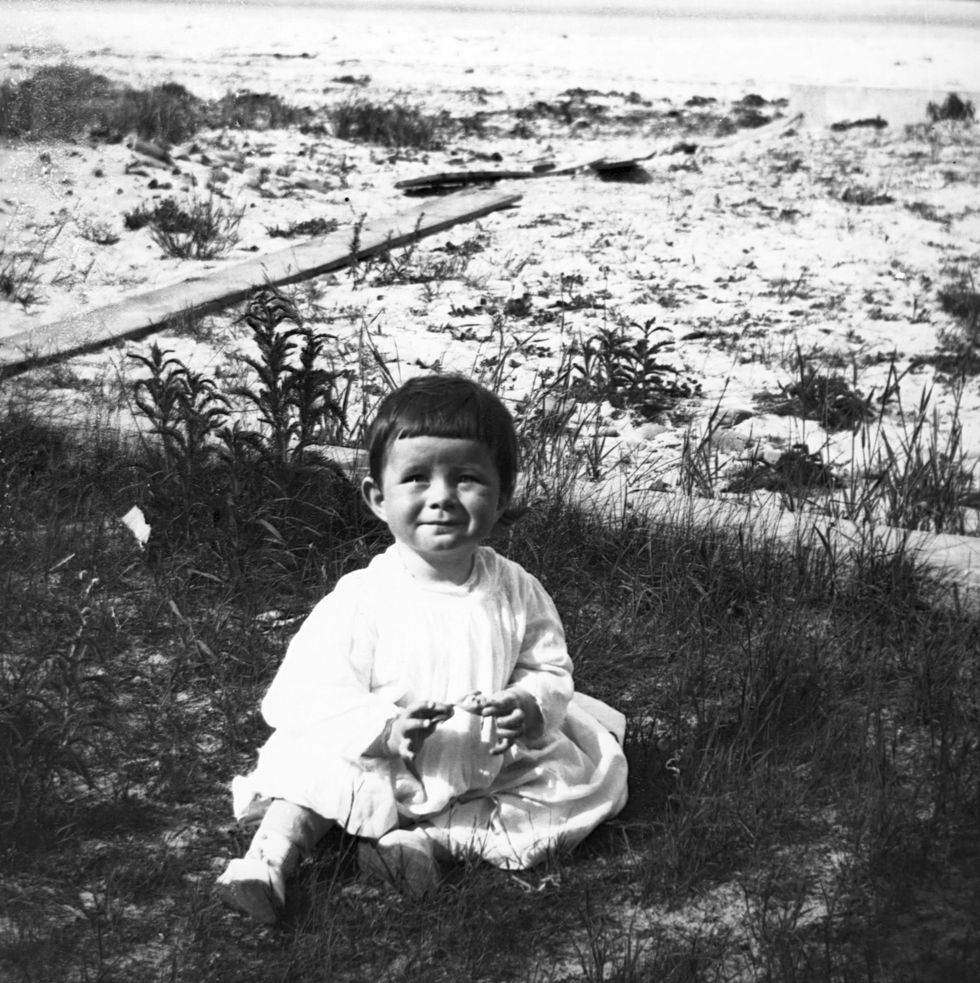
John Fitzgerald Kennedy was born on May 29, 1917, in Brookline, Massachusetts. Both the Fitzgeralds and the Kennedys were wealthy and prominent Irish Catholic families in Boston. John’s paternal grandfather, P.J. Kennedy, was a wealthy banker and liquor trader, and his maternal grandfather, John E. Fitzgerald, nicknamed “Honey Fitz,” was a skilled politician who served as a congressman and as the mayor of Boston. Kennedy’s mother, Rose Elizabeth Fitzgerald, was a Boston debutante, and his father, Joseph Kennedy Sr., was a successful banker who made a fortune on the stock market after World War I. Joe Kennedy Sr. went on to a government career as chairman of the Securities and Exchange Commission and as an ambassador to Great Britain.
John, nicknamed “Jack,” was the second oldest of a group of nine extraordinary siblings. His brothers and sisters include Special Olympics founder Eunice Kennedy Shriver, U.S. Attorney General Robert Kennedy, and Ted Kennedy, one of the most powerful senators in American history. The Kennedy children remained close-knit and supportive of each other throughout their entire lives.
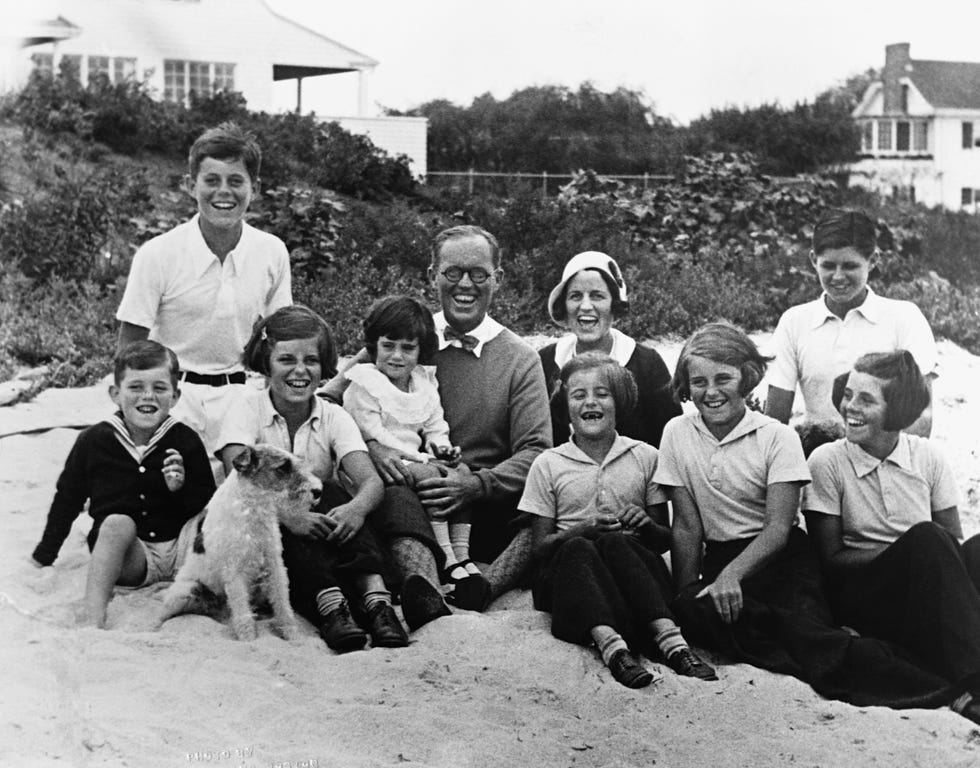
Joseph and Rose largely spurned the world of Boston socialites into which they had been born to focus instead on their children’s education. Joe Sr. in particular obsessed over every detail of his kids’ lives, a rarity for a father at that time. As a family friend noted, “Most fathers in those days simply weren’t that interested in what their children did. But Joe Kennedy knew what his kids were up to all the time.”
Joe Sr. had great expectations for his children, and he sought to instill in them a fierce competitive fire and the belief that winning was everything. He entered his children in swimming and sailing competitions and chided them for finishing in anything but first place. John’s sister, Eunice, later recalled, “I was 24 before I knew I didn’t have to win something every day.” John bought into his father’s philosophy that winning was everything. “He hates to lose at anything,” Eunice said. “That’s the only thing Jack gets really emotional about—when he loses.”
Education
Despite his father’s constant reprimands, young Kennedy was a poor student and a mischievous boy. He attended a Catholic boys’ boarding school in Connecticut called Canterbury, where he excelled at English and history—the subjects he enjoyed—but nearly flunked Latin, in which he had no interest. Despite his poor grades, Kennedy continued on to Choate, an elite Connecticut preparatory school. Although he was obviously brilliant, evidenced by the extraordinary thoughtfulness and nuance of his work on the rare occasions when he applied himself, Kennedy remained at best a mediocre student, preferring sports, girls, and practical jokes to coursework.
His father wrote to him by way of encouragement, “If I didn’t really feel you had the goods, I would be most charitable in my attitude toward your failings... I am not expecting too much, and I will not be disappointed if you don’t turn out to be a real genius, but I think you can be a really worthwhile citizen with good judgment and understanding.” John was, in fact, very bookish in high school, reading ceaselessly but not the books his teachers assigned.
He was also chronically ill during his childhood and adolescence; he suffered from severe colds, the flu, scarlet fever, and even more severe, undiagnosed diseases that forced him to miss months of school at a time and occasionally brought him to the brink of death.
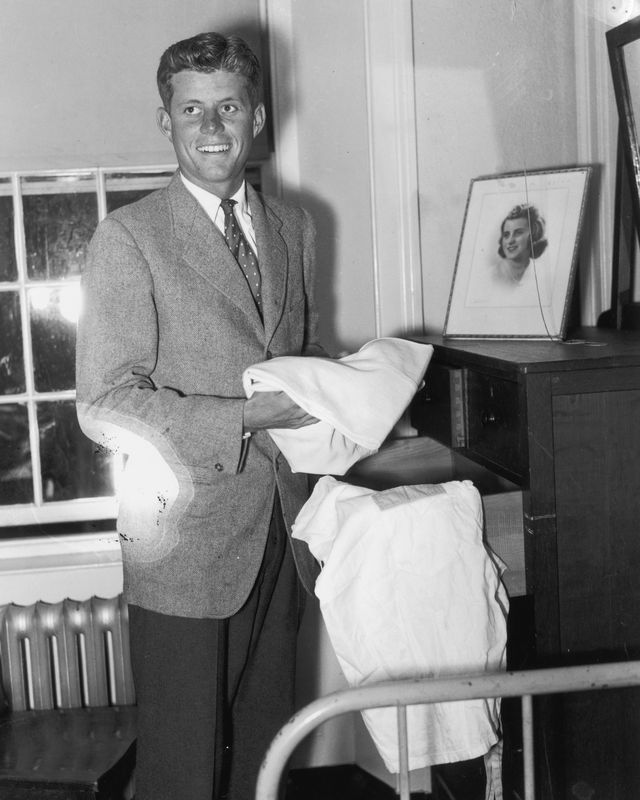
After graduating from Choate and spending one semester at Princeton University, Kennedy transferred to Harvard University in 1936. There, he repeated his by then well-established academic pattern, excelling occasionally in the classes he enjoyed but proving only an average student due to the omnipresent diversions of sports and women. Handsome, charming, and blessed with a radiant smile, Kennedy was incredibly popular with his Harvard classmates. His friend Lem Billings recalled, “Jack was more fun than anyone I’ve ever known, and I think most people who knew him felt the same way about him.” Kennedy was also an incorrigible womanizer. He wrote to Billings during his sophomore year, “I can now get tail as often and as free as I want, which is a step in the right direction.”
Nevertheless, as an upperclassman, Kennedy finally grew serious about his studies and began to realize his potential. His father had been appointed ambassador to Great Britain, and on an extended visit in 1939, John decided to research and write a senior thesis on why Britain was so unprepared to fight Germany in World War II. An incisive analysis of Britain’s failures to meet the Nazi challenge, the paper was so well-received that upon Kennedy’s graduation in 1940 it was published as a book, Why England Slept, selling more than 80,000 copies. Kennedy’s father sent him a cablegram in the aftermath of the book’s publication: “Two things I always knew about you one that you are smart two that you are a swell guy love dad.”
U.S. Navy Service
Shortly after graduating from Harvard, Kennedy joined the U.S. Navy and was assigned to command a patrol torpedo boat in the South Pacific. On August 2, 1943, his boat, PT-109, was rammed by a Japanese warship and split in two. Two sailors died, and Kennedy badly injured his back. Hauling another wounded sailor by the strap of his life vest, Kennedy led the survivors to a nearby island, where they were rescued six days later. The incident earned him the Navy and Marine Corps Medal for “extremely heroic conduct” and a Purple Heart for the injuries he suffered.
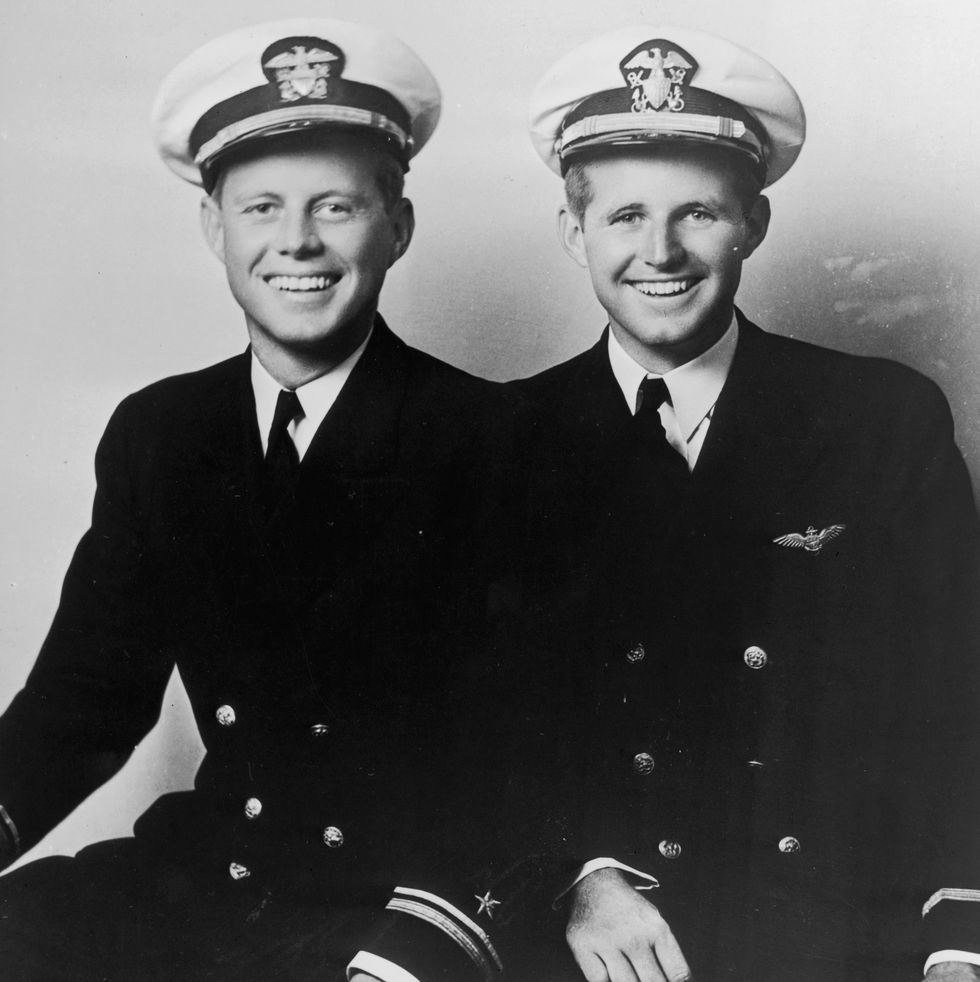
However, Kennedy’s older brother, Joe Jr., who had also joined the Navy, wasn’t so fortunate. A pilot, he died when his plane blew up in August 1944. Handsome, athletic, intelligent, and ambitious, Joseph Kennedy Jr. had been pegged by his father as the one among his children who would some day become president of the United States. In the aftermath of Joe Jr.’s death, John took his family’s hopes and aspirations for his older brother upon himself.
U.S. Congressman and Senator
Upon his discharge from the Navy, John worked briefly as a reporter for Hearst Newspapers. Then in 1946, at the age of 29, he decided to run for the U.S. House of Representatives from a working-class district of Boston, a seat being vacated by Democrat James Michael Curly. Bolstered by his status as a war hero, his family connections, and his father’s money, the young Democrat won the election handily.
However, after the glory and excitement of publishing his first book and serving in World War II, Kennedy found his work in Congress incredibly dull. Despite serving three terms, from 1946 to 1952, Kennedy remained frustrated by what he saw as stifling rules and procedures that prevented a young, inexperienced representative from making an impact. “We were just worms in the House,” he later recalled. “Nobody paid attention to us nationally.”
In 1952, seeking greater influence and a larger platform, Kennedy challenged Republican incumbent Henry Cabot Lodge for his seat in the U.S. Senate. Once again backed by his father’s vast financial resources, Kennedy hired his younger brother Robert as his campaign manager. Robert put together what one journalist called “the most methodical, the most scientific, the most thoroughly detailed, the most intricate, the most disciplined and smoothly working state-wide campaign in Massachusetts history—and possibly anywhere else.”
In an election year in which Republicans gained control of both houses of Congress, Kennedy nevertheless won a narrow victory, giving him considerable clout within the Democratic Party. According to one of his aides, the decisive factor in Kennedy’s victory was his personality: “He was the new kind of political figure that people were looking for that year, dignified and gentlemanly and well-educated and intelligent, without the air of superior condescension.”
Kennedy continued to suffer frequent illnesses during his career in the Senate. While recovering from one surgery, he wrote another book, profiling eight senators who had taken courageous but unpopular stances. Profiles in Courage won the 1957 Pulitzer Prize for biography, and Kennedy remains the only American president to win a Pulitzer Prize.
Otherwise, Kennedy’s eight-year Senate career was relatively undistinguished. Bored by the Massachusetts-specific issues on which he had to spend much of his time, Kennedy was more drawn to the international challenges posed by the Soviet Union’s growing nuclear arsenal and the Cold War battle for the hearts and minds of Third World nations.
Wife and Children
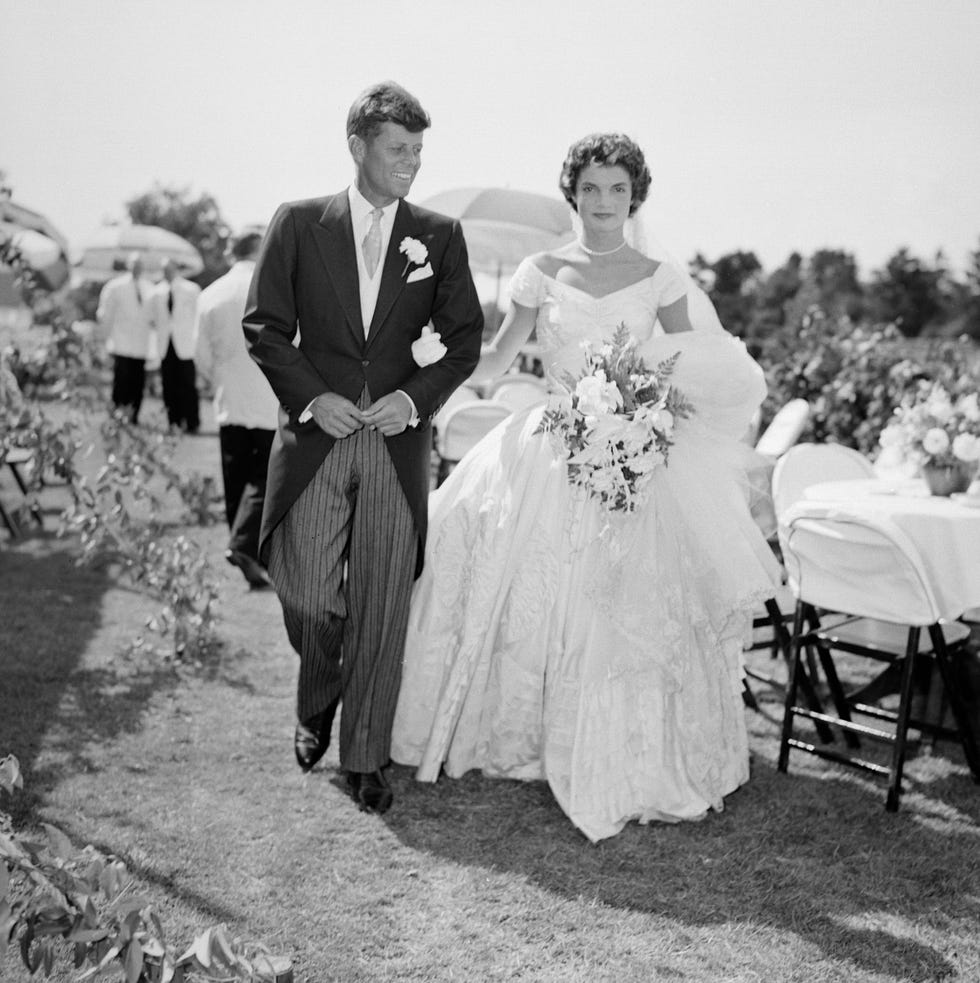
Shortly after his Senate election, Kennedy met a beautiful young woman named Jacqueline Bouvier at a dinner party and, in his own words, “leaned across the asparagus and asked her for a date.” They were married on September 12, 1953, until John’s death a decade later.
The couple first expected to become parents in 1956, but Jackie delivered a stillborn girl they intended to name Arabella. John and Jackie then welcomed their daughter, Caroline, in November 1957 and their son John Jr. in November 1960. In August 1963, their son Patrick was born prematurely and died two days after his birth.
1960 Presidential Campaign
In 1956, Kennedy was very nearly selected as Democratic presidential candidate Adlai Stevenson’s running mate but was ultimately passed over for Estes Kefauver from Tennessee. Four years later, Kennedy decided to run for president himself.
In the 1960 Democratic primaries, Kennedy outmaneuvered his main opponent, Hubert Humphrey, with superior organization and financial resources. Selecting Senate Majority Leader Lyndon B. Johnson as his running mate, Kennedy faced Vice President Richard Nixon in the general election. The election turned largely on a series of televised national debates in which Kennedy bested Nixon, an experienced and skilled debater, by appearing relaxed, healthy, and vigorous in contrast to his pallid and tense opponent.
On November 8, 1960, Kennedy defeated Nixon by a razor-thin margin to become the 35th president of the United States of America. Kennedy’s election was historic in several respects. At the age of 43, he was the second youngest American president in history, second only to Theodore Roosevelt, who assumed the office at 42. He was also the first Catholic president and the first president born in the 20th century.
U.S. President
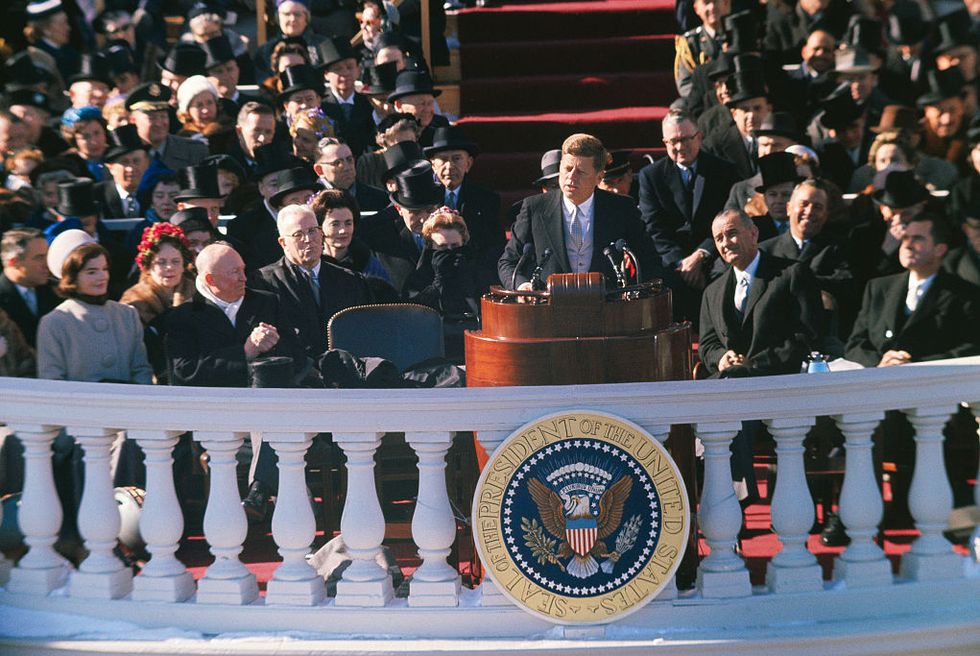
Delivering his legendary inaugural address on January 20, 1961, Kennedy sought to inspire all Americans to more active citizenship. “Ask not what your country can do for you,” he famously said. “Ask what you can do for your country.” During his brief tenure as president, Kennedy did much for America.
Foreign Affairs
Kennedy’s greatest accomplishments came in the arena of foreign affairs. Capitalizing on the spirit of activism he had helped to ignite, Kennedy created the Peace Corps by executive order in 1961. By the end of the century, over 170,000 Peace Corps volunteers would serve in 135 countries. Also in 1961, Kennedy created the Alliance for Progress to foster greater economic ties with Latin America, in hopes of alleviating poverty and thwarting the spread of communism in the region.
Kennedy also presided over a series of international crises. On April 15, 1961, he authorized a covert mission to overthrow leftist Cuban leader Fidel Castro with a group of 1,500 CIA-trained Cuban refugees. Known as the Bay of Pigs Invasion, the mission proved an unmitigated failure, causing Kennedy great embarrassment.
In August 1961, to stem massive waves of emigration from Soviet-dominated East Germany to American ally West Germany via the divided city of Berlin, Nikita Khrushchev ordered the construction of the Berlin Wall, which became the foremost symbol of the Cold War.
However, the greatest crisis of the Kennedy administration was the Cuban Missile Crisis of October 1962. Discovering that the Soviet Union had sent ballistic nuclear missiles to Cuba, Kennedy blockaded the island and vowed to defend the United States at any cost. After several of the tensest days in history, during which the world seemed on the brink of nuclear annihilation, the Soviet Union agreed to remove the missiles in return for Kennedy’s promise to not invade Cuba and to remove American missiles from Turkey.
Eight months later, in June 1963, Kennedy successfully negotiated the Nuclear Test-Ban Treaty with Great Britain and the Soviet Union, helping to ease Cold War tensions. It was one of his proudest accomplishments.

Domestic Policy
President Kennedy’s record on domestic policy was rather mixed. Taking office in the midst of a recession, he proposed sweeping income tax cuts, raising the minimum wage, and instituting new social programs to improve education, health care, and mass transit. However, hampered by lukewarm relations with Congress, Kennedy only achieved part of his agenda: a modest increase in the minimum wage and watered down tax cuts.
The most contentious domestic issue of Kennedy’s presidency was civil rights. Constrained by Southern Democrats in Congress who remained stridently opposed to civil rights for Black citizens, Kennedy offered only tepid support for civil rights reforms early in his term.
Nevertheless, in September 1962, Kennedy sent his brother Attorney General Robert Kennedy to Mississippi to use the National Guard and federal marshals to escort and defend civil rights activist James Meredith as he became the first Black student to enroll at the University of Mississippi on October 1, 1962.
Near the end of 1963, in the wake of the March on Washington and Martin Luther King Jr.’s “I Have a Dream” speech, Kennedy finally sent a civil rights bill to Congress. One of the last acts of his presidency and his life, Kennedy’s bill eventually passed as the landmark Civil Rights Act in 1964.
Assassination and Death
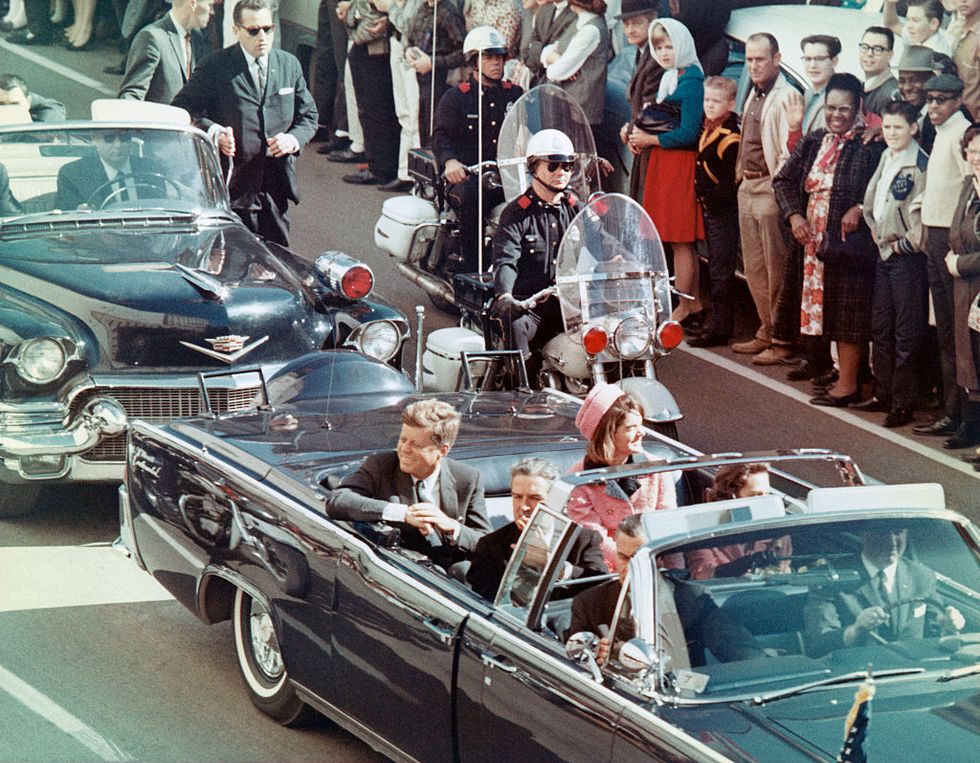
On November 21, 1963, President Kennedy flew to Fort Worth, Texas, for a campaign appearance. The next day, November 22, Kennedy, along with his wife and Texas governor John Connally, rode through cheering crowds in downtown Dallas in a Lincoln Continental convertible. From an upstairs window of the Texas School Book Depository building, a 24-year-old warehouse worker named Lee Harvey Oswald, a former Marine with Soviet sympathies, fired upon the car, hitting the president twice. Kennedy died at Dallas’ Parkland Memorial Hospital shortly thereafter at age 46.
A Dallas nightclub owner named Jack Ruby assassinated Oswald days later while he was being transferred between jails. The death of President Kennedy was an unspeakable national tragedy, and to this date, many people remember with unsettling vividness the exact moment they learned of his death. While conspiracy theories have swirled ever since Kennedy’s assassination, the official version of events remains the most plausible: Oswald acted alone.
For few former presidents is the dichotomy between public and scholarly opinion so vast. To the American public, as well as his first historians, Kennedy is a hero—a visionary politician who, if not for his untimely death, might have averted the political and social turmoil of the late 1960s. In public-opinion polls, Kennedy consistently ranks with Thomas Jefferson and Abraham Lincoln as among the most beloved American presidents of all time. Critiquing this outpouring of adoration, many more recent Kennedy scholars have derided Kennedy’s womanizing and lack of personal morals and argued that, as a leader, he was more style than substance.
In the end, no one can ever truly know what type of president Kennedy would have become had he finished out his first term or been reelected. Nor can we say how the course of history might have been different had he lived into old age. As historian Arthur Schlesinger Jr. wrote, it was “as if Lincoln had been killed six months after Gettysburg or Franklin Roosevelt at the end of 1935 or Truman before the Marshall Plan.”
The most enduring image of Kennedy’s presidency, and of his whole life, is that of Camelot, the idyllic castle of the legendary King Arthur. As his wife, Jackie Kennedy, said after his death, “There’ll be great presidents again, and the Johnsons are wonderful—they’ve been wonderful to me—but there’ll never be another Camelot again.”
Release of Assassination Documents
On October 26, 2017, President Donald Trump ordered the release of 2,800 records related to John F. Kennedy’s assassination. The move came at the expiration of a 25-year waiting period signed into law in 1992, which allowed the declassification of the documents provided that doing so wouldn’t hurt intelligence, military operations, or foreign relations.
Trump’s release of the documents came on the final day he was legally allowed to do so. However, he didn’t release all of the documents, as officials from the FBI, CIA, and other agencies had successfully lobbied for the chance to review particularly sensitive material for an additional 180 days.
Quotes
- For time and the world, do not stand still. Change is the law of life. And those who look only to the past, or the present, are certain to miss the future.
- Forgive your enemies, but never forget their names.
- We need men who can dream of things that never were and not ask why.
- If we cannot now end our differences, at least we can help make the world safe for diversity.
- Ask not what your country can do for you. Ask what you can do for your country.
- A man does what he must—in spite of personal consequences, in spite of obstacles, and dangers, and pressures—and that is the basis of all human morality.
- The times are too grave, the challenge too urgent, and the stakes too high—to permit the customary passions of political debate. We are not here to curse the darkness, but to light the candle that can guide us through that darkness to a safe and sane future... For the world is changing. The old era is ending. The old ways will not do.
- If a free society cannot help the many who are poor, it cannot save the few who are rich.
- The cost of freedom is always high—and Americans have always paid it. And one path we shall never choose and that is the path of surrender or submission.
- We choose to go to the moon in this decade and do the other things, not because they are easy, but because they are hard.
- The greater our knowledge increases, the greater our ignorance unfolds.
- Let every nation know, whether it wishes us well or ill, that we shall pay any price, bear any burden, meet any hardship, support any friend, oppose any foe, in order to assure the survival and the success of liberty.
- Those who make peaceful revolution impossible will make violent revolution inevitable.
- [O]ur most basic common link is that we all inhabit this small planet. We all breathe the same air. We all cherish our children’s future. And we are all mortal.
Fact Check: We strive for accuracy and fairness. If you see something that doesn’t look right, contact us!
The Biography.com staff is a team of people-obsessed and news-hungry editors with decades of collective experience. We have worked as daily newspaper reporters, major national magazine editors, and as editors-in-chief of regional media publications. Among our ranks are book authors and award-winning journalists. Our staff also works with freelance writers, researchers, and other contributors to produce the smart, compelling profiles and articles you see on our site. To meet the team, visit our About Us page: https://www.biography.com/about/a43602329/about-us


