c. 1820-1913
Who Was Harriet Tubman?
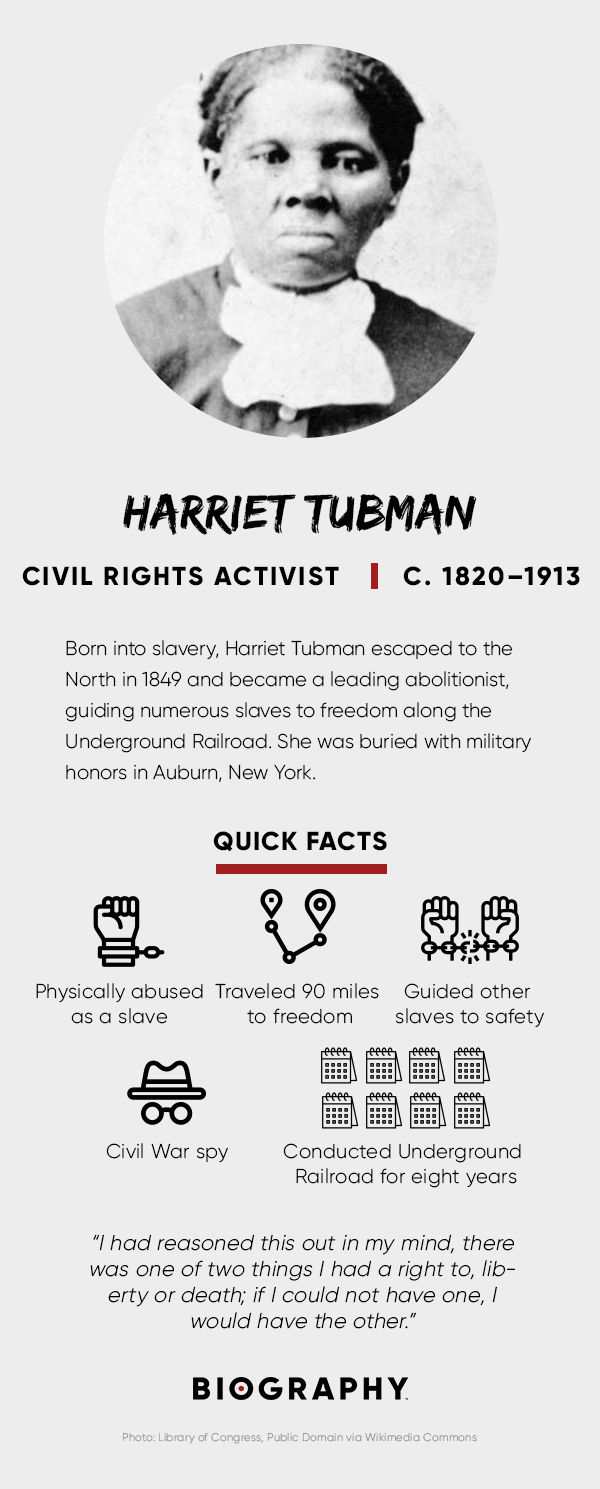
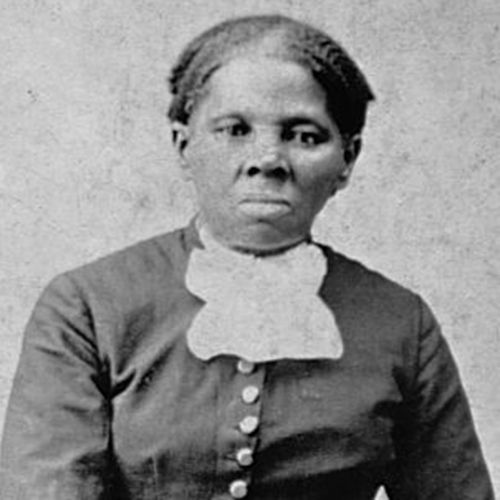
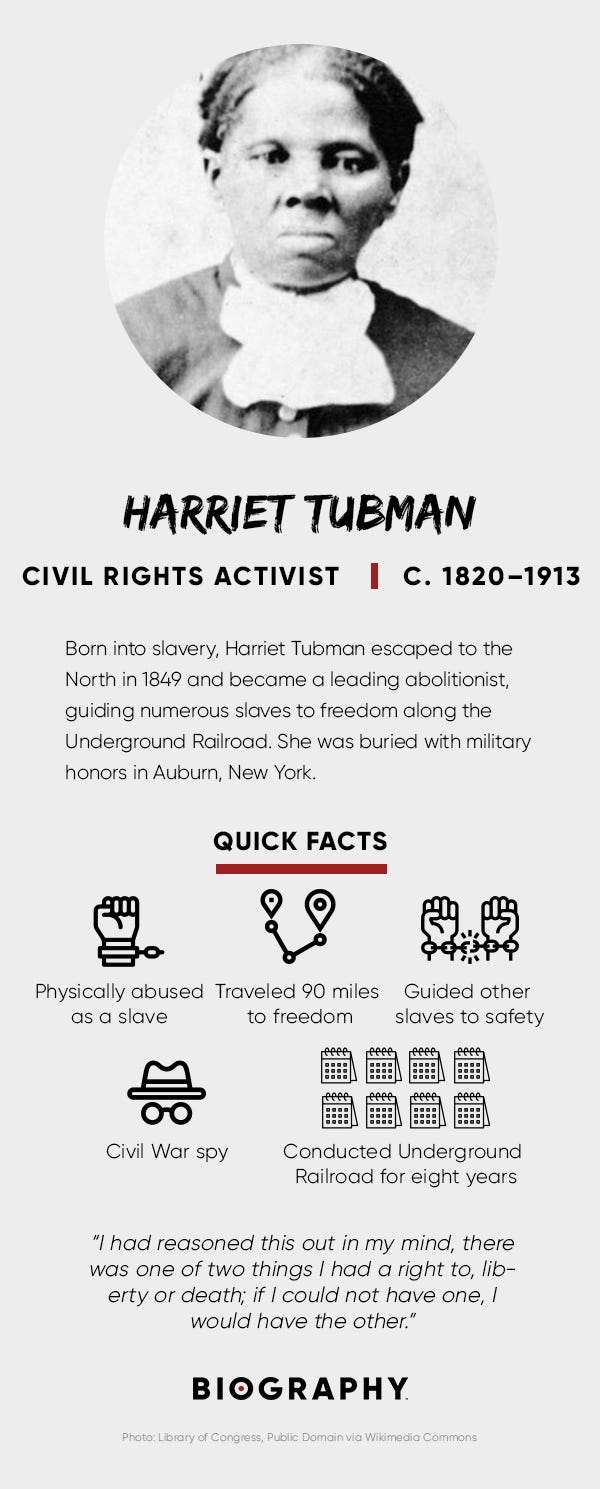
Born into slavery in Maryland, Harriet Tubman escaped to freedom in the North in 1849 to become the most famous “conductor” on the Underground Railroad. Tubman risked her life to lead dozens of family members and other slaves from the plantation system to freedom on this elaborate secret network of safe houses. A leading abolitionist before the American Civil War, Tubman also helped the Union Army during the war, working as a spy, among other roles.
After the Civil War ended, Tubman dedicated her life to helping impoverished former slaves and the elderly. In honor of her life and by popular demand, in 2016, the U.S. Treasury Department announced that Tubman would replace Andrew Jackson on the center of a new $20 bill.
Quick Facts
FULL NAME: Araminta Harriet Ross
BORN: c. 1820
DIED: March 10, 1913
BIRTHPLACE: Dorchester County, Maryland
PARENTS: Harriet Green, Ben Ross
SIBLINGS: Linah, Mariah, Soph, Robert, Benjamin, Rachel, Henry, Moses
Early Life and Family
Tubman’s date of birth is unknown, although she was likely born between 1820 and 1825. According to the National Park Service, oral traditions and recent research suggest she was born in early 1822.
She was one of nine children born between 1808 and 1832 to enslaved parents in Dorchester County, Maryland. Her mother, Harriet “Rit” Green, was owned by Mary Pattison Brodess. Her father, Ben Ross, was owned by Anthony Thompson. (Thompson and Brodess eventually married.)
Originally named Araminta Harriet Ross, Tubman was nicknamed “Minty” by her parents. Araminta changed her name to Harriet around her marriage, possibly to honor her mother.
Harriet Tubman: The Road to Freedom
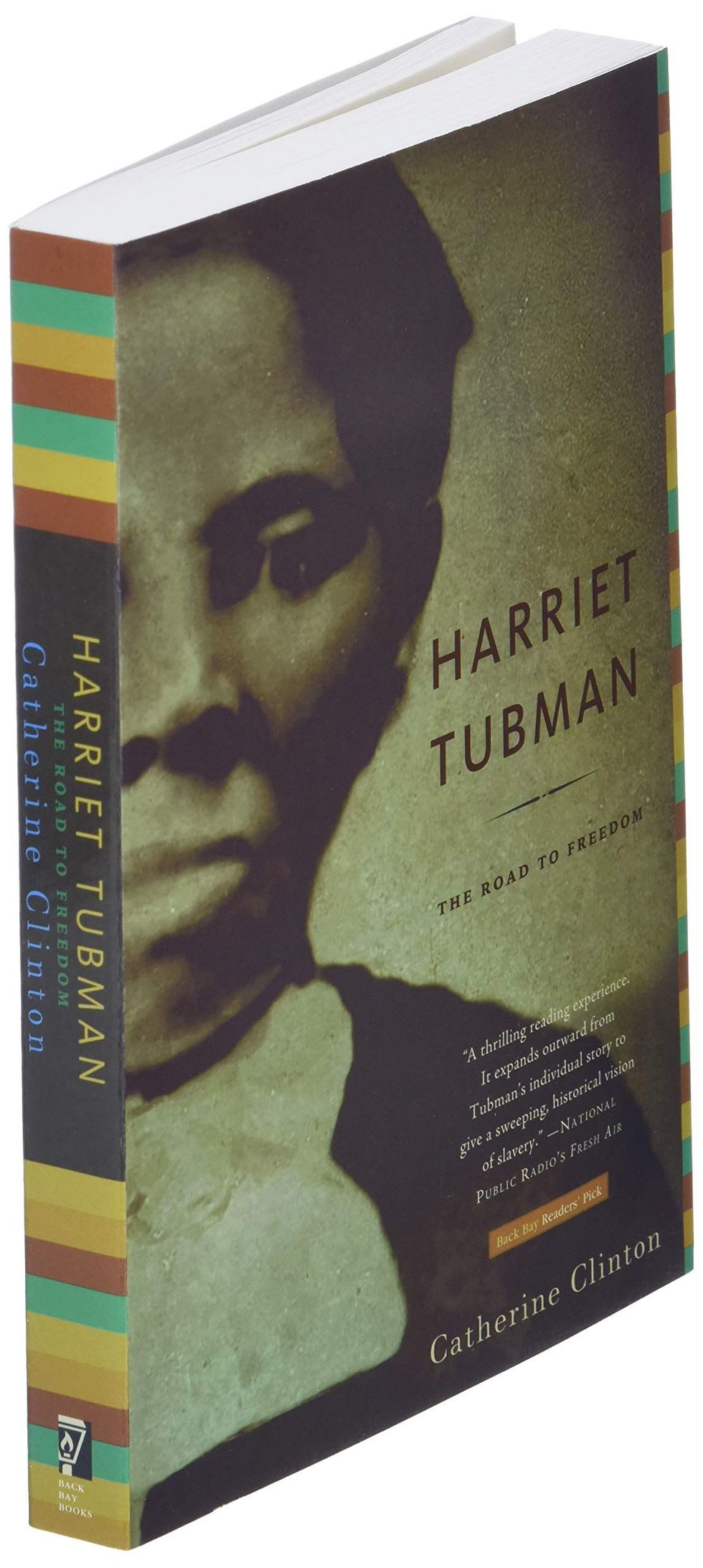
Tubman’s early life was full of hardship. Mary Brodess's son Edward sold three of Tubman’s sisters to distant plantations, severing the family. When a trader from Georgia approached Brodess about buying Rit’s youngest son, Moses, Rit successfully resisted the further fracturing of her family, setting a powerful example for her young daughter.
Physical violence was a part of daily life for Tubman and her family. The violence she suffered early in life caused permanent physical injuries. Tubman later recounted a particular day when she was lashed five times before breakfast. She carried the scars for the rest of her life.
The most severe injury occurred when Tubman was an adolescent. Sent to a dry goods store for supplies, she encountered a slave who had left the fields without permission. The man’s overseer demanded that Tubman help restrain the runaway. When Tubman refused, the overseer threw a two-pound weight that struck her in the head. Tubman endured seizures, severe headaches, and narcoleptic episodes for the rest of her life. She also experienced intense dream states, which she classified as religious experiences.
The line between freedom and slavery was hazy for Tubman and her family. Tubman’s father, Ben, was freed from slavery at the age of 45, as stipulated in the will of a previous owner. Nonetheless, Ben had few options but to continue working as a timber estimator and foreman for his former owners.
Although similar manumission stipulations applied to Rit and her children, the individuals who owned the family chose not to free them. Despite his free status, Ben had little power to challenge their decision.

Escape to Philadelphia
Tubman first encountered the Underground Railroad—an extensive system of people and passages that helped fugitive slaves flee to the northern U.S. states and into Canada—when she used it to escape slavery herself in 1849. Following a bout of illness and the death of her owner, Tubman decided to escape slavery in Maryland for Philadelphia. She feared that her family would be further severed and was concerned for her fate as a sickly slave of low economic value.
Two of her brothers, Ben and Harry, accompanied her on Sept. 17, 1849. However, after a notice was published in the Cambridge Democrat offering a $300 reward for the return of Araminta, Harry and Ben had second thoughts and returned to the plantation. Tubman had no plans to remain in bondage. Seeing her brothers safely home, she soon set off alone for Pennsylvania.
Using the Underground Railroad, Tubman traveled nearly 90 miles to Philadelphia. She crossed into the free state of Pennsylvania with relief and awe and recalled later: “When I found I had crossed that line, I looked at my hands to see if I was the same person. There was such a glory over everything; the sun came like gold through the trees and over the fields, and I felt like I was in Heaven.”
Underground Railroad Conductor
Rather than remaining in the safety of the North, Tubman made it her mission to rescue her family and others living in slavery via the Underground Railroad. She made approximately 13 trips to Maryland to assist family members and friends while serving as a “conductor,” or person responsible for leading fugitives between safe-havens.
In December 1850, Tubman received a warning that her niece, Kessiah, and her two young children would be sold. Kessiah’s husband, a free Black man named John Bowley, made the winning bid for his wife at an auction in Baltimore. Tubman then helped the entire family make the journey to Philadelphia. This was the first of Tubman's numerous trips.
The dynamics of escaping slavery changed in 1850 with the passage of the Fugitive Slave Law. This law stated that escaped slaves could be captured in the North and returned to slavery, leading to the abduction of former slaves and free Black people living in the Free States. Law enforcement officials in the North were compelled to aid in the capture of slaves, regardless of their principles.
In response to the law, Tubman re-routed the Underground Railroad to Canada, which prohibited slavery categorically. In December 1851, Tubman guided a group of 11 fugitives northward. Evidence suggests that the party stopped at the home of abolitionist and formerly enslaved person Frederick Douglass.
In April 1858, Tubman was introduced to the abolitionist John Brown, who advocated the use of violence to disrupt and destroy the institution of slavery. Tubman shared Brown’s goals and at least tolerated his methods. Tubman claimed to have had a prophetic vision of Brown before they met.
When Brown began recruiting supporters for an attack on slaveholders at Harper’s Ferry, he turned to “General Tubman” for help. After Brown’s subsequent execution, Tubman praised him as a martyr.
Tubman remained active during the Civil War. Working for the Union Army as a cook and nurse, Tubman quickly became an armed scout and spy. The first woman to lead an armed expedition in the war, she guided the Combahee River Raid, which liberated more than 700 slaves in South Carolina.
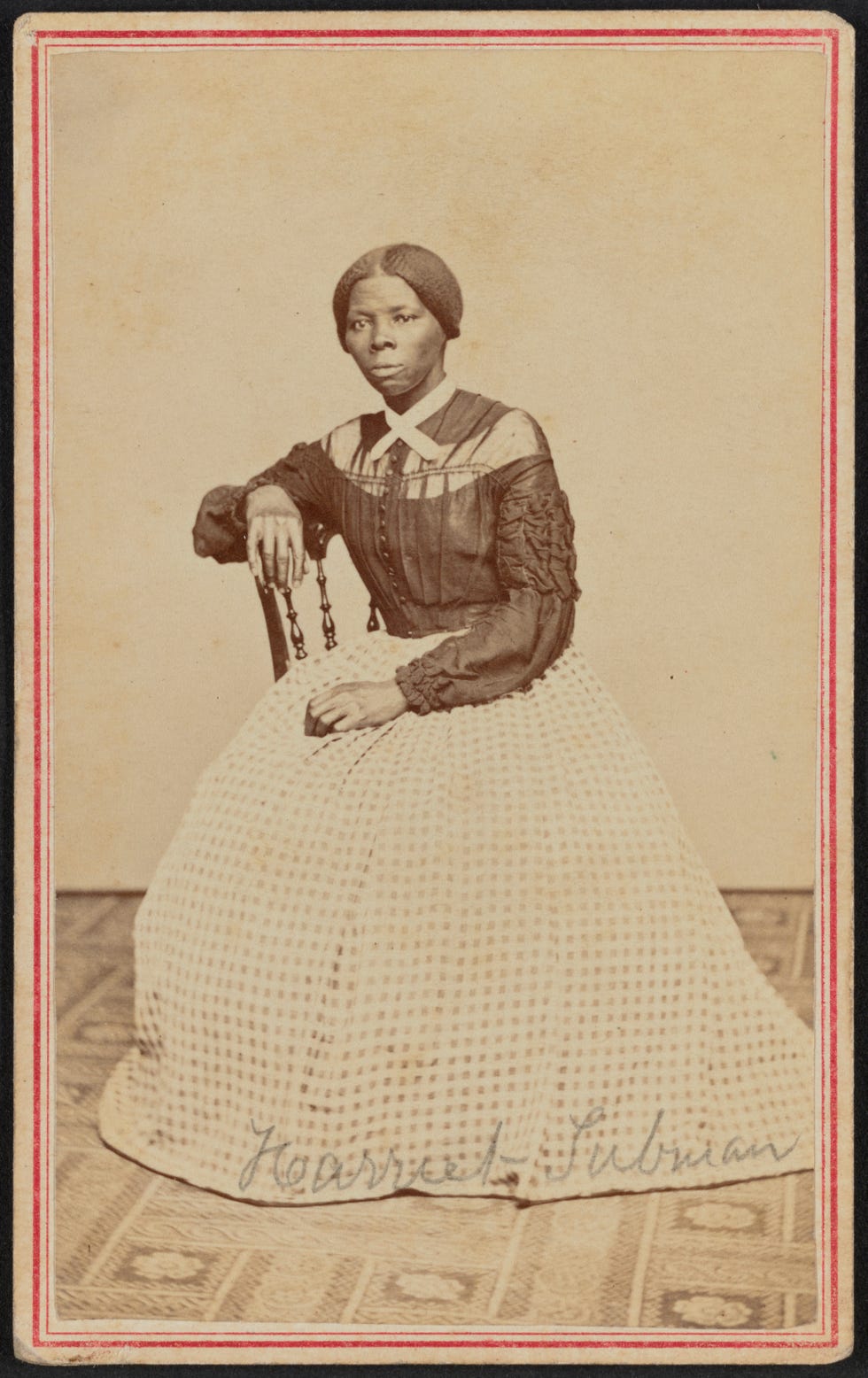
How Many Slaves Did Harriet Tubman Free?
In an 1868 biography, writer Sarah H. Bradford gave an exaggerated estimate of the number of slaves Tubman directly led to safety via the Underground Railroad—as many as 300 across 19 trips. But according to Tubman’s accounts—and extensive documentation of her missions—the number is closer to about 70 family members and friends across 13 trips to Maryland between 1850 and 1860. She did not rescue enslaved people from all across the South, as it would have been too dangerous for her to travel to places where she was not familiar with the geography.
According to the National Park Service, Tubman carried a small pistol with her as a means of protection against slave catchers, as well as to give encouragement to worried runaways who otherwise might turn back and jeopardize the safety of her group.
Additionally, Tubman provided helpful instruction to about 70 slaves from the Eastern Shore who eventually found freedom on their own. Because of these efforts, she earned the nickname “Moses” for her leadership.
Husbands and Children
In 1844, Harriet married a free Black man named John Tubman. At the time, around half of the African American people on the eastern shore of Maryland were free, and it was not unusual for a family to include both free and enslaved people.
Little is known about John or his marriage to Harriet, including whether and how long they lived together. Any children they might have had would have been considered enslaved since the mother’s status dictated that of any offspring. John declined to make the voyage on the Underground Railroad with Harriet, preferring to stay in Maryland with a new wife.
In 1869, Tubman married a Civil War veteran named Nelson Davis. In 1874, the couple adopted a baby girl named Gertie.
Later Life
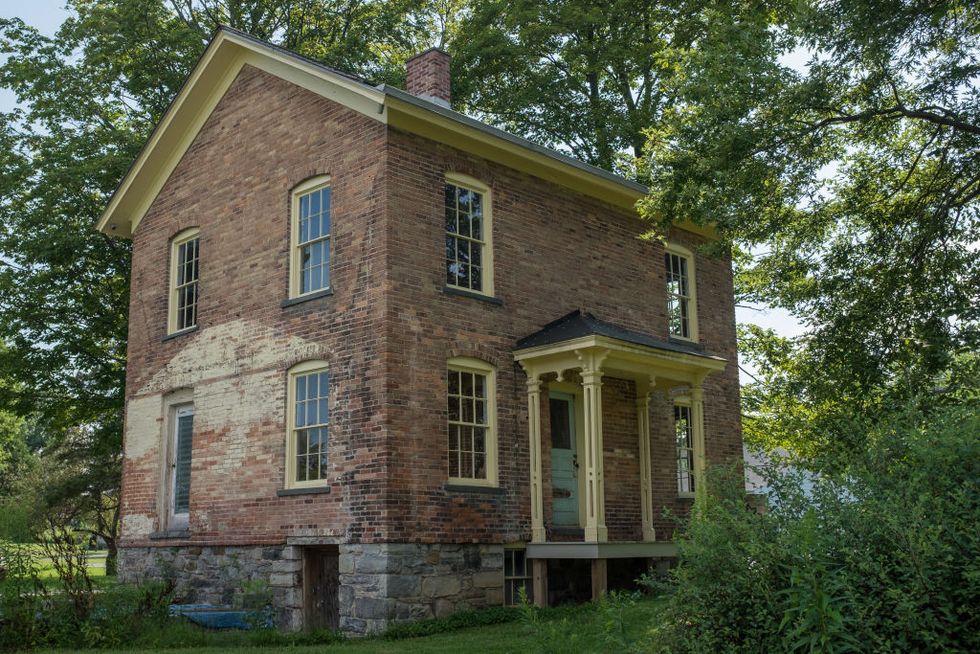
In early 1859, abolitionist Senator William H. Seward sold Tubman a small piece of land on the outskirts of Auburn, New York. The land in Auburn became a haven for Tubman’s family and friends. Tubman spent the years following the war on this property, tending to her family and others who had taken up residence there.
Despite Tubman’s fame and reputation, she was never financially secure. Tubman’s friends and supporters raised some funds to support her. Bradford, an admirer, penned her 1868 biography, Scenes in the Life of Harriet Tubman, with the proceeds going to Tubman and her family.
Tubman continued to give freely despite her economic woes. In 1903, she donated a parcel of her land to the African Methodist Episcopal Zion Church in Auburn. The Harriet Tubman Home for the Aged opened on this site in 1908.
How Did Harriet Tubman Die?
Tubman died of pneumonia on March 10, 1913, surrounded by friends and family, at around 93. As Tubman aged, the head injuries she sustained early in her life became more painful and disruptive. She underwent brain surgery at Boston’s Massachusetts General Hospital to alleviate the pains and “buzzing” she experienced regularly. Tubman was eventually admitted into the rest home named in her honor. She was buried with military honors at Fort Hill Cemetery in Auburn.
Widely known and well-respected while she was alive, Tubman became an American icon years after she died. At the end of the 20th century, a survey named her as one of the most famous civilians in American history before the Civil War, third only to Betsy Ross and Paul Revere. She continues to inspire generations of Americans struggling for civil rights.
When Tubman died, the city of Auburn commemorated her life with a plaque on the courthouse. Tubman was celebrated in many other ways throughout the nation in the 20th century. Dozens of schools were named in her honor, and both the Harriet Tubman Home in Auburn and the Harriet Tubman Museum in Cambridge serve as monuments to her life.
Tubman on the New $20 Bill
In April 2016, the U.S. Treasury Department announced that Tubman would replace Jackson on the center of a new $20 bill. The announcement came after the Treasury Department received a groundswell of public comments following the Women on 20s campaign calling for a notable American woman to appear on U.S. currency. The decision was celebrated, as Tubman devoted her life to racial equality and fought for women’s rights.
In June 2015, Treasury Secretary Jacob J. Lew was criticized for saying that a woman would likely appear on the $10 bill, which features a portrait of Alexander Hamilton, the influential founding father who found renewed popularity because of the hit Broadway musical Hamilton. The ultimate decision to have Tubman replace Jackson, a slaveholder who played a role in the removal of Native Americans from their land, was widely praised.
The unveiling of the new $20 bill featuring Tubman was planned for 2020 to coincide with the 100th anniversary of the 19th Amendment, which gave women the right to vote. However, in May 2019, Treasury Secretary Steven Mnuchin announced that no new designs would be unveiled until 2026 due to counterfeiting issues. In June, the Treasury Department’s inspector general said it would investigate why the launch had been delayed.
In January 2021, the Biden administration said it would be “exploring ways to speed up" the release of the Tubman $20.
Multiple reports have suggested the redesigned bill featuring Tubman will debut in 2030, although that is a “soft date” subject to change based on various factors.
Tubman in TV and Film
Actor Cicely Tyson portrayed Tubman in A Woman Called Moses, a two-part 1978 miniseries about her life narrated by Orson Welles that aired on NBC.
A more recent adaptation of Tubman’s life was the 2019 movie Harriet, starring Cynthia Erivo as Tubman. The film chronicled Tubman’s life from her first marriage through her service freeing the enslaved. Erivo was nominated for an Oscar, Golden Globe, and Screen Actor’s Guild Award for her role.
Watch Harriet on Prime Video.
Quotes
- I was the conductor of the Underground Railroad for eight years, and I can say what most conductors can’t say; I never ran my train off the track and I never lost a passenger.
- I had reasoned this out in my mind, there was one of two things I had a right to, liberty or death; if I could not have one, I would have the other.
- I grew up like a neglected weed—ignorant of liberty, having no experience of it.
- I freed a thousand slaves. I could have freed a thousand more, if only they knew they were slaves.
- Oh, Lord! You’ve been with me in six troubles, don’t desert me in the seventh!
- When I found I had crossed that line, I looked at my hands to see if I was the same person. There was such a glory over everything; the sun came like gold through the trees, and over the fields, and I felt like I was in Heaven.
- I had crossed the line of which I had so long been dreaming. I was free; but there was no one to welcome me to the land of freedom, I was a stranger in a strange land.
- I have known her long, and a nobler, higher spirit, or a truer, seldom dwells in the human form.
- The midnight sky and the silent stars have been the witnesses of your devotion to freedom and of your heroism. Excepting John Brown—of sacred memory—I know of no one who has willingly encountered more perils and hardships to serve our enslaved people than you have.
- I bring you one of the best and bravest persons on this continent — General Tubman as we call her.
- We will be ourselves and free, or die in the attempt. Harriet Tubman was not our great-grandmother for nothing.
- We saw the lightning and that was the guns; and then we heard the thunder and that was the big guns; and then we heard the rain falling and that was the blood falling; and when we came to get in the crops, it was dead men that we reaped.
- Much that you have done would seem improbable to those who do not know you as I know you.
- Her tales of adventure are beyond anything in fiction and her ingenuity and generalship are extraordinary.
- But to this solemn resolution I came; I was free, and they should be free also; I would make a home for them in the North, and the Lord helping me, I would bring them all there. Oh, how I prayed then, lying all alone on de cold, damp ground; ‘Oh, dear Lord,’ I said,
‘I ain't got no friend but you. Come to my help, Lord, for I'm in trouble!
Fact Check: We strive for accuracy and fairness. If you see something that doesn't look right, contact us!
The Biography.com staff is a team of people-obsessed and news-hungry editors with decades of collective experience. We have worked as daily newspaper reporters, major national magazine editors, and as editors-in-chief of regional media publications. Among our ranks are book authors and award-winning journalists. Our staff also works with freelance writers, researchers, and other contributors to produce the smart, compelling profiles and articles you see on our site. To meet the team, visit our About Us page: https://www.biography.com/about/a43602329/about-us
Tyler Piccotti joined the Biography.com staff as an Associate News Editor and is now the News and Culture Editor. He previously worked as a reporter and copy editor for a daily newspaper recognized by the Associated Press Sports Editors. In his current role, he shares the true stories behind your favorite movies and TV shows and profiles rising musicians, actors, and athletes. When he's not working, you can find him at the nearest amusement park or movie theater and cheering on his favorite teams.