(1929-2003)
Who Was June Carter Cash?
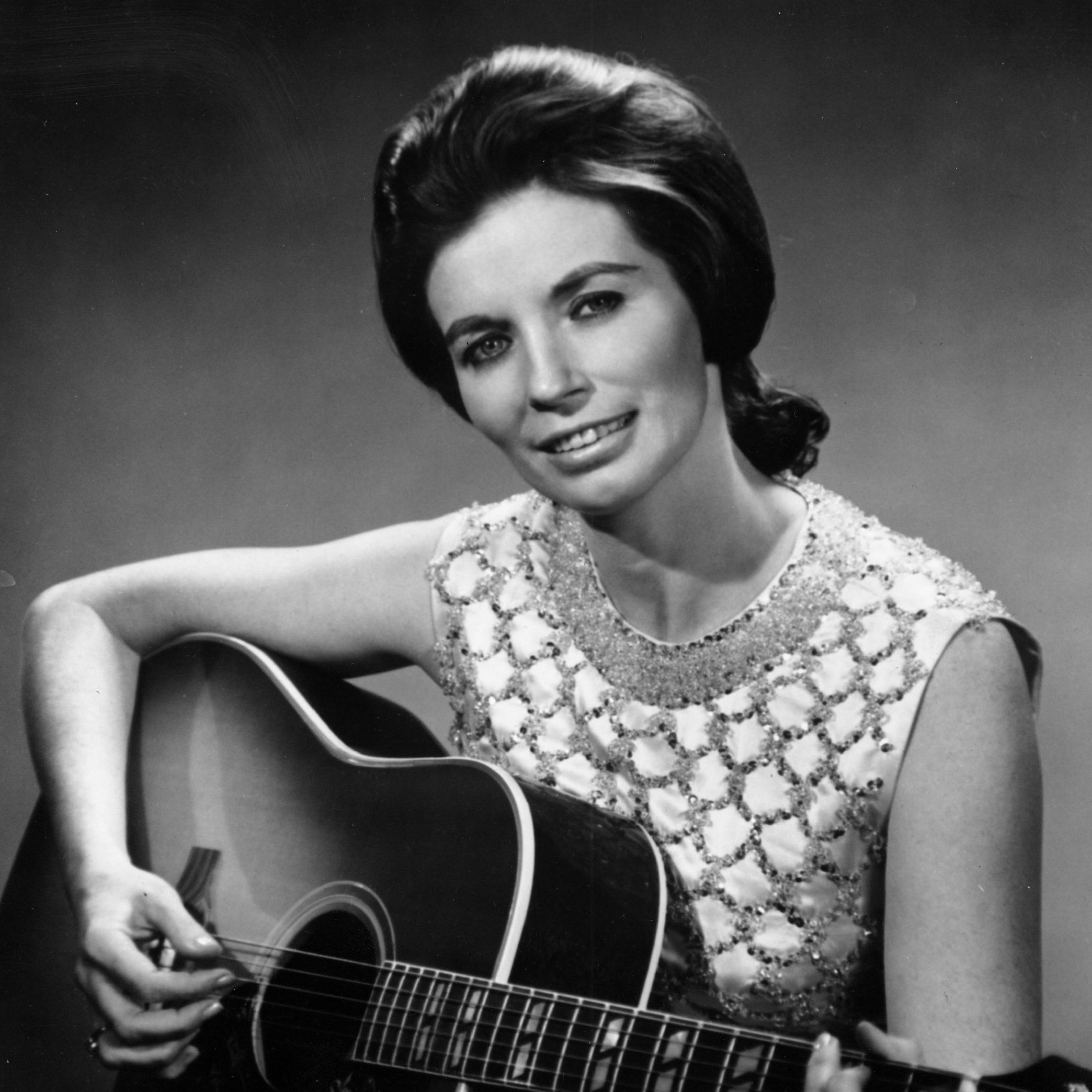
June Carter Cash and her sisters performed as the Carter Sisters, with June singing and playing rhythm guitar. She and Johnny Cash had a number of hits, including "It Ain't Me Babe" and "If I Were a Carpenter." She married Cash in 1968, and their story made it to the big screen in the Cash biopic Walk the Line 37 years later, with Reese Witherspoon playing Carter Cash.
Musical Background
Singer-songwriter June Carter Cash was born Valerie June Carter on June 23, 1929, in Maces Springs, Virginia. The daughter of Ezra Carter and Mother Maybelle Carter, June was a born into the first family of country music. She and her sisters, Helen and Anita, performed as the Carter Sisters, with June singing, playing autoharp and rhythm guitar and keeping audiences entertained with her comedic wit.
In 1952, June married Carl Smith, with whom she performed at Nashville's Grand Ole Opry, and they had a daughter, Rebecca Carlene. After their divorce, June toured with Elvis Presley and was briefly married to a local police officer, Edwin Nix, with whom she had another daughter, Rozanna who was called Rosie.
Meeting Johnny Cash
In the mid-1950s, June studied at The Actor's Studio in New York City, landing a role in 1958's Country Music Holiday, as well as guest spots on TV westerns and soap operas. But she returned to music with her mother and sisters in the early 1960s to work with Johnny Cash. June and Johnny had a number of hits, including "It Ain't Me Babe," "Jackson" and "If I Were a Carpenter." She married Cash on March 1, 1968, and their son, John Carter Cash, was born in 1970.
For much of the 1970s and 1980s June's career to a backseat to Johnny's. But in 1999, following what many believed to be her retirement, June reemerged with the album Press On, which won a Grammy for Best Traditional Folk Album. Four years later, Wildwood Flower netted her two Grammys. June won the award for Best Traditional Folk Album and the award for Best Female Country Vocal Performance for the song "Keep on the Sunny Side."
Death
June Carter Cash died of complications following heart surgery on May 15, 2003, in Nashville, Tennessee. Later that year, her beloved husband passed away on September 12. Their love story made to the big screen in the Johnny Cash biopic Walk the Line two years later. Actress Reese Witherspoon played June Carter Cash — winning an Academy Award for her portrayal — and Joaquin Phoenix played her legendary husband.
Two years later, Sheryl Crow, Willie Nelson, Loretta Lynn, Rosanne Cash, Emmylou Harris and Kris Kristofferson were among the artists who participated in a special tribute recording, Anchored In Love (2007), for June Carter Cash. It was also the title of the biography of her written by her son John Carter Cash published that same year.
QUICK FACTS
- Name: June Carter Cash
- Birth Year: 1929
- Birth date: June 23, 1929
- Birth State: Virginia
- Birth City: Maces Springs
- Birth Country: United States
- Gender: Female
- Best Known For: June Carter Cash was a Grammy-winning country singer who was married to and performed with country music star Johnny Cash.
- Industries
- Country
- Astrological Sign: Cancer
- Schools
- The Actors Studio
- Death Year: 2003
- Death date: May 15, 2003
- Death State: Tennessee
- Death City: Nashville
- Death Country: United States
Fact Check
We strive for accuracy and fairness. If you see something that doesn't look right, contact us!
The Biography.com staff is a team of people-obsessed and news-hungry editors with decades of collective experience. We have worked as daily newspaper reporters, major national magazine editors, and as editors-in-chief of regional media publications. Among our ranks are book authors and award-winning journalists. Our staff also works with freelance writers, researchers, and other contributors to produce the smart, compelling profiles and articles you see on our site. To meet the team, visit our About Us page: https://www.biography.com/about/a43602329/about-us