1933–2020
Who Was Ruth Bader Ginsburg?
Ruth Bader Ginsburg was a lawyer and jurist who served as an associate justice of the U.S. Supreme Court from 1993 to 2020. After graduating from Columbia Law School, the Brooklyn native became a staunch courtroom advocate for the fair treatment of women, working with the ACLU’s Women’s Rights Project. In 1980, Ginsburg was appointed by President Jimmy Carter to the U.S. Court of Appeals, where she served for 13 years. She was then appointed to the U.S. Supreme Court by President Bill Clinton in 1993, becoming the second woman to hold the position. Widely considered a feminist icon, Ginsburg stayed on the bench until her death in September 2020 at the age of 87.
Quick Facts
FULL NAME: Joan Ruth Bader Ginsberg
BORN: March 15, 1933
DIED: September 18, 2020
BIRTHPLACE: Brooklyn, New York
SPOUSE: Martin D. Ginsburg (1954-2010)
CHILDREN: Jane and James
Early Life and Education
Joan Ruth Bader was born on March 15, 1933, in Brooklyn, New York, and grew up in a low-income, working-class neighborhood. Her father, Nathan Bader, was a Russian-born Jewish immigrant who worked as a fur manufacturer, and her mother, Celia Bader, was a homemaker. When Ginsberg was just 1 year old, her older sister, and only sibling, Marilyn, died of meningitis at the age of 6.
Ginsburg’s mother was a major influence in her life and taught her the value of independence and a good education. Celia herself did not attend college, instead working in a garment factory to help pay for her brother’s college education—an act of selflessness that forever impressed Ginsburg.
At James Madison High School in Brooklyn, Ginsburg worked diligently and excelled in her studies. Sadly, her mother was diagnosed with cancer during Ginsburg’s high school years and died the day before her graduation.
Ginsburg earned her bachelor’s degree in government from Cornell University in 1954, finishing first in her class. Shortly after graduation, on June 23, 1954, she married Martin “Marty” Ginsburg. The pair met on a blind date.
In 1956, now a wife and mother, she enrolled at Harvard Law School, where she learned to balance her family life and her new role as a law student. She also encountered a very male-dominated, hostile environment, with only eight other females in her class of more than 500. The women were chided by the law school’s dean for taking the places of qualified males. But Ginsburg pressed on and excelled academically, eventually becoming the first female member of the prestigious Harvard Law Review.
Around this time, Martin, also at Harvard Law, was diagnosed with testicular cancer. Upon his graduation, Martin, now in remission, accepted a position at a law firm in New York City. To join her husband, Ginsburg transferred to Columbia Law School in 1958. There, she was elected to the school’s law review and graduated first in her class in 1959.
Law Career
Despite her outstanding academic record, Ginsburg struggled to find a law firm that would hire her, often facing discrimination because she was both a woman and a mother. It wasn’t until her former Columbia professor Gerald Gunter vouched for her that she secured a position clerking for U.S. District Judge Edmund L. Palmieri in 1959. After two years, Ginsburg entered the job market once again, and while she received some offers, she faced much lower pay than her male counterparts.
She soon embraced academia, joining the faculty at Rutgers University Law School before teaching at Columbia from 1972 to 1980, where she became the school’s first female tenured professor. During the 1970s, she also served as the director of the Women’s Rights Project of the American Civil Liberties Union, for which she argued six landmark cases on gender equality before the U.S. Supreme Court.
Ginsburg believed the law was gender-blind, meaning all groups are entitled to equal rights. One of the five cases she won before the Supreme Court involved a portion of the Social Security Act that favored women over men because it granted certain benefits to widows but not widowers.
In 1980, President Jimmy Carter appointed Ginsburg to the U.S. Court of Appeals for the District of Columbia. She served as a federal judge for 13 years before she earned her next major appointment.
Supreme Court Justice
In 1993, Ginsberg was appointment to the U.S. Supreme Court by President Bill Clinton. She was selected to serve as an associate justice, filling the seat vacated by Justice Byron White. President Clinton wanted a replacement with the intellect and political skills to deal with the more conservative members of the Court.

The Senate Judiciary Committee hearings were unusually friendly, despite frustration expressed by some senators over Ginsburg’s evasive answers to hypothetical situations. Several expressed concern over how she could transition from social advocate to Supreme Court Justice. In the end, however, she was easily confirmed by the Senate, 96–3.
As a judge, Ginsburg favored caution, moderation, and restraint. She was considered part of the Supreme Court’s moderate-liberal bloc presenting a strong voice in favor of gender equality, the rights of workers, and the separation of church and state. In 1996 Ginsburg wrote the Supreme Court’s landmark decision in United States v. Virginia, which held that the state-supported Virginia Military Institute could not refuse to admit women. In 1999, she won the American Bar Association’s Thurgood Marshall Award for her contributions to gender equality and civil rights.
Landmark Cases
As a Supreme Court justice, Ginsburg’s first major landmark case was in United States v. Virginia in 1996. She authored the majority opinion, ruling that the Virginia Military Institute’s male-only admission policy was unconstitutional. The decision effectively prohibited state-run institutions from excluding women.
Despite her reputation for restrained writing, she gathered considerable attention for her dissenting opinion in the case of Bush v. Gore, which effectively decided the 2000 presidential election between George W. Bush and Al Gore. Objecting to the court’s majority opinion favoring Bush, Ginsburg deliberately and subtly concluded her decision with the words, “I dissent”—a significant departure from the tradition of including the adverb “respectfully.”
In 2015, Ginsburg sided with the majority in two landmark Supreme Court rulings. On June 25th, she was one of the six justices to uphold a critical component of the 2010 Affordable Care Act in King v. Burwell. The decision allows the federal government to continue providing subsidies to Americans who purchase health care through “exchanges,” regardless of whether they are state or federally operated. The majority ruling, read by Chief Justice John Roberts, was a massive victory for President Barack Obama and made the Affordable Care Act difficult to undo. Conservative justices Clarence Thomas, Samuel Alito, and Antonin Scalia were in dissent, with Scalia presenting a scathing dissenting opinion to the Court.
On June 26, the Supreme Court handed down its second historic decision in as many days, with a 5–4 majority ruling in Obergefell v. Hodges, making same-sex marriage legal in all 50 states. Ginsburg is considered to have been instrumental in the decision, showing public support for the idea in previous years by officiating same-sex marriages and by challenging arguments against it during the early proceedings of the case. She was joined in the majority by Justices Anthony Kennedy, Stephen Breyer, Sonia Sotomayor, and Elena Kagan, with Roberts reading the dissenting opinion this time.
In April 2018, Ginsburg notched another career milestone by assigning a majority opinion for the first time in her 25 years with the court. The ruling for Sessions v. Dimaya, which drew attention for conservative Neil Gorsuch’s decision to vote with his liberal colleagues, struck down a provision of the Immigration and Nationality Act that allowed the deportation of any foreign national convicted of a “crime of violence.” Holding seniority among the majority, Ginsburg ultimately assigned the task of penning the opinion to Elena Kagan.
Husband and Kids

In 1954, Ruth married fellow law student Martin D. Ginsburg. The early years of their marriage were challenging, as their first child, Jane, was born shortly after Martin was drafted into the military in 1954. He served for two years and, after his discharge, the couple returned to Harvard, where Ruth also enrolled.
Martin was diagnosed with testicular cancer in 1956, requiring intensive treatment and rehabilitation. Ruth cared for her young daughter and convalescing husband, and arranged for people to take notes for him in classes while she continued her own law studies. Martin recovered, graduated from law school, and accepted a position at a New York law firm. Nearly a decade later, they welcomed their son, James, in 1965.
In June 2010, Ruth’s husband died of cancer. She described Martin as her biggest booster and told her kidshe was “the only young man I dated who cared that I had a brain.” Married for 56 years, the relationship between Ruth and Marty was said to differ from the norm: Martin was gregarious, loved to entertain and tell jokes, while Ruth was serious, soft-spoken and shy.
Martin provided a reason for their successful union: “My wife doesn’t give me any advice about cooking and I don’t give her any advice about the law.” A day after her husband’s death, she was at work on the Court for the last day of the 2010 term.
Memoir and RBG Movie
Ginsburg, sometimes referred to as RBG by her supporters, released her memoir, My Own Words, in 2016. The New York Times Best-Selling book provides a glimpse of her life through a collection of writings from various times in her life, dating as far back as her junior high school years.
In January 2018, Ginsburg appeared at the Sundance Film Festival to accompany the premiere of the documentary RBG. Touching on the #MeToo movement, she recalled an earlier time when she had to put up with the advances of a Cornell University professor. She also gave her seal of approval for Kate McKinnon’s sassy portrayal of her on Saturday Night Live, noting, “I would like to say ‘Ginsburned’ sometimes to my colleagues.”
Ginsburg expanded on her thoughts regarding the #MeToo movement, saying its “staying power” would enable it to survive a backlash, in a 2018 interview with Poppy Harlow at Columbia University. She also defended the importance of a free press and an independent judiciary, both challenged during the Donald Trump administration.
Later Years

Ginsburg notably opposed the potential of a Trump presidency in 2016, at one point calling him a “faker,” before apologizing for publicly commenting on the campaign. In January 2018, after the president released a list of Supreme Court candidates in preparation for the looming retirement of elderly justices, the 84-year-old Ginsburg signaled she wasn’t going anywhere by hiring a full slate of clerks through 2020.
The issue of her staying power loomed large later in the year when Justice Kennedy, who often sided with the court’s liberal bloc, announced he was stepping down at the end of July. At that time, Ginsburg revealed she hoped to stick around for at least five more years.
Health Issues
Ginsburg endured several health scares after being appointed to the bench, undergoing surgery for colon cancer, pancreatic cancer, and lung cancer. She was hospitalized in November 2018 after falling in her office and fracturing three ribs.
In May 2020, one day after the Court heard arguments via teleconference for the first time due to the coronavirus pandemic, it was announced that the senior justice had again been hospitalized, to undergo a nonsurgical treatment for a gallbladder infection.
In July 2020, Ginsburg revealed she was undergoing chemotherapy for a “recurrence of cancer” on her liver and was “yielding positive results.”
Death and Legacy
Ginsburg died on September 18, 2020, at her home in Washington, D.C., from complications of metastatic pancreatic cancer. She was 87 years old. Just days later, Ginsburg laid in state in the U.S. Capitol, becoming the first woman and second Supreme Court Justice to have this honor.
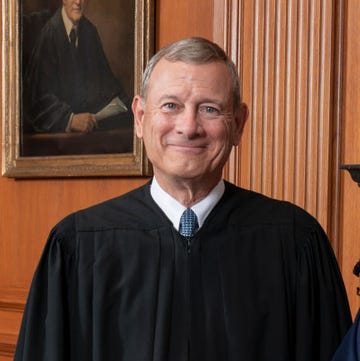
“Our nation has lost a jurist of historic stature,” Chief Justice John Roberts said in a statement after her death. “We at the Supreme Court have lost a cherished colleague. Today we mourn, but with confidence that future generations will remember Ruth Bader Ginsburg as we knew her—a tireless and resolute champion of justice.”
Quotes
- My mother told me two things constantly. One was to be a lady, and the other was to be independent.
- Women will only have true equality when men share with them the responsibility of bringing up the next generation.
- The state controlling a woman would mean denying her full autonomy and full equality.
- So that’s the dissenter’s hope: that they are writing not for today but for tomorrow.
- Feminism ... I think the simplest explanation, and one that captures the idea, is a song that Marlo Thomas sang, ‘Free to be You and Me.’
- If you’re going to change things, you have to be with the people who hold the levers.
- I think unconscious bias is one of the hardest things to get at.
- If there was one decision I would overrule, it would be ‘Citizens United.’ I think the notion that we have all the democracy that money can buy strays so far from what our democracy is supposed to be.
- Fight for the things that you care about, but do it in a way that will lead others to join you.
Fact Check: We strive for accuracy and fairness. If you see something that doesn’t look right, contact us!
Editor’s note: This piece was originally published on Biography.com on May 7, 2021.
The Biography.com staff is a team of people-obsessed and news-hungry editors with decades of collective experience. We have worked as daily newspaper reporters, major national magazine editors, and as editors-in-chief of regional media publications. Among our ranks are book authors and award-winning journalists. Our staff also works with freelance writers, researchers, and other contributors to produce the smart, compelling profiles and articles you see on our site. To meet the team, visit our About Us page: https://www.biography.com/about/a43602329/about-us
Catherine Caruso joined the Biography.com staff in August 2024, having previously worked as a freelance journalist for several years. She is a graduate of Syracuse University, where she studied English literature. When she’s not working on a new story, you can find her reading, hitting the gym, or watching too much TV.