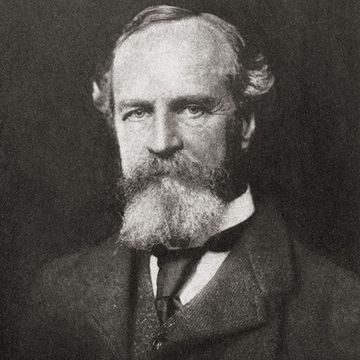
1694-1778
Who Was Voltaire?
Voltaire established himself as one of the leading writers of the Enlightenment. His famed works include the tragic play Zaïre, the historical study The Age of Louis XIV and the satirical novella Candide. Often at odds with French authorities over his politically and religiously charged works, he was twice imprisoned and spent many years in exile. He died shortly after returning to Paris in 1778.
Quick Facts
FULL NAME: François-Marie Arouet
BORN: November 21, 1694
DIED: May 30, 1778
BIRTHPLACE: Paris, France
ASTROLOGICAL SIGN: Scorpio
Early Life
Voltaire was born François-Marie Arouet to a prosperous family on November 21, 1694, in Paris. He was the youngest of five children born to François Arouet and Marie Marguerite d'Aumart. When Voltaire was just seven years old, his mother passed away. Following her death, he grew closer to his free-thinking godfather.
In 1704, Voltaire was enrolled at the Collége Louis-le-Grand, a Jesuit secondary school in Paris, where he received a classical education and began showing promise as a writer.
Beliefs and Philosophy
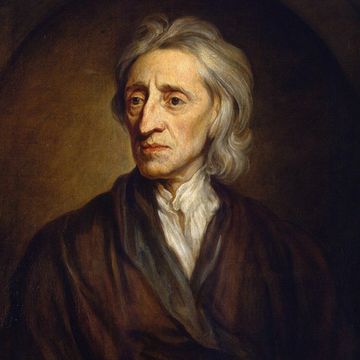
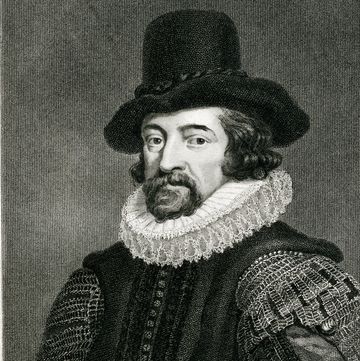
Embracing Enlightenment philosophers such as Isaac Newton, John Locke and Francis Bacon, Voltaire found inspiration in their ideals of a free and liberal society, along with freedom of religion and free commerce.
Voltaire, in keeping with other Enlightenment thinkers of the era, was a deist — not by faith, according to him, but rather by reason. He looked favorably on religious tolerance, even though he could be severely critical towards Christianity, Judaism and Islam.
As a vegetarian and an advocate of animal rights, however, Voltaire praised Hinduism, stating Hindus were "[a] peaceful and innocent people, equally incapable of hurting others or of defending themselves."
Major Works
Voltaire wrote poetry and plays, as well as historical and philosophical works. His most well-known poetry includes The Henriade (1723) and The Maid of Orleans, which he started writing in 1730 but never fully completed.
Among the earliest of Voltaire's best-known plays is his adaptation of Sophocles' tragedy Oedipus, which was first performed in 1718. Voltaire followed with a string of dramatic tragedies, including Mariamne (1724). His Zaïre (1732), written in verse, was something of a departure from previous works: Until that point, Voltaire's tragedies had centered on a fatal flaw in the protagonist's character; however, the tragedy in Zaïre was the result of circumstance. Following Zaïre, Voltaire continued to write tragic plays, including Mahomet (1736) and Nanine (1749).
Voltaire's body of writing also includes the notable historical works The Age of Louis XIV (1751) and Essay on the Customs and the Spirit of the Nations (1756). In the latter, Voltaire took a unique approach to tracing the progression of world civilization by focusing on social history and the arts.
'Candide'
Voltaire's popular philosophic works took the form of the short stories Micromégas (1752) and Plato's Dream (1756), as well as the famed satirical novella Candide (1759), which is considered Voltaire's greatest work. Candide is filled with philosophical and religious parody, and in the end the characters reject optimism. There is great debate on whether Voltaire was making an actual statement about embracing a pessimistic philosophy or if he was trying to encourage people to be actively involved to improve society.
In 1764, he published another of his acclaimed philosophical works, Dictionnaire philosophique, an encyclopedic dictionary that embraced the concepts of Enlightenment and rejected the ideas of the Roman Catholic Church.
Arrests and Exiles
In 1716, Voltaire was exiled to Tulle for mocking the duc d'Orleans. In 1717, he returned to Paris, only to be arrested and exiled to the Bastille for a year on charges of writing libelous poetry. Voltaire was sent to the Bastille again in 1726, for arguing with the Chevalier de Rohan. This time he was only detained briefly before being exiled to England, where he remained for nearly three years.
The publication of Voltaire's Letters on the English (1733) angered the French church and government, forcing the writer to flee to safer pastures. He spent the next 15 years with his mistress, Émilie du Châtelet, at her husband's home in Cirey-sur-Blaise.
Death
Voltaire moved to Prussia in 1750 as a member of Frederick the Great's court, and spent later years in Geneva and Ferney. By 1778, he was recognized as an icon of the Enlightenment's progressive ideals, and he was given a hero's welcome upon his return to Paris. He died there shortly afterward, on May 30, 1778.
Legacy
In 1952, researcher and writer Theodore Besterman established a museum devoted to Voltaire in Geneva. He later set about writing a biography of his favorite subject, and following his death in 1976, the Voltaire Foundation was vested permanently at the University of Oxford.
The foundation continued to work toward making the Enlightenment writer's prolific output available to the public. It was later announced that The Oxford Complete Works of Voltaire, the first exhaustive annotated edition of Voltaire’s novels, plays and letters, would expand to 220 volumes by 2020.
In November 2017, during an event to celebrate what would have been Voltaire's 323rd birthday, foundation director Nicholas Cronk explained how the famed writer used inaccuracies to generate attention. Among his fabrications, Voltaire offered up differing dates for his birthday and lied about the identity of his biological father.
Quotes
- A witty saying proves nothing.
- All murderers are punished unless they kill in large numbers and to the sound of trumpets.
Fact Check: We strive for accuracy and fairness. If you see something that doesn’t look right, contact us!
The Biography.com staff is a team of people-obsessed and news-hungry editors with decades of collective experience. We have worked as daily newspaper reporters, major national magazine editors, and as editors-in-chief of regional media publications. Among our ranks are book authors and award-winning journalists. Our staff also works with freelance writers, researchers, and other contributors to produce the smart, compelling profiles and articles you see on our site. To meet the team, visit our About Us page: https://www.biography.com/about/a43602329/about-us