(1899-1974)
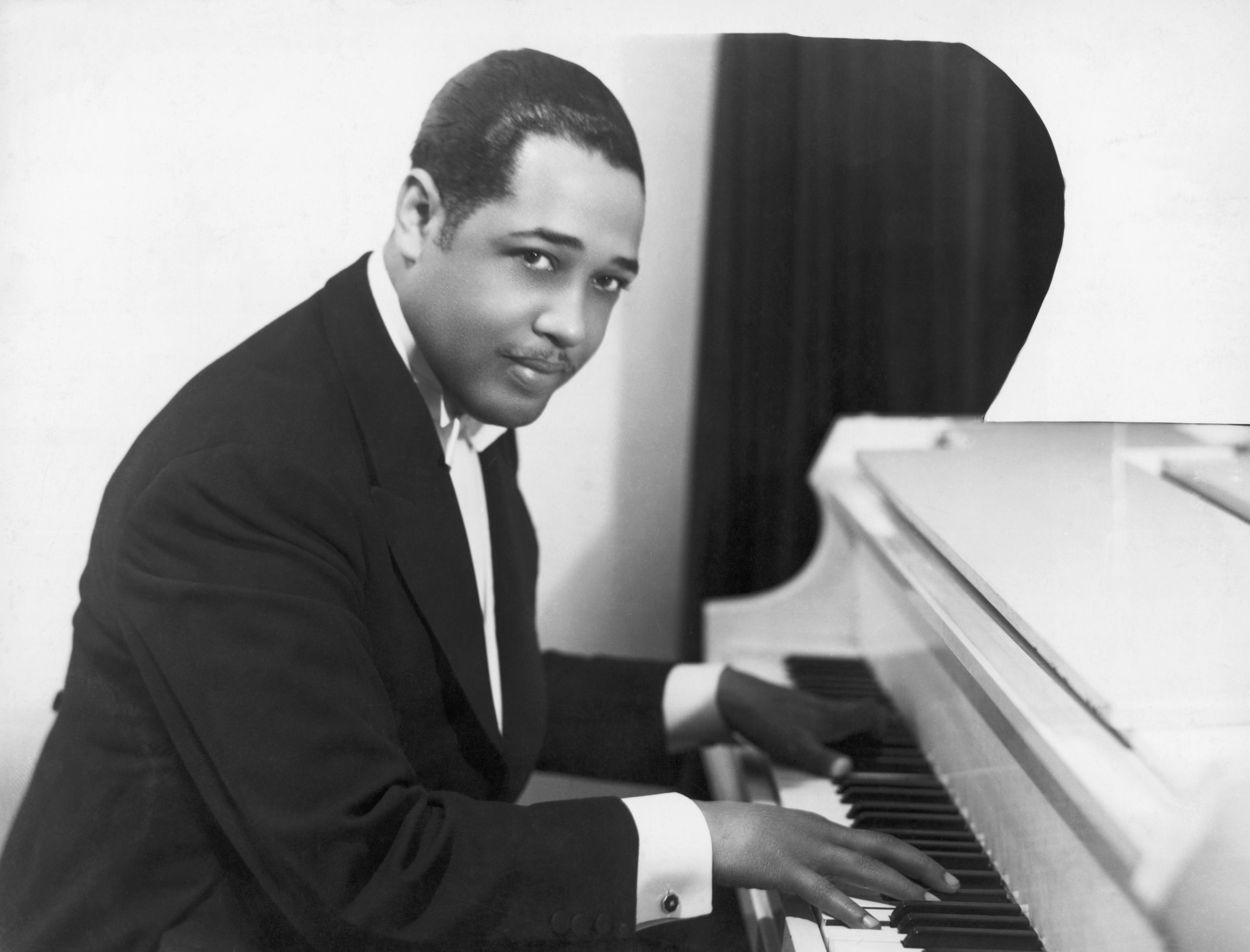
Who Was Duke Ellington?
A major figure in the history of jazz music, Duke Ellington's career spanned more than half a century, during which time he composed thousands of songs for the stage, screen and contemporary songbook. He created one of the most distinctive ensemble sounds in Western music and continued to play what he called "American Music" until shortly before his death in 1974.
Quick Facts
FULL NAME: Edward Kennedy "Duke" Ellington
BORN: April 29, 1899
BIRTHPLACE: Washington D.C.
DEATH: May 24, 1974 (age 75)
SPOUSE: Edna Thompson (m. 1918-1967)
CHILDREN: Mercer Ellington
ASTROLOGICAL SIGN: Taurus
Early Life
Born on April 29, 1899, Ellington was raised by two talented, musical parents in a middle-class neighborhood of Washington, D.C. At the age of seven, he began studying piano and earned the nickname "Duke" for his gentlemanly ways. Inspired by his job as a soda jerk, he wrote his first composition, "Soda Fountain Rag," at the age of 15. Despite being awarded an art scholarship to the Pratt Institute in Brooklyn, New York, Ellington followed his passion for ragtime and began to play professionally at age 17.
Duke Ellington's Band
In the 1920s, Ellington performed in Broadway nightclubs as the bandleader of a sextet, a group which in time grew to a 10-piece ensemble. Ellington sought out musicians with unique playing styles, such as Bubber Miley, who used a plunger to make the "wa-wa" sound, and Joe Nanton, who gave the world his trombone "growl." At various times, his ensemble included the trumpeter Cootie Williams, cornetist Rex Stewart and alto saxophonist Johnny Hodges. Ellington made hundreds of recordings with his bands, appeared in films and on radio, and toured Europe on two occasions in the 1930s.
Songs
Ellington's fame rose to the rafters in the 1940s when he composed several masterworks, including "Concerto for Cootie," "Cotton Tail" and "Ko-Ko." Some of his most popular songs included "It Don't Mean a Thing if It Ain't Got That Swing," "Sophisticated Lady," "Prelude to a Kiss," "Solitude" and "Satin Doll." A number of his hits were sung by the impressive Ivie Anderson, a favorite female vocalist of Ellington's band.
'Take the A Train'
Perhaps Ellington's most famous jazz tune was "Take the A Train," which was composed by Billy Strayhorn and recorded for commercial purposes on February 15, 1941. "Take the A Train," the "A" referring to a subway line in New York City, took the place of Ellington's previous signature tune "Sepia Panorama."
It was Ellington's sense of musical drama that made him stand out. His blend of melodies, rhythms and subtle sonic movements gave audiences a new experience—complex yet accessible jazz that made the heart swing. Ellington's autobiography, Music Is My Mistress, was published in 1973. Ellington earned 12 Grammy awards from 1959 to 2000, nine while he was alive.
Death
At the age of 19, Ellington married Edna Thompson, who had been his girlfriend since high school, and soon after their marriage, she gave birth to their only child, Mercer Kennedy Ellington.
On May 24, 1974, at the age of 75, Ellington died of lung cancer and pneumonia. His last words were, "Music is how I live, why I live and how I will be remembered." More than 12,000 people attended his funeral. He was buried in Woodlawn Cemetery in the Bronx, New York City.
Fact Check: We strive for accuracy and fairness. If you see something that doesn't look right, contact us!
QUOTES
- People do not retire. They are retired by others.
- You’ve got to find some way of saying it without saying it.
The Biography.com staff is a team of people-obsessed and news-hungry editors with decades of collective experience. We have worked as daily newspaper reporters, major national magazine editors, and as editors-in-chief of regional media publications. Among our ranks are book authors and award-winning journalists. Our staff also works with freelance writers, researchers, and other contributors to produce the smart, compelling profiles and articles you see on our site. To meet the team, visit our About Us page: https://www.biography.com/about/a43602329/about-us