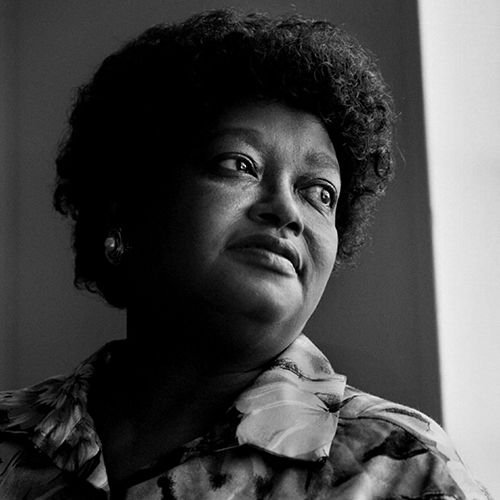
1939-2026
Who Was Claudette Colvin?
Claudette Colvin was a civil rights activist who, before Rosa Parks, refused to give up her bus seat to a white passenger. The then-15-year-old was arrested on March 2, 1955, and became one of four plaintiffs in Browder v. Gayle, a landmark federal court case that ruled Montgomery’s segregated bus system was unconstitutional. Colvin later moved to New York City and worked as a nurse’s aide before retiring in 2004. More than six decades after Colvin’s courageous act, an Alabama judge expunged her juvenile arrest record in 2021. Colvin died of natural causes on January 13, 2026.
Quick Facts
FULL NAME: Claudette Colvin (born Claudette Austin)
BORN: September 5, 1939
DEATH: January 13, 2026
BIRTHPLACE: Birmingham, Alabama
CHILDREN: Raymond Colvin and Randy Colvin
ASTROLOGICAL SIGN: Virgo
Early Life
Colvin was born on September 5, 1939, in Montgomery, Alabama. Growing up in one of Montgomery’s poorer neighborhoods, Colvin studied hard in school. She earned mostly A grades in her classes and aspired to become president one day.
On March 2, 1955, Colvin was riding home on a city bus after school when the driver told her to give up her seat to a white passenger. She refused, saying, “It’s my constitutional right to sit here as much as that lady. I paid my fare, it’s my constitutional right.” Colvin felt compelled to stand her ground. “I felt like Sojourner Truth was pushing down on one shoulder and Harriet Tubman was pushing down on the other—saying, ‘Sit down girl!’ I was glued to my seat,” she later told Newsweek.
Arrested for Violating Segregation Laws
After her refusal to give up her seat, Colvin was arrested on several charges, including violating the city’s segregation laws. For several hours, she sat in jail, completely terrified. “I was really afraid, because you just didn’t know what white people might do at that time,” Colvin later said. After her minister paid her bail, she went home where she and her family stayed up all night out of concern for possible retaliation.
The National Association for the Advancement of Colored People (NAACP) briefly considered using Colvin’s case to challenge the segregation laws, but they decided against it because of her age. She also had become pregnant and they thought an unwed mother would attract too much negative attention in a public legal battle. Her son, Raymond, was born in March 1956.
In court, Colvin opposed the segregation law by declaring herself not guilty. The court, however, ruled against her and put her on probation. Despite the light sentence, Colvin could not escape the court of public opinion. The once-quiet student was branded a troublemaker by some, and she had to drop out of college. Her reputation also made it impossible for her to find a job.
Plaintiff in Browder v. Gayle
Despite her personal challenges, Colvin became one of the four plaintiffs in the Browder v. Gayle case, along with Aurelia S. Browder, Susie McDonald and Mary Louise Smith (Jeanatta Reese, who was initially named a plaintiff in the case, withdrew early on due to outside pressure). The decision in the 1956 case, which had been filed by Fred Gray and Charles D. Langford on behalf of the aforementioned Black women, ruled that Montgomery’s segregated bus system was unconstitutional.
Two years later, Colvin moved to New York City, where she had her second son, Randy, and worked as a nurse’s aide at a Manhattan nursing home. She retired in 2004.
Removal of Arrest Record

In October 2021, Colvin filed a petition in court to expunge her juvenile court record—which still included a charge for assaulting a police officer during the bus incident. She was placed on “indefinite probation” but never informed of its conclusion, according to her legal team. Colvin had no other arrests in the following years.
“I am an old woman now. Having my records expunged will mean something to my grandchildren and great grandchildren. And it will mean something for other Black children,” Colvin said in a sworn statement.
The petition received the support of multiple civic leaders, including Montgomery Mayor Steve Reed. Weeks later in December, Montgomery Juvenile Court Judge Calvin L. Williams officially approved the request to seal, destroy, and expunge Colvin’s record—ending her legal saga after more than six decades.
Death and Legacy
Colvin died of natural causes at age 86 on January 13, 2026. “To us, she was more than a historical figure. She was the heart of our family, wise, resilient, and grounded in faith. We will remember her laughter, her sharp wit, and her unwavering belief in justice and human dignity,” the Claudette Colvin Foundation said in a statement.
Much of the writing on civil rights history in Montgomery has focused on the arrest of Parks, another woman who refused to give up her seat on the bus, nine months after Colvin. While Parks has been heralded as a civil rights heroine, Colvin’s story has received less notice. Some have tried to change that. Rita Dove penned the poem “Claudette Colvin Goes to Work,” which later became a song.
While her role in the fight to end segregation in Montgomery may not be widely recognized, Colvin helped advance civil rights efforts in the city. “Claudette gave all of us moral courage. If she had not done what she did, I am not sure that we would have been able to mount the support for Mrs. Parks,” Gray, her former attorney, told Newsweek.
Books About Claudette Colvin
Phillip Hoose wrote about Colvin in the young adult biography Claudette Colvin: Twice Toward Justice, originally published in January 2009. The book was based on extensive interviews with Colvin and others pertinent to her life and case.
In 2022, Colvin published her own minibook titled No Fear Here and I Do Not Fear. The spirituality work “provides a blueprint on how to live free of fear and how to rewrite the table of your heart.“
More recently, Colvin and Hoose collaborated again in 2024 to create the biographical children’s book Claudette Colvin: I Want Freedom Now!, featuring illustrations of her life and activism.
Quotes
- I knew then and I know now that, when it comes to justice, there is no easy way to get it. You can’t sugarcoat it. You have to take a stand and say, ‘This is not right.’
- I felt like Sojourner Truth was pushing down on one shoulder and Harriet Tubman was pushing down on the other—saying, ‘Sit down girl!’ I was glued to my seat.
- I might have considered getting up if the woman had been elderly, but she wasn’t. She looked about 40. The other three girls in my row got up and moved back, but I didn’t. I just couldn’t.
Fact Check: We strive for accuracy and fairness. If you see something that doesn’t look right, contact us!
The Biography.com staff is a team of people-obsessed and news-hungry editors with decades of collective experience. We have worked as daily newspaper reporters, major national magazine editors, and as editors-in-chief of regional media publications. Among our ranks are book authors and award-winning journalists. Our staff also works with freelance writers, researchers, and other contributors to produce the smart, compelling profiles and articles you see on our site. To meet the team, visit our About Us page: https://www.biography.com/about/a43602329/about-us
Tyler Piccotti joined the Biography.com staff as an Associate News Editor and is now the News and Culture Editor. He previously worked as a reporter and copy editor for a daily newspaper recognized by the Associated Press Sports Editors. In his current role, he shares the true stories behind your favorite movies and TV shows and profiles rising musicians, actors, and athletes. When he's not working, you can find him at the nearest amusement park or movie theater and cheering on his favorite teams.