(1270-1305)
Who Was William Wallace?
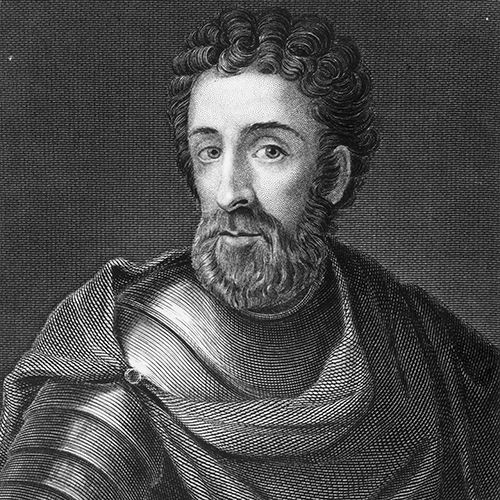
Born circa 1270, near Paisley, Renfrew, Scotland, William Wallace was the son of a Scottish landowner. He spearheaded his country’s long charge against the English toward freedom, and his martyrdom paved the way for eventual success.
The Rebellion Begins
Born around 1270 to a Scottish landowner, Wallace’s efforts to free Scotland from England’s grasp came just a year after his country initially lost its freedom, when he was 27 years old.
In 1296, England’s King Edward I forced Scottish king John de Balliol, already known as a weak king, to abdicate the throne, jailed him and declared himself ruler of Scotland. Resistance to Edward’s actions had already begun when, in May 1297, Wallace and some 30 other men burned the Scottish town of Lanark and killed its English sheriff. Wallace then organized a local army and attacked the English strongholds between the Forth and Tay rivers.
The Rebellion Ramps Up
On September 11, 1297, an English army confronted Wallace and his men at the Forth River near Stirling. Wallace’s forces were vastly outnumbered, but the English had to cross a narrow bridge over the Forth before they could reach Wallace and his growing army. With strategic positioning on their side, Wallace’s forces massacred the English as they crossed the river, and Wallace gained an unlikely and crushing victory.
He went on to capture Stirling Castle, and Scotland was, for a brief period, nearly free of occupying English forces. In October, Wallace invaded northern England and ravaged Northumberland and Cumberland counties, but his unconventionally brutal battle tactics (he reportedly flayed a dead English soldier and kept his skin as a trophy) only served to antagonize the English even more.
When Wallace returned to Scotland in December 1297, he was knighted and proclaimed guardian of the kingdom, ruling in the deposed king’s name. But three months later, Edward returned to England, and four months after that, in July, he invaded Scotland again.
On July 22, Wallace's troops suffered defeat in the Battle of Falkirk, and as quickly as that, his military reputation was ruined and he resigned his guardianship. Wallace next served as a diplomat and in 1299, attempted to garner French support for Scotland’s rebellion. He was briefly successful, but the French eventually turned against the Scots, and Scottish leaders capitulated to the English and recognized Edward as their king in 1304.
Capture and Execution
Unwilling to compromise, Wallace refused to submit to English rule, and Edward’s men pursued him until August 5, 1305, when they captured and arrested him near Glasgow. He was taken to London and condemned as a traitor to the king and was hanged, disemboweled, beheaded and quartered. He was seen by the Scots as a martyr and as a symbol of the struggle for independence, and his efforts continued after his death.
Scotland gained its independence some 23 years after Wallace’s execution, with the Treaty of Edinburgh in 1328, and Wallace has since been remembered as one of Scotland’s greatest heroes.
QUICK FACTS
- Name: William Wallace
- Birth Year: 1270
- Birth City: Paisley, Scotland
- Birth Country: United Kingdom
- Gender: Male
- Best Known For: William Wallace, a Scottish knight, became a central early figure in the wars to secure Scottish freedom from the English, becoming one of his country's greatest national heroes.
- Industries
- War and Militaries
- Nacionalities
- Scot (Scotland)
- Death Year: 1305
- Death date: August 23, 1305
- Death City: London
- Death Country: United Kingdom
Fact Check
We strive for accuracy and fairness.If you see something that doesn't look right,contact us!
CITATION INFORMATION
- Article Title: William Wallace Biography
- Author: Biography.com Editors
- Website Name: The Biography.com website
- Url: https://www.biography.com/military-figures/william-wallace
- Access Date:
- Publisher: A&E; Television Networks
- Last Updated: March 31, 2021
- Original Published Date: April 2, 2014