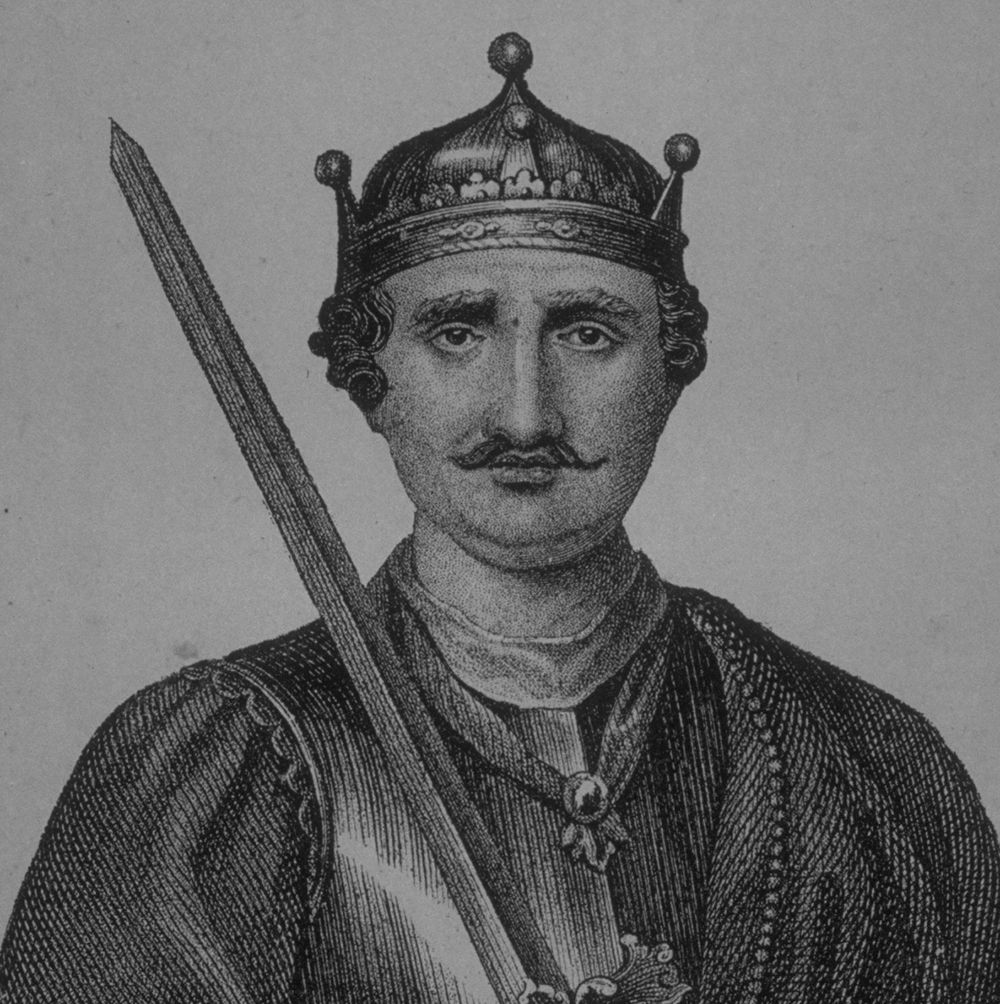
(1028-1087)
Who Was William the Conqueror?
At the age of eight, William the Conqueror became duke of Normandy and later King of England. Violence plagued his early reign, but with the help of King Henry I of France, William managed to survive the early years. After the Battle of Hastings, in 1066, he was crowned king of England. He never spoke English and was illiterate, but he had more influence on the evolution of the English language then anyone before or since. William ruled England until his death, on September 9, 1087, in Rouen, France.
Early Life
Born circa 1028 in Falaise, Normandy, France, William the Conqueror was an illegitimate child of Robert I, duke of Normandy, who died in 1035 while returning from a pilgrimage to Jerusalem.
At only eight years of age, William became the new duke of Normandy. Violence and corruption-plagued his early reign, as the feudal barons fought for control of his fragile dukedom. A few of William's guards died and his teacher was murdered during a period of severe anarchy. With the help of King Henry I of France, William managed to survive the early years.
Battle for the Throne
King Henry I of France knighted William, still in his teens, in 1042. Taking a new stand on political events, William finally gained firm control of his duchy (although his enemies commonly referred to him as "The Bastard" due to his illegitimate birth). By 1064 he had conquered and won two neighboring provinces — Brittany and Maine. In the meantime, the childless king of England — Edward the Confessor, whose mother was a sister of William's grandfather — promised William succession to the English throne.
Harold Godwin
However, when Edward died in 1066, his brother-in-law and most powerful of the English lords, Harold Godwin, claimed the throne of England for himself (despite an oath he made to William to support his claim). The Witan, a council of English lords that commonly took part in deciding succession, supported Harold. William, angered by the betrayal, decided to invade England and enforce his claim.
William assembled a fleet and an army on the French coast, but due to unrelenting north winds, their advance was delayed for several weeks. In the meantime, the Norwegian army invaded England from the North Sea. Harold, who had been preparing for William's invasion from the south, rapidly moved his army north to defend England from Norway. After defeating the Norwegians, Harold unwisely marched his troops back down to meet William, without a rest.
Battle of Hastings
On October 14, 1066, the two armies met in the famous Battle of Hastings. King Harold and his two brothers were killed in the battle, and since no one of stature remained to raise a new army, William's path to the throne was clear. He was crowned king of England on Christmas Day.
Land Grab for the Normans
There were several revolts in the next five years, which William used as an excuse to confiscate English land and declare it his personal property. He then distributed the land to his Norman followers, who imposed their unique feudal system. Eventually, Normans replaced the entire Anglo-Saxon aristocracy. William, however, retained most of England's institutions and was intensely interested in learning about his new property. He ordered a detailed census to be made of the population and property of England — which was compiled in The Domesday Book (now an invaluable source of historical information and still in the Public Record Office in London).
Death and Legacy
William died on September 9, 1087, in Rouen, France.
Although he never spoke English and was illiterate, he had more influence on the evolution of the English language than anyone before or since — adding a slew of French and Latin words to the English dictionary. The introduction of skilled Norman administrators may be largely responsible for eventually making England the most powerful government in Europe.
Children
William the Conqueror had four sons and five daughters, and every monarch of England since has been his direct descendant.
QUICK FACTS
- Name: William the Conqueror
- Birth Year: 1028
- Birth City: Falaise, Normandy
- Birth Country: France
- Gender: Male
- Best Known For: The policies of William the Conqueror, king of England from 1066 until his death in 1087, may be largely responsible for eventually making Britain the most powerful nation in Europe.
- Industries
- World Politics
- War and Militaries
- Nacionalities
- French
- Death Year: 1087
- Death date: September 9, 1087
- Death City: Rouen
- Death Country: France
Fact Check
We strive for accuracy and fairness.If you see something that doesn't look right,contact us!
CITATION INFORMATION
- Article Title: William the Conqueror Biography
- Author: Biography.com Editors
- Website Name: The Biography.com website
- Url: https://www.biography.com/royalty/william-the-conqueror
- Access Date:
- Publisher: A&E; Television Networks
- Last Updated: May 21, 2021
- Original Published Date: April 2, 2014