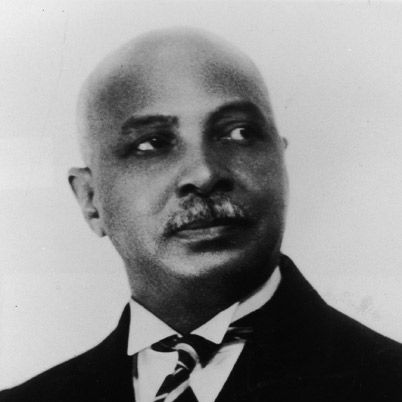
(1873-1958)
Who Was W.C. Handy?
W.C. Handy played with several bands and traveled throughout the Midwest and the South, learning about the African American folk music that would become known as the blues. Handy later composed his own songs — including "St. Louis Blues," "Memphis Blues" and "Aunt Hagar's Blues" — which would help popularize the form and come to be major commercial hits.
Early Life
Composer, musician and music publisher William Christopher Handy was born on November 16, 1873, in Florence, Alabama, to Elizabeth Brewer and Charles Barnard Handy. The son and grandson of Methodist ministers, the young Handy showed his love of music at an early age, and was supported in his pursuits by his maternal grandmother. His father had other ideas, however, and was staunchly opposed to secular musicianship for his son, only agreeing to pay for organ lessons. Nonetheless, Handy held fast to his love and took up the cornet, also enjoying a cappella vocal lessons at school.
Some reports say that Handy joined a minstrel show — a theatrical production of the time that featured African American music, generally in caricatured form — at the age of 15. The troupe disbanded after several appearances. Handy later studied at the Teachers Agricultural and Mechanical College in Huntsville, Alabama, receiving his degree in 1892. He then found work as a schoolteacher, but in his time off he continued to pursue his music career.
Hardships and First Blues Song
Handy's contributions in shaping what would be called the blues were influenced by the African American musical folk traditions that he experienced during his travels and performances. In 1892, he formed a band called Lauzette Quartet, with the intention of performing at the Chicago World's Fair later that year, but when the fair was postponed until 1893, the band was forced to split. Handy ended up in St. Louis, where he experienced difficult days of poverty, hunger and homelessness.
Yet Handy held fast, continued to play the cornet at shows and eventually made his way to Kentucky, where he was hired as a musician in the well-to-do in the city of Henderson. At one performance there in 1898, Handy met Elizabeth Virginia Price, whom he married in July of that year. They would have two children together and remain married until her death in 1937.
But Handy's first big musical break came in 1896, when he was asked to join W. A. Mahara's Minstrels as its bandleader. He stayed with the group for several years, traveling the country and as far away as Cuba to perform. Weary of life on the road, in 1900, Handy and Elizabeth settled down in Huntsville, Alabama, where Handy worked as a music teacher, but in 1902 he hit the road again.
'Memphis Blues'
After a sojourn in Clarksdale, Mississippi, where Handy headed up the band the Black Knights of Pyhtias and immersed himself in the local variation of the blues, by the end of the first decade of the 20th century, Handy had settled in Memphis, Tennessee, where he performed frequently at the Beale Street clubs. In 1909 Handy wrote what was to become a campaign song called "Mr. Crump," named after Memphis mayoral candidate Edward H. "Boss" Crump. (Crump won the election, although the lyrics of the song weren't the most flattering). The song was later reworked and became "Memphis Blues." Handy made a deal to get the song published in 1912, and henceforth became a trailblazer in bringing the form's song structures to large audiences.
Often considered the first blues song every published, "Memphis Blues" was a commercial hit. Handy, however, never got to reap the financial rewards of its success, having sold the rights to the song and fallen prey to exploitative business practices. Having learned his lesson the hard way, he decided to set up a structure to retain ownership of his songs and created his own publishing venture with a songwriter named Harry Pace.
"St. Louis Blues"
Handy released his next hit, "St. Louis Blues" — outlining the hardships he'd experienced years before in the titular city — in 1914, under the Pace & Handy Music Company, (which later became known as the Handy Brothers Music Company, after Pace left the venture). "St. Louis Blues" became a massive success and would be recorded many times over the next several years. Other Handy hits include "Yellow Dog Blues" (1914) and "Beale Street Blues" (1916). He would eventually be credited with composing dozens of songs.
Later Life and Legacy
In 1918, Handy moved his business to New York to escape Southern racial hostility, and later scored success with the composition "Aunt Hagar's Blues." He continued to promote blues to large audiences during the 1920s, editing the book Blues: An Anthology (1926) — which contained blues arrangements for vocals and piano — and organizing the first blues performance in New York City's Carnegie Hall in 1928.
Handy continued working steadily throughout the 1930s, publishing Negro Authors and Composers of the United States in 1935 and W.C. Handy's Collection of Negro Spirituals in 1938. A few years later, in 1941, he published an autobiography, Father of the Blues. Having experienced problems with his eyesight for years, Handy was blind by the mid-1940s due to a skull fracture — the result of a fall from a train platform.
Handy married his longtime assistant, Irma Louise Logan, in 1954, and lived to experience his works performed by popular jazz greats. The blues composer died of pneumonia in New York City on March 28, 1958, at the age of 84. More than 20,000 people attended his funeral at a church in Harlem, and thousands more lined the streets to pay their respects. Only months after his death, his life story played on the silver screen in theaters across the country in the film St. Louis Blues, which starred singer Nat King Cole as the legendary composer.
Handy's legacy continues to shine in the annals of music, with his songs continually reinterpreted in idioms of blues, jazz, pop and classical music. Often referred to as the "Father of the Blues," Handy's pioneering vision also lives on through Alabama's annual W.C. Handy Music Festival.
QUICK FACTS
- Name: W.C. Handy
- Birth Year: 1873
- Birth date: November 16, 1873
- Birth State: Alabama
- Birth City: Florence
- Birth Country: United States
- Gender: Male
- Best Known For: W.C. Handy was an African American composer and a leader in popularizing blues music in the early 20th century, with hits like "Memphis Blues" and "St. Louis Blues."
- Astrological Sign: Scorpio
- Schools
- Teachers Agricultural and Mechanical College
- Death Year: 1958
- Death date: March 28, 1958
- Death State: New York
- Death City: New York
- Death Country: United States
Fact Check
We strive for accuracy and fairness.If you see something that doesn't look right,contact us!
CITATION INFORMATION
- Article Title: W.C. Handy Biography
- Author: Biography.com Editors
- Website Name: The Biography.com website
- Url: https://www.biography.com/musicians/wc-handy
- Access Date:
- Publisher: A&E; Television Networks
- Last Updated: July 28, 2020
- Original Published Date: April 2, 2014
QUOTES
- I've always felt that the blues deal with an epoch in our history, and coming from the same people that gave us the spiritual, they reflected a nominal freedom. All the blues that I've written are either historic or folklore or folksong.
- Whenever I heard the song of a bird and the answering call of its mate, I could visualize the notes in scale . . . all built up within my consciousness as a natural symphony.
- Life is something like this trumpet. If you don't put anything in it, you don't get anything out. And that's the truth.