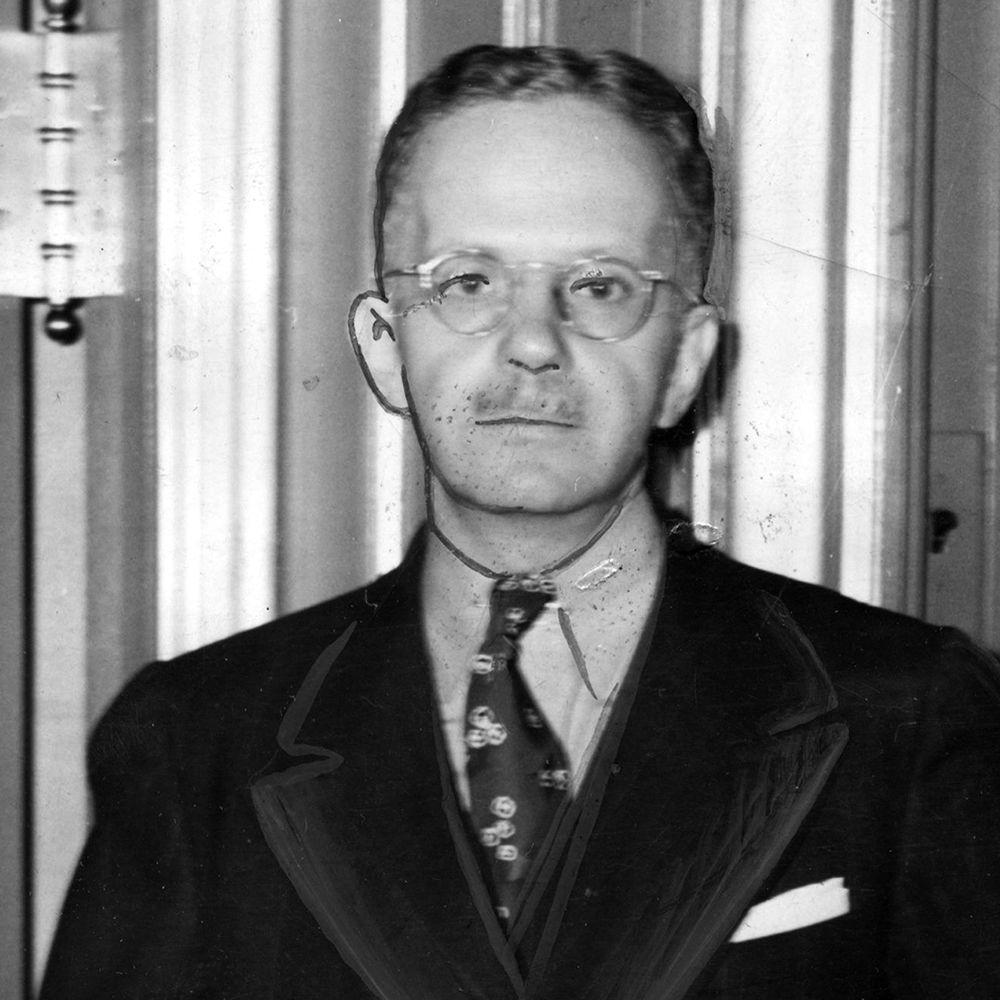
(1893-1955)
Who Was Walter White?
Though Walter White had blonde hair and blue eyes, he embraced his African American heritage and fought to end the discrimination that surrounded African Americans. As a member of the NAACP, White investigated lynchings and worked to end segregation; he later became the organization's executive secretary.
Early Life
Walter Francis White was born in Atlanta, Georgia, on July 1, 1893. (Before he became president of the United States, William Henry Harrison fathered several children with one of his slaves. One of these children was Walter White's grandmother, making Harrison Walter White's great-grandfather.) In 1906, he was a witness to race riots in Atlanta, and saw his home come close to being destroyed. He only escaped the violence of the day because he was light-complexioned, with blonde hair and blue eyes.
Given the discrimination and prejudice that African Americans faced every day of their lives, many with appearances like Walter White's elected to leave their homes and families in order to live as whites. But White--whose parents who had been born as slaves--chose to embrace his African-American heritage.
NAACP Investigator
A 1916 graduate of Atlanta University, White worked in insurance before protesting cuts in funding for African American students in Atlanta. After starting a local chapter of the National Association for the Advancement of Colored People, he became a member of the organization's national team in 1918, when executive secretary James Weldon Johnson selected White to be an assistant secretary.
White began investigating lynchings in the South, a terrifyingly regular occurrence. His appearance, paired with his Southern accent, meant he was able to obtain responses when he questioned politicians and suspected lynchers. The information he uncovered was then broadcast by the NAACP.
White looked into more than 40 lynchings and eight race riots, and each investigation was a dangerous endeavor. On one occasion in 1919, the fact that White was in fact an African American was discovered. Tipped off to the danger, he quickly fled town to avoid being attacked himself.
Entry Into Writing
In addition to his work with the NAACP, White wrote novels: The Fire in the Flint (1924), about a doctor who returns to the South only to end up being lynched, and Flight (1926), whose protagonist initially passes for white, then re-embraces her racial identity. His 1929 non-fiction work, Rope and Faggot: A Biography of Judge Lynch, examined the causes and effects of lynching. White also helped encourage Harlem Renaissance writers.
NAACP Leader
Following Johnson's retirement, White became the NAACP's acting executive secretary; he officially took over the position in 1931. He successfully prevented the confirmation of Judge John J. Parker, an avowed segregationist, to the Supreme Court. Unfortunately, his attempt to institute a federal anti-lynching law, which had the support of his good friend Eleanor Roosevelt, was quashed by filibustering Southern Senators. However, White's investigations into the practice helped reduce the number of lynchings.
Under White's direction, the NAACP also used legal channels to fight segregation, poll taxes and other discriminatory measures. He was able to see the validation of this strategy with the 1954 ruling in Brown v. Board of Education.
Along with A. Philip Randolph, White encouraged President Franklin Delano Roosevelt to issue 1941's Fair Employment Practices executive order, which forbade racial discrimination in defense industry hiring. After looking into the treatment of African American soldiers during World War II, White wrote A Rising Wind (1945). President Harry Truman's commission for civil rights and his move to desegregate the armed forces were prompted by his contact with White and White's book.
Later Years and Death
In 1948, White's autobiography, A Man Called White, was released. It talked about the role he had played in the NAACP, but his power in the organization had waned with age, health issues and internal strife following his second marriage to a white woman. However, White remained the titular head of the NAACP until he had a heart attack at age 61 and died in New York City on March 21, 1955.
QUICK FACTS
- Name: Walter Francis White
- Birth Year: 1893
- Birth date: July 1, 1893
- Birth State: Georgia
- Birth City: Atlanta
- Birth Country: United States
- Gender: Male
- Best Known For: As a member of the NAACP, Walter White investigated lynchings and worked to end segregation. He was the organization's executive secretary from 1931 to 1955.
- Industries
- Civil Rights
- Fiction and Poetry
- Journalism and Nonfiction
- Astrological Sign: Cancer
- Schools
- Atlanta University
- Interesting Facts
- Walter White is the great-grandson of William Henry Harrison, the ninth president of the United States.
- Death Year: 1955
- Death date: March 21, 1955
- Death State: New York
- Death City: New York
- Death Country: United States
Fact Check
We strive for accuracy and fairness.If you see something that doesn't look right,contact us!
CITATION INFORMATION
- Article Title: Walter White Biography
- Author: Biography.com Editors
- Website Name: The Biography.com website
- Url: https://www.biography.com/activists/walter-white
- Access Date:
- Publisher: A&E; Television Networks
- Last Updated: May 14, 2021
- Original Published Date: April 2, 2014
QUOTES
- I am not white. There is nothing within my mind and heart which tempts me to think I am.