(1939-1984)
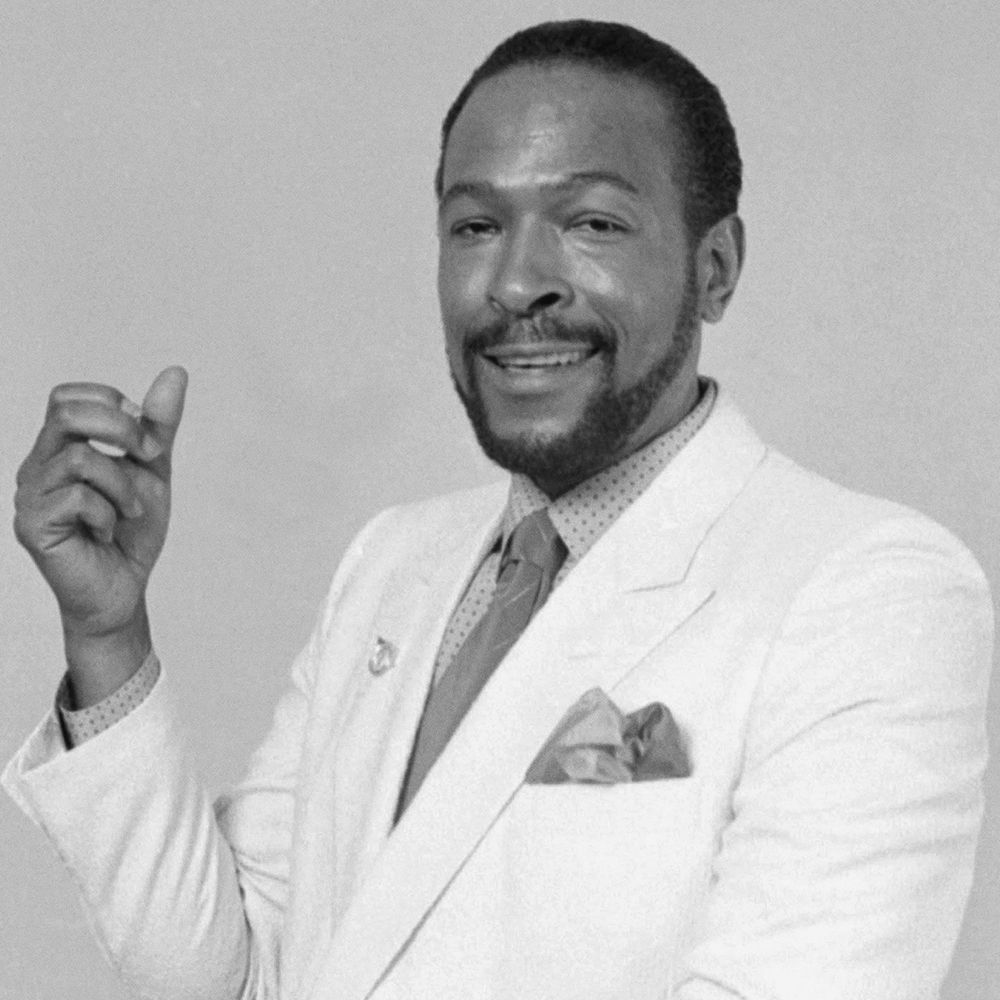
Who Was Marvin Gaye?
Marvin Gaye sang in his father's church and in the Moonglows before signing with Motown. He recorded songs by Smokey Robinson before becoming his own producer on the protest album What's Going On (1971). Gaye's later records developed his production style and yielded several hits, including "Let's Get It On," "Sexual Healing" and "I Heard it Through the Grapevine." Gaye was killed in 1984 during a domestic dispute with his father.
Early Life
Singer Marvin Pentz Gaye, Jr., also known as the "Prince of Soul," was born in Washington, D.C., on April 2, 1939. Gaye was raised under the strict control of his father, Reverend Marvin Gay Sr.—Marvin Gaye Jr. added the "e" on the end of his name later in life—the minister at a local church, against a bleak backdrop of widespread violence in his neighborhood.
Throughout his childhood, Gaye often found peace in music, mastering the piano and drums at a young age. Until high school, his singing experience was limited to church revivals, but soon he developed a love for R&B and doo-wop that would set the foundation for his career. In the late 1950s, Gaye joined a vocal group called The New Moonglows.
The talented singer had a phenomenal range that spanned three vocal styles and he soon impressed the group's founder, Harvey Fuqua. It wasn't long before Gaye and Fuqua both came to the attention of Detroit music impresario Berry Gordy Jr. and were signed to Gordy's legendary Motown Records.
Motown Records
Gaye's first certified hit under his own name wouldn't come until 1962, but his early years at Motown were full of behind-the-scenes successes. He was a session drummer for Motown legends such as Little Stevie Wonder, The Supremes, The Marvelettes and Martha and the Vandellas. Showing his stripes as Motown's renaissance man, Gaye went on to break into the Top 40 for the first time on his own in 1962 with his solo single "Hitch Hike."
Throughout the 1960s, Gaye would show his immense range, churning out solo dance hits and romantic duets with hit-makers like Diana Ross and Mary Wells. "Can I Get a Witness" and "I Heard it Through the Grapevine" were some of Gaye's biggest hits of the period, the latter achieving its place as Motown's best-selling single of the 1960s.
For three high-flying years, Gaye and Tammi Terrell wowed the country with their soaring duet performances of songs like "Ain't No Mountain High Enough" and "If I Could Build My Whole World Around You." Unfortunately, their reign as the Royal Couple of R&B ended when Terrell succumbed to a brain tumor in 1970. His beloved partner's death ushered in a dark period for the singer, who swore never to partner with another female vocalist and threatened to abandon the stage for good.
Political Message
In 1970, inspired by escalating violence and political unrest over the Vietnam War, Gaye wrote the landmark song "What's Going On." Despite clashes with Motown over the song's creative direction, the single was released in 1971 and became an instant smash. Its success prompted Gaye to take even more risks, both musically and politically. When it was released in the spring of 1971, the What's Going On album served to open Gaye up to new audiences while maintaining his Motown following.
Departing from the tried and true Motown formula, Gaye went out on his own artistically, paving the way for other Motown artists like Wonder and Michael Jackson to branch out in later years. Beyond influencing his peers, the album garnered widespread critical acclaim, winning the Rolling Stone Album of the Year award.
Crossover Success
In 1972, Gaye moved to Los Angeles and soon met Janis Hunter, who would later become his second wife. Inspired in part by his newfound independence, Gaye recorded one of the most revered love anthems of all time, "Let's Get It On." The song became his second no. 1 Billboard hit, cementing his crossover appeal once and for all. Shortly afterwards, Motown pushed Gaye into touring to capitalize on his most recent success; reluctantly the singer-songwriter returned to the stage.
Through most of the mid-1970s, Gaye was touring, collaborating or producing. Working with Diana Ross and The Miracles, he put off releasing another solo album until 1976. He continued touring after the release of I Want You (1976) and, after scoring a No. 1 hit in 1977 with the dance single "Got to Give It Up," released his last album for Motown Records (Here, My Dear) in 1978.
(Decades later, "Got to Give It Up" would become the center of a big controversy. In 2013, Gaye's estate asserted that producer/songwriter Pharrell Williams and singer/songwriter Robin Thicke had committed copyright infringement by taking major musical elements from the disco track for the mega-hit "Blurred Lines." After a case in which Thicke testified that he'd had little to do with the writing of the song, the jury ruled in favor of Gaye's family, who were awarded $7.3 million in damages and profit shares. The jury also ruled that neither Williams or Thicke had purposely committed infringement.)
After two decades at Motown, Gaye signed with CBS's Columbia Records in 1982 and began to work on his last album, Midnight Love. The lead single from that album, "Sexual Healing," became a huge comeback hit for the R&B star and earned him his first two Grammy Awards and an American Music Award for Favorite Soul Single.
Personal Life
In 1975, Gaye's wife Anna Gordy—Berry Gordy's sister—filed for divorce, and two years later Gaye married Hunter, who had by then given birth to their daughter, Nona (born September 4, 1974) and their son Frankie (born November 16, 1975). Gaye also had an adopted son (Marvin Pentz Gaye III) from his previous marriage. The singer's marriage to Hunter proved short lived and tumultuous, ending in divorce in 1981.
Death and Legacy
Despite his successful comeback in the early 1980s, Gaye struggled badly with the substance abuse and bouts of depression that had plagued him for most of his life. After his last tour, he moved into his parents' house. There he and his father fell into a pattern of violent fights and quarrels that recalled conflicts that had haunted the family for decades. On April 1, 1984, Marvin Gaye Sr. shot and killed his son after a physical altercation; the father claimed he acted in self-defense but would later be convicted of involuntary manslaughter.
Three years after his death, Gaye was inducted into the Rock and Roll Hall of Fame. Creating beautiful art from a troubled life, Gaye again and again brought his vision, range and artistry to the world stage. At the end of his career, he admitted he no longer made music for pleasure; instead, he said, "I record so that I can feed people what they need, what they feel. Hopefully, I record so that I can help someone overcome a bad time."
QUICK FACTS
- Name: Marvin Gaye
- Birth Year: 1939
- Birth date: April 2, 1939
- Birth City: Washington, D. C.
- Birth Country: United States
- Gender: Male
- Best Known For: Marvin Gaye was a soul singer-songwriter with Motown in the 1960s and 1970s. He produced his own records and often addressed controversial themes.
- Industries
- Pop
- Astrological Sign: Aries
- Interesting Facts
- Before making it as a solo artist, Marvin Gaye played drums for artists such as Stevie Wonder and The Supremes.
- Death Year: 1984
- Death date: April 1, 1984
- Death State: California
- Death City: Los Angeles
- Death Country: United States
Fact Check
We strive for accuracy and fairness.If you see something that doesn't look right,contact us!
CITATION INFORMATION
- Article Title: Marvin Gaye Biography
- Author: Biography.com Editors
- Website Name: The Biography.com website
- Url: https://www.biography.com/musicians/marvin-gaye
- Access Date:
- Publisher: A&E; Television Networks
- Last Updated: April 19, 2021
- Original Published Date: April 2, 2014
QUOTES
- War is not the answer, because only love can conquer hate.
- If you cannot find peace within yourself, you will never find it anywhere else.
- I record so that I can feed people what they need, what they feel. Hopefully, I record so that I can help someone overcome a bad time.
- Marvin Gaye is one of the greatest male voices of all time. So covering a Marvin Gaye song, especially one as quintessential as 'What's Going On,' I was a little hesitant in doing so. But I felt that it was one of those songs which spoke to a whole generation.