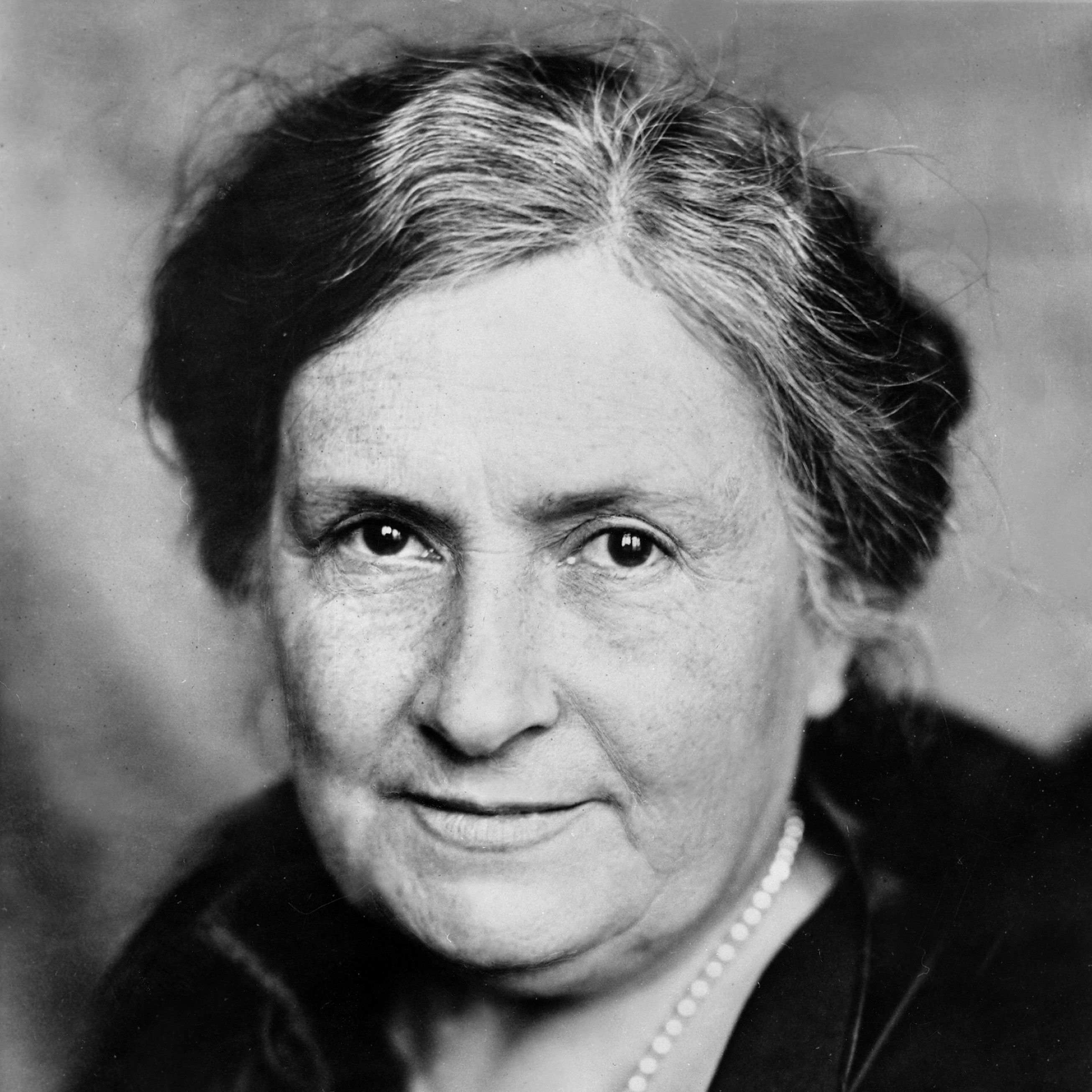
(1870-1952)
Who Was Maria Montessori?
Maria Montessori was placed in charge of the Casa dei Bambini school. By 1925, more than 1,000 Montessori schools had opened in the United States. By 1940 the Montessori movement had faded, but it was revived in the 1960s. During World War II, Montessori developed Education for Peace in India and earned two Nobel Peace Prize nominations.
Early Life
Montessori was born on August 31, 1870, in the provincial town of Chiaravalle, Italy, to middle-class, well-educated parents. At the time that Montessori was growing up, Italy held conservative values about women's roles. From a young age, she consistently broke out of those proscribed gender limitations. After the family moved to Rome, when she was 14, Montessori attended classes at a boys' technical institute, where she further developed her aptitude for math and her interest in the sciences, particularly biology.
Facing her father's resistance but armed with her mother's support, Montessori went on to graduate with high honors from the medical school of the University of Rome in 1896. In so doing, Montessori became the first female doctor in Italy.
Early Childhood Education Research
As a doctor, Montessori chose pediatrics and psychiatry as her specialties. While teaching at her medical-school alma mater, Montessori treated many poor and working-class children who attended the free clinics there. During that time, she observed that intrinsic intelligence was present in children of all socio-economic backgrounds.
Montessori became the director of the Orthophrenic School for developmentally disabled children in 1900. There she began to extensively research early childhood development and education. Her reading included the studies of 18th and 19th-century French physicians Jean-Marc-Gaspard Itard and Édouard Séguin, who had experimented with the capabilities of disabled children. Montessori began to conceptualize her own method of applying their educational theories, which she tested through hands-on scientific observation of students at the Orthophrenic School. Montessori found the resulting improvement in students' development remarkable. She spread her research findings in speeches throughout Europe, also using her platform to advocate for women's and children's rights.
Educational Legacy
Montessori's success with developmentally disabled children spurred her desire to test her teaching methods on "normal" children. In 1907 the Italian government afforded her that opportunity. Montessori was placed in charge of 60 students from the slums, ranging in age from 1 to 6. The school, called Casa dei Bambini (or Children's House), enabled Montessori to create the "prepared learning" environment she believed was conducive to sense learning and creative exploration. Teachers were encouraged to stand back and "follow the child"—that is, to let children's natural interests take the lead. Over time, Montessori tweaked her methods through trial and error. Her writings further served to spread her ideology throughout Europe and the United States.
By 1925 more than 1,000 of her schools had opened in America. Gradually Montessori schools fell out of favor; by 1940 the movement had faded and only a few schools remained. Once World War II began, Montessori was forced to flee to India, where she developed a program called Education for Peace. Her work with the program earned her two Nobel Peace Prize nominations.
Death and Legacy
Montessori died on May 6, 1952, in Noordwijk aan Zee, Netherlands. The 1960s witnessed a resurgence in Montessori schools, led by Dr. Nancy McCormick Rambusch. Today, Montessori's teaching methods continue to "follow the child" all over the globe.
QUICK FACTS
- Name: Maria Montessori
- Birth Year: 1870
- Birth date: August 31, 1870
- Birth City: Chiaravalle
- Birth Country: Italy
- Gender: Female
- Best Known For: Italian physician Maria Montessori was a pioneer of theories in early childhood education, which are still implemented in Montessori schools all over the globe.
- Industries
- Education and Academia
- Writing and Publishing
- Astrological Sign: Virgo
- Schools
- University of Rome
- Nacionalities
- Italian
- Death Year: 1952
- Death date: May 6, 1952
- Death City: Noordwijk aan Zee
- Death Country: Netherlands
Fact Check
We strive for accuracy and fairness.If you see something that doesn't look right,contact us!
CITATION INFORMATION
- Article Title: Maria Montessori Biography
- Author: Biography.com Editors
- Website Name: The Biography.com website
- Url: https://www.biography.com/scholars-educators/maria-montessori
- Access Date:
- Publisher: A&E; Television Networks
- Last Updated: October 28, 2021
- Original Published Date: April 2, 2014
QUOTES
- Supposing I said there was a planet without schools or teachers, study was unknown, and yet the inhabitants—doing nothing but living and walking about—came to know all things, to carry in their minds the whole of learning: would you not think I was romancing? Well, just this, which seems so fanciful as to be nothing but the invention of a fertile imagination, is a reality. It is the child's way of learning. This is the path he follows. He learns everything without knowing he is learning it, and in doing so passes little by little from the unconscious to the conscious, treading always in the paths of joy and love.
- Scientific observation has established that education is not what the teacher gives; education is a natural process spontaneously carried out by the human individual, and is acquired not by listening to words but by experiences upon the environment. The task of the teacher becomes that of preparing a series of motives of cultural activity, spread over a specially prepared environment, and then refraining from obtrusive interference. Human teachers can only help the great work that is being done, as servants help the master. Doing so, they will be witnesses to the unfolding of the human soul and to the rising of a New Man who will not be a victim of events, but will have the clarity of vision to direct and shape the future of human society.