(1853-1895)
Synopsis
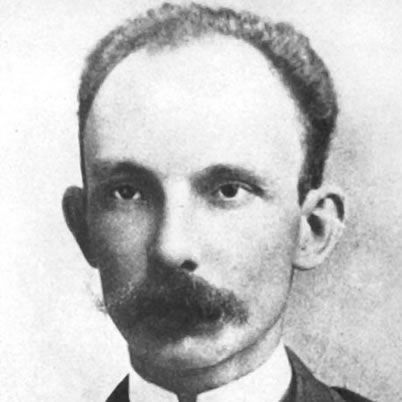
Sometimes called the Apostle of the Cuban Revolution, José Martí was born in Havana in 1853. He showed a talent for writing and revolutionary politics at an early age. The famous patriotic song "Guantanamera" is adapted from his poetry collection Versos Sencillos and gained greater popularity in 1963 when it was recorded by folk singer Pete Seeger. First exiled from Cuba in 1871, Martí spent much of his life abroad. In 1895, he returned to Cuba to fight for its independence and died on the battlefield.
A Budding Revolutionary
José Martí was born to poor Spanish immigrant parents in Havana, Cuba, on January 28, 1853. Demonstrating natural artistic abilities from an early age, he originally pursued studies in painting before turning his energies to writing. By the time he was 16, his poetry and other work were appearing in print.
At the same time he was developing his literary talents, Martí was forming his political consciousness as well. He was passionate about the growing revolutionary efforts to liberate Cuba from Spain, known as the Ten Years' War, and soon devoted his skills as a writer to advance the cause. To that end, in 1869 Martí created the newspaper La Patria Libre, in which he published several significant poems, including the dramatic "Abdala," in which he described the liberation of an imaginary country.
In Exile
That same year, Martí's criticism of Spanish rule led to his arrest. He was initially sentenced to six years hard labor, but in 1871 he was released and deported to Spain. There Martí published the pamphlet Political Imprisonment in Cuba, describing the harsh treatment he had received in jail. While publishing his political writings, he also furthered his education, studying law at the Central University of Madrid and later at the University of Zaragoza, where he completed his degree in 1874.
By 1875, Martí had moved to Mexico, where he continued to campaign for Cuban independence. He contributed to several newspapers there and became involved in Mexico City's artistic community. But he soon became disenchanted with the country's government and moved to Guatemala in 1877. Martí became a professor at the Universidad Nacional, where he taught literature, history and philosophy. He also married Carmen Zayas Bazán.
Our America
When the Ten Years' War ended with a general amnesty in 1878, Martí and Carmen returned to Cuba, where they had a son, José, that November. Martí initially attempted to practice law, but the government would not allow it, and he was forced to find work as a teacher instead. However, the following year, after farmers, enslaved people and others clashed with Spanish troops in Santiago de Cuba, Martí was arrested and charged with conspiracy, once more forcing the revolutionary writer to leave his homeland.
After wanderings that included stays in France and Venezuela, by 1881, Martí had settled in New York City, where he wrote in both English and Spanish for several newspapers, including a regular column for Buenos Aires' La Nación. Tackling a variety of subjects, Martí was as skilled at social and political commentary as he was at literary criticism. He wrote well-received essays about such poets as Walt Whitman, and he shared his impressions of the United States as a correspondent. In one of his most famous essays, "Our America" (1881), he called for Latin American countries to unite. He also suggested that these countries learn from the United States, but establish governments based on their own cultures and needs. He also continued to write and publish poetry during this time, including the collections Ismaelillo (1882) and Versos Sencillos (1891).
In addition to writing, Martí worked as a diplomat for several Latin American nations, serving as a consul for Uruguay, Paraguay and Argentina. However, he never forgot about Cuba during his time abroad. Traveling around the United States, Martí developed ties with other Cubans living in exile.
The Patriot
In 1892, Martí became a delegate of the Cuban Revolutionary Party and began to develop plans to invade his homeland. Among his ideas for a new Cuban government, Martí sought to prevent any one class or group from taking total control of the country. He also wanted to overthrow the existing leadership quickly, to prevent the United States from intervening in the matter. While he admired much about the United States, Martí had concerns that Cuba's northern neighbor would try to take over the island.
Martí soon joined forces with two nationalist generals from the Ten Years' War, Máximo Gómez and Antonio Maceo, and raised funds from Cuban exiles and political organizations to support their efforts. On January 31, 1895, Martí left New York City to make his way to Cuba, where he and his supporters arrived in on April 11 to began their fight. Martí was shot and killed by Spanish troops in Dos Ríos on May 19.
Through his life and writings, Martí served as an inspiration for revolutionaries around the world. Cuban leader Fidel Castro has named him as an important influence on his own revolution in Cuba decades later. Martí is now considered a national hero in Cuba and is honored by a memorial statue in the Plaza de la Revolución in Havana as well as the international airport there that bears his name. The popular patriotic folk song "Guantanamera" features lyrics adapted from his Versos Sencillos and was later made famous when it was recorded by American singer Pete Seeger and again by easy listening vocal group the Sandpipers.
QUICK FACTS
- Name: Jose Martí
- Birth Year: 1853
- Birth date: January 28, 1853
- Birth City: Havana
- Birth Country: Cuba
- Gender: Male
- Best Known For: Poet and journalist José Martí spent his short life fighting for Cuban independence.
- Industries
- War and Militaries
- Writing and Publishing
- Astrological Sign: Aquarius
- Schools
- University of Zaragoza
- Central University of Madrid
- Nacionalities
- Cuban
- Occupations
- Journalist
- Poet
- Death Year: 1895
- Death date: May 19, 1895
- Death City: Dos Rios
- Death Country: Cuba
Fact Check
We strive for accuracy and fairness.If you see something that doesn't look right,contact us!
CITATION INFORMATION
- Article Title: José Martí Biography
- Author: Biography.com Editors
- Website Name: The Biography.com website
- Url: https://www.biography.com/authors-writers/jose-marti
- Access Date:
- Publisher: A&E; Television Networks
- Last Updated: September 24, 2020
- Original Published Date: April 2, 2014
QUOTES
- The Republic . . . should not be the unjust predomination of one class of citizens over the rest, but the open and sincere equilibrium of all the real forces of the country.