(1806-1873)
Who Was John Stuart Mill?
Under the tutelage of his imposing father, himself a historian and economist, John Stuart Mill began his intellectual journey at an early age, starting his study of Greek at the age of three and Latin at eight. Mill’s father was a proponent of Jeremy Bentham’s philosophy of utilitarianism, and Mill began embracing it himself in his middle teens.
Later, he started to believe that his rigorous analytical training had weakened his capacity for emotion, that his intellect had been nurtured but his feelings had not. This perhaps led to his expansion of Bentham’s utilitarian thought, his development of the “harm theory,” and his writings in the defense of the rights of women, all of which cemented his reputation as a major thinker of his day.
Early Life
Born in 1806, John Stuart Mill was the eldest son of James Mill and Harriet Barrow (whose influence on Mill was vastly overshadowed by that of his father). A struggling man of letters, James Mill wrote History of British India (1818), and the work landed him a coveted position in the East India Company, where he rose to the post of chief examiner. When not carrying out his administrative duties, James Mill spent considerable time educating his son John, who began to learn Greek at age three and Latin at age eight. By the age of 14, John was extremely well versed in the Greek and Latin classics; had studied world history, logic and mathematics; and had mastered the basics of economic theory, all of which was part of his father’s plan to make John Stuart Mill a young proponent of the views of the philosophical radicals.
By his late teens, Mill spent many hours editing Jeremy Bentham’s manuscripts, and he threw himself into the work of the philosophic radicals (still guided by his father). He also founded a number of intellectual societies and began to contribute to periodicals, including the Westminster Review (which was founded by Bentham and James Mill). In 1823, his father secured him a junior position in the East India Company, and he, like his father before him, rose in the ranks, eventually taking his father's position of chief examiner.
Crisis and Evolution of the Thinker
In 1826, Mill experienced what he would later call in his autobiography a “mental crisis,” during which he suffered a nervous breakdown marked by depression. It was likely triggered by the intense stress of his education, the continual influence of his domineering father, and other factors, but what emerged from this period is in the end more important than what caused it: Because of the depression, Mill started to rethink his entire life’s work thus far and to reformulate theories he had previously wholly embraced.
Mill’s new path began with a struggle to revise his father’s and Bentham’s work, which he suddenly saw as limited in a number of ways. This new drive was perhaps triggered by the poetry he had begun reading, most notably that of William Wordsworth. Mill found something of a mental balm in the verses of Wordsworth. Over the course of several months, his depression disappeared, and with it many of his former firmly held ideals.
Mill came to believe that he had been emotionally stunted by his father's demanding analytical training, that his ability to feel had been compromised by the constant cultivation of his intellect, and that this emotional component was lacking from what the radical philosophers had been espousing. He therefore sought a philosophy that could overcome the limits imposed by culture and history (e.g., natural rights) on any possible reform movement and would advance the roles of feeling and imagination.
Mill began to dismantle much of the negative (and therefore limited) polemic of Bentham and his father. He understood that fighting the negativity against which he was rebelling with more negativity was futile, so he allowed himself to see the good and to view the defenders of the old ways not as reactionaries but as those who have always advanced the good aspects of their generally flawed ways of thinking.
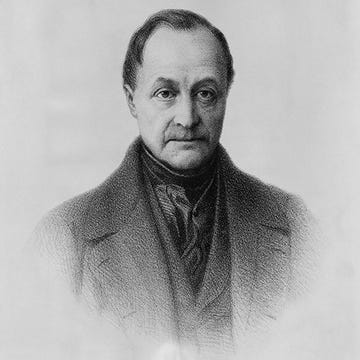
Mill must have considered his own role in advancing his formerly held beliefs, as he did not abandon Bentham’s utilitarianism entirely, but now centered his thoughts on its “positive” elements instead of attacking it critically and destructively; he focused on how its best parts could be used constructively in the creation of a new society. He advanced in his endeavor by immersing himself in the writings of a wide variety of thinkers (and corresponding with many as well), including John Ruskin, Auguste Comte and Alexis de Tocqueville, and editing a new journal that he co-founded with his father and Charles Molesworth, the London Review.
Books: 'On Liberty' and 'Utilitarianism'
In 1832, Bentham died, followed closely by James Mill in 1836. With the deaths of his two mentors, Mill discovered that he had even more intellectual freedom. He used that freedom to create a new philosophic radicalism incorporating the ideas of thinkers such as Coleridge and Thomas Carlyle. He also acknowledged that while he was breaking away from Bentham, there were aspects of his mentor’s philosophy that he intended to preserve.
The major works started to appear in 1843 with A System of Logic, Mill’s most comprehensive and systematic philosophical work, which presented Mills’ thoughts on inductive logic and the shortcomings of the use of syllogisms (arguments derived from general principles, in which two premises are used to deduce a conclusion) to advance deductive logic.
The year 1859 marked the publication of On Liberty, Mills’ landmark work on supporting individuals' moral and economic freedom from the government and society at large. In his autobiography, Mill wrote of "the importance, to man and society . . . , of giving full freedom to human nature to expand itself in innumerable and conflicting directions,” an idea fully fleshed out in On Liberty. In the work, Mill asserts that individuals’ opinions and behavior should enjoy free rein, whether in the face of the law or social pressure. Perhaps as a segue into Mill’s Utilitarianism, which would follow four years later, Mill makes one concession: If a person's behavior harms other people, that behavior should be constrained. The essay has been criticized for various vagaries in its arguments, but it provides an impassioned defense of nonconformity, diversity and individuality.
In 1861, Utilitarianism first began appearing in serialized form in Fraser’s Magazine. The work comes from Mill’s association with, and partial break from, the moral philosophy of Jeremy Bentham and would go on to be Mill’s most famous work. It bolsters support for Bentham's philosophy and refutes certain misconceptions about it. In sum, utilitarianism as a moral philosophy rests on a single sentence: “Actions are right in proportion as they tend to promote happiness, wrong as they tend to produce the reverse of happiness.” In his book, Mill argues that utilitarianism stems from "natural" sentiments that exist organically within human beings' social nature. Therefore, if society were simply to embrace acts that minimize pain and maximize happiness, the standards created would form an easily and naturally internalized code of ethics. In his exploration of this issue, Mill transcends discussions of good and evil, and humanity’s fascination with concepts of them, and posits a single criterion for a universal morality.
Legacy
Although Mill was influenced by utilitarianism, he nevertheless wrote again and again in defense of the importance of the rights of individuals—notably in defense of both suffrage for women and their equal rights in education. (His essay called “The Subjection of Women” [1869] is an early, and at the time quite controversial, defense of gender equality, and because of it he is often considered a proto-feminist.) Mill’s belief that the majority often denies individual liberties drove his interest in social reform, and he was a strident activist on behalf of political reforms, labor unions and farm cooperatives. He has been called "the most influential English-speaking philosopher of the 19th century” and is remembered as one of history’s great thinkers in regard to social and political theory.
QUICK FACTS
- Name: John Mill
- Birth Year: 1806
- Birth date: May 20, 1806
- Birth City: London
- Birth Country: United Kingdom
- Gender: Male
- Best Known For: John Stuart Mill, who has been called the most influential English-speaking philosopher of the 19th century, was a British philosopher, economist, and moral and political theorist.
- Industries
- Education and Academia
- Politics and Government
- Journalism and Nonfiction
- Business and Industry
- Astrological Sign: Taurus
- Death Year: 1873
- Death date: May 8, 1873
- Death City: Avignon
- Death Country: France
Fact Check
We strive for accuracy and fairness. If you see something that doesn't look right, contact us!