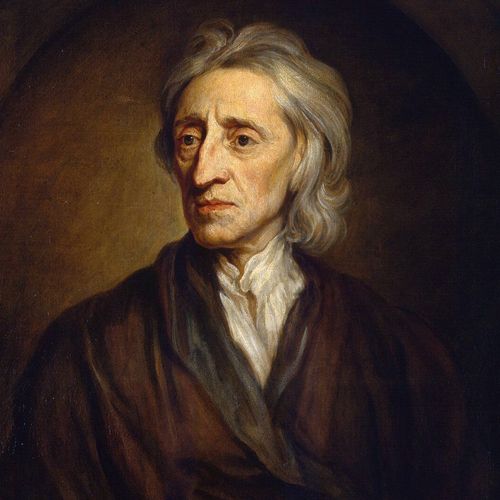
(1632-1704)
Who Was John Locke?
John Locke went to Westminster School and then Christ Church, University of Oxford. At Oxford, he studied medicine, which would play a central role in his life. He became a highly influential philosopher, writing about such topics as political philosophy, epistemology, and education. Locke's writings helped found modern Western philosophy.
Early Life
Influential philosopher and physician John Locke, whose writings had a significant impact on Western philosophy, was born on August 29, 1632, in Wrington, a village in the English county of Somerset. His father was a country lawyer and military man who had served as a captain during the English civil war.
Both his parents were Puritans and as such, Locke was raised that way. Because of his father's connections and allegiance to the English government, Locke received an outstanding education.
Education
In 1647 he enrolled at Westminster School in London, where Locke earned the distinct honor of being named a King's Scholar, a privilege that went to only select number of boys and paved the way for Locke to attend Christ Church, Oxford in 1652.
At Christ Church, perhaps Oxford's most prestigious school, Locke immersed himself in logic and metaphysics, as well as the classical languages. After graduating in 1656, he returned to Christ Church two years later for a Master of Arts, which led in just a few short years to Locke taking on tutorial work at the college.
In 1668 Locke was elected a fellow of the Royal Society. He graduated with a bachelor's of medicine in 1674.
Early in his medical studies, Locke met Lord Ashley, who was to become Earl of Shaftesbury. The two grew close and Shaftesbury eventually persuaded Locke to move to London and become his personal physician. As Shaftesbury’s stature grew, so did Locke's responsibilities. He assisted in his business and political matters, and after Shaftesbury was made chancellor, Locke became his secretary of presentations.
Writings and Beliefs
Shaftesbury's influence on Locke's professional career and his political thoughts cannot be understated. As one of the founders of the Whig party, which pushed for constitutional monarchism and stood in opposition to the dominant Tories, Shaftesbury imparted an outlook on rule and government that never left Locke.
In Locke's landmark, Two Treatises of Government put forth his revolutionary ideas concerning the natural rights of man and the social contract. Both concepts not only stirred waves in England but also impacted the intellectual underpinnings that formed the later American and French revolutions.
As England fell under a cloud of possible revolution, Locke became a target of the government. While historical research has pointed to his lack of involvement in the incident, Locke was forced to leave in England in 1683 due to a failed assassination attempt of King Charles II and his brother, or what later came to be known as the Rye House Plot.
Exiled in Holland, Locke composed "An Essay Concerning Human Understanding," another groundbreaking work of intellectual might that spanned four books and took on the task of examining the nature of human knowledge.
Just like his Two Treatises, the Essay was published after Locke's return to England in 1688. His arrival back in his homeland had come in the aftermath of the dramatic departure of King James II, who'd fled the country, allowing the Whigs to rise to power. Later called the Glorious Revolution of 1688, the event forever changed English government, moving the balance of power from the throne to Parliament. It also set Locke up to be a hero to many in his native country.
Later Years and Impact
In addition to his Essay and Two Treatises, Locke's return to England also saw him publish additional work, including A Letter Concerning Toleration, The Reasonableness of Christianity and Some Thoughts Concerning Education.
A hero to the Whig party, Locke remained connected to governmental affairs in his advanced years. He helped steer the resurrection of the Board of Trade, which oversaw England's new territories in North America. Locke served as one of the body's key members.
Long afflicted with delicate health, Locke died on October 28, 1704, in Essex, where he'd resided over the last decade of his life.
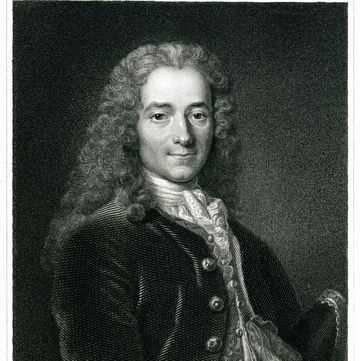
Years after his death we are still gauging his impact on Western thought. His theories concerning the separation of Church and State, religious freedom, and liberty, not only influenced European thinkers such as the French Enlightenment writer, Voltaire but shaped the thinking of America's founders, from Alexander Hamilton to Thomas Jefferson.
QUICK FACTS
- Name: John Locke
- Birth Year: 1632
- Birth date: August 29, 1632
- Birth City: Wrington
- Birth Country: United Kingdom
- Gender: Male
- Best Known For: English philosopher John Locke's works lie at the foundation of modern philosophical empiricism and political liberalism.
- Industries
- Politics and Government
- Journalism and Nonfiction
- Astrological Sign: Virgo
- Schools
- University of Oxford
- Westminster School
- Death Year: 1704
- Death date: October 28, 1704
- Death City: Essex
- Death Country: United Kingdom
Fact Check
We strive for accuracy and fairness. If you see something that doesn't look right, contact us!
QUOTES
- Every man has a property in his own person. This nobody has a right to, but himself.