(1880-1973)
Who Was Jeannette Rankin?
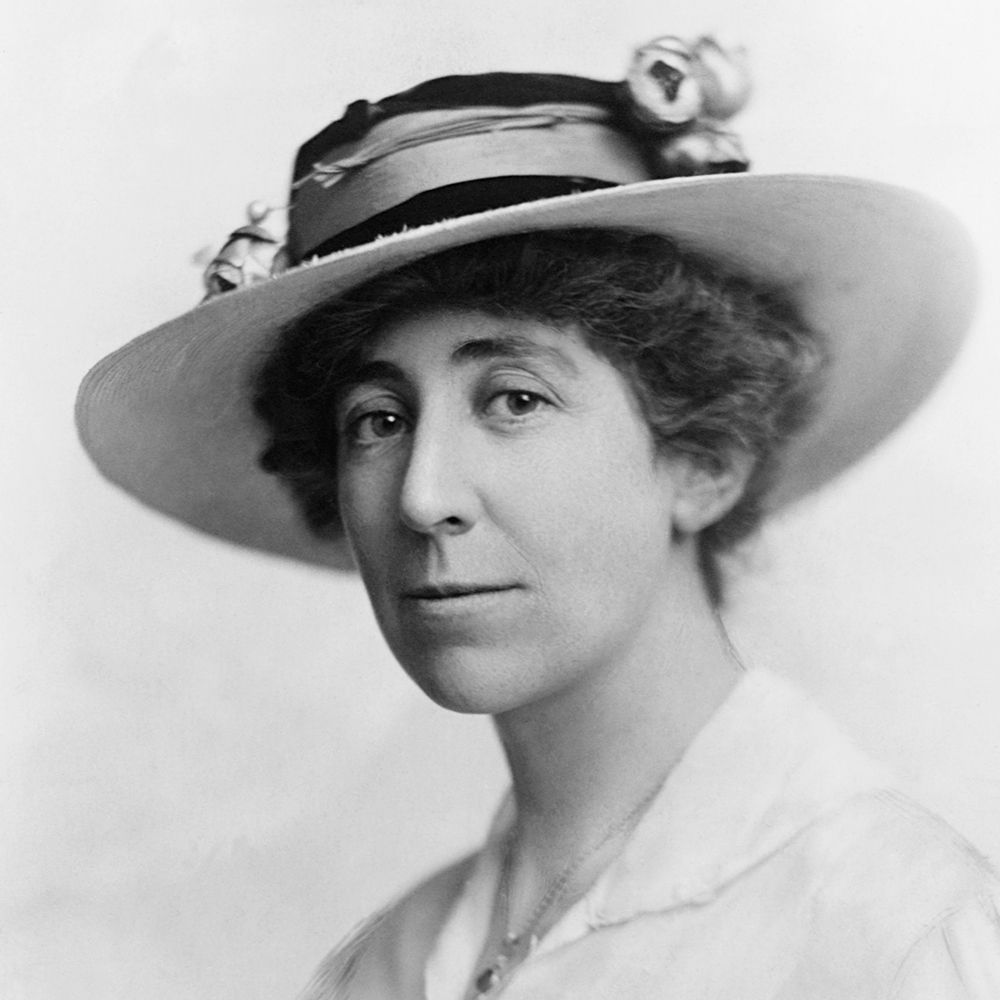
Jeannette Rankin successfully fought for a woman's right to vote in Washington State and Montana and was elected to the U.S. House of Representatives in 1916. The first woman to elected to the U.S. Congress, during her two separate terms Rankin helped pass the 19th Amendment and was the only Congressperson to vote against both WWI and WWII.
Early Life
Rankin was born on June 11, 1880, near Missoula, Montana. One of seven children, she was the daughter of a rancher and a schoolteacher. After earning a degree in biology in 1902 from the University of Montana, Rankin followed in her mother's footsteps briefly, working as a teacher. Rankin tried several more careers, including seamstress and social worker.
First Female in Congress
Rankin found her calling in the women's suffrage movement. While living in Washington State, she became active in the drive to amend that state's constitution to give women the right to vote. The measure passed in 1911, and Rankin later returned home to Montana to win the right to vote for the women of her home state. The voters of Montana granted women the right to vote in 1914.
Her years as a social activist and her politically well-connected brother helped Rankin in her 1916 run for the U.S. House of Representatives. Although it was a very close race, she won the election, becoming the first woman to serve in Congress. This accomplishment is even more miraculous, considering this was a time when many women still did not have the right to vote.
In 1917, Rankin proposed the formation of a Committee on Woman Suffrage, of which she was appointed leader. In 1918, she addressed the House Floor after the committee issued a report for a constitutional amendment on the women's right to vote:
“How shall we answer the challenge, gentlemen?” Rankin asked. “How shall we explain to them the meaning of democracy if the same Congress that voted to make the world safe for democracy refuses to give this small measure of democracy to the women of our country?”
In a narrow win, the resolution passed the House but eventually died in the Senate.
Pacifist Positions
An ardent pacifist, Rankin voted against the United States entering World War I. The war resolution measure was passed by Congress 374 to 50. During the war, she fought for the rights of women working in the war effort. Rankin also created women's rights legislation and helped pass the Nineteenth Amendment to the U.S. Congress, granting women the right to vote.
After her two-year term ended in 1919, Rankin focused much of her energy on her pacifism and social welfare. That same year, she served as a delegate to the Women's International Conference for Peace in Switzerland along with such other noted figures as Jane Addams, Emily Greene Balch, Alice Hamilton and Lillian Wald. In 1924, she bought a small farm in Georgia that had no electricity or plumbing and founded the pacifist organization, The Georgia Peace Society. From 1929 to 1939 she was a lobbyist and speaker for the National Council for the Prevention of War and later became an active member of the Women's International League for Peace and Freedom (WILPF), serving in several key positions.
Rankin made a return to politics in 1939. Running for a seat in the U.S. House of Representatives, she won the election in part based on her antiwar position. Even the bombing of Pearl Harbor on December 7, 1941, could not dissuade Rankin from her pacifist stance and she voted against entering the war. By this time, much of the public's antiwar sentiment had given way to anger and outrage over the attack on U.S. soil. This time, the war resolution passed 388 votes –1. Her no vote was cast amid “a chorus of hisses and boos.” The rest of her term was made irrelevant due to her unpopular vote. “I have nothing left but my integrity,” she told her friends privately.
Later Years
Leaving office in 1943, Rankin spent much of her time traveling. She was especially drawn to India because of Gandhi's teachings on nonviolent protest. She also continued to work to further her pacifist beliefs, speaking out against U.S. military actions in Korea and Vietnam. She died on May 18, 1973, in Carmel, California, but was said to have been considering a third run for a House seat that year to protest the Vietnam War. This groundbreaking politician was the only legislator to vote against both world wars, reflecting her deep commitment to pacifism. She is also remembered for her tireless efforts on behalf of women's suffrage.
Personal Life
Rankin never married and reportedly did not want to be a "baby factory" as she had perceived her mother to be. During her early 20s she had turned down a number of marriage proposals, and some historians speculate she may have been lesbian.
QUICK FACTS
- Name: Jeannette Rankin
- Birth Year: 1880
- Birth date: June 11, 1880
- Birth State: Montana
- Birth City: Missoula
- Birth Country: United States
- Gender: Female
- Best Known For: Jeannette Rankin was the first woman to elected to the U.S. Congress. She helped pass the 19th Amendment, giving women the right to vote, and was a committed pacifist.
- Industries
- Civil Rights
- U.S. Politics
- World War II
- World War I
- Astrological Sign: Gemini
- Schools
- New York School of Philanthropy (later part of Columbia University)
- University of Washington
- University of Montana
- Death Year: 1973
- Death date: May 18, 1973
- Death State: California
- Death City: Carmel
- Death Country: United States
Fact Check
We strive for accuracy and fairness.If you see something that doesn't look right,contact us!
CITATION INFORMATION
- Article Title: Jeannette Rankin Biography
- Author: Biography.com Editors
- Website Name: The Biography.com website
- Url: https://www.biography.com/political-figures/jeannette-rankin
- Access Date:
- Publisher: A&E; Television Networks
- Last Updated: April 19, 2021
- Original Published Date: April 2, 2014