1923-2023
Henry Kissinger Today: Nobel Peace Prize–Winning Diplomat Dies at Age 100
Influential diplomat Henry Kissinger died November 29 at his Connecticut home, according to a statement from his consulting firm. The centenarian served as the 56th U.S. secretary of state, from 1973 to 1977, under Presidents Richard Nixon and Gerald Ford. “Secretary Kissinger really set the standard for everyone who followed in this job,” current Secretary of State Antony Blinken said Thursday. “I was very privileged to get his counsel many times, including as recently as about a month ago.”
Who Was Henry Kissinger?
Henry Kissinger was one of the most influential American diplomats of the 20th century and served as U.S. secretary of state from 1973 to 1977. With his family, the German teenager immigrated to the United States and eventually became a Harvard University professor before assuming leadership in the foreign policy of his adopted country. He advised six U.S. presidents, from John F. Kennedy to George H.W. Bush, with Richard Nixon appointing him to secretary of state in 1973. Kissinger won that year’s Nobel Peace Prize for his work in the Vietnam War’s Paris accords. The diplomat was later critiqued for some of his covert actions at home and abroad. A prolific author of more than 20 books, Kissinger died in November 2023 at age 100.
Quick Facts
FULL NAME: Heinz Alfred Kissinger
BORN: May 27, 1923
DIED: November 29, 2023
BIRTHPLACE: Fürth, Germany
SPOUSES: Ann Fleischer (c. 1949-1964) and Nancy Maginnes Kissinger (1974-2023)
CHILDREN: David and Elizabeth
ASTROLOGICAL SIGN: Gemini
Early Life
Henry Kissinger was born Heinz Alfred Kissinger on May 27, 1923, in Fürth, a city in the Bavaria region of Germany. Kissinger’s mother, Paula Stern, came from a relatively wealthy and prominent family, and his father, Louis Kissinger, was a teacher. Kissinger grew up in an Orthodox Jewish household, and during his youth, he spent two hours each day diligently studying the Bible and the Talmud.
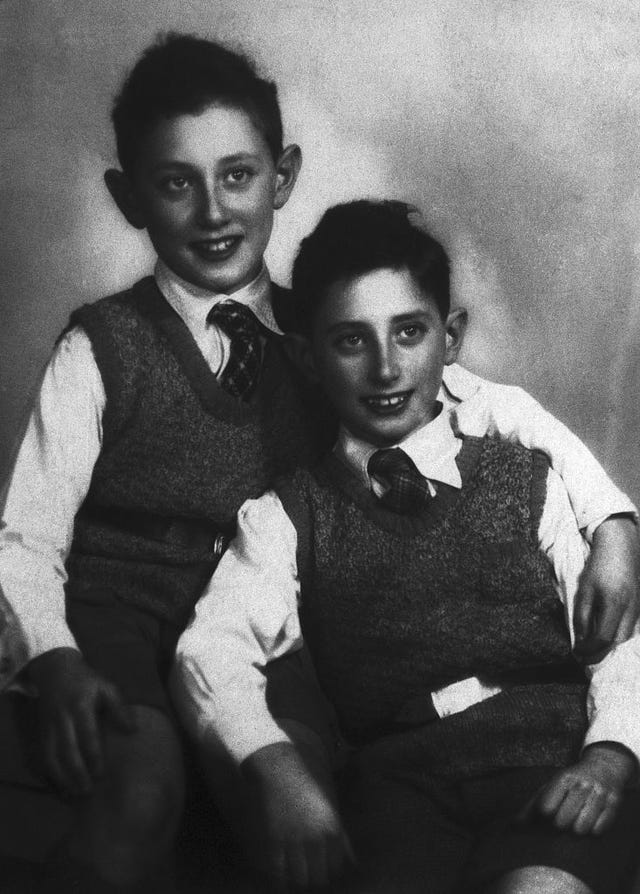
The interwar Germany of Kissinger’s youth was still reeling from its defeat in World War I and the humiliating and debilitating terms of the 1919 Treaty of Versailles. Such national emasculation gave rise to the intense German nationalism of Nazism, in which many Germans increasingly treated Germany’s Jewish population as outsiders and scapegoats for their misfortunes.
As a child, Kissinger encountered anti-Semitism daily. An avid soccer fan, he defied laws banning Jews from professional sporting events to attend matches, receiving several beatings at the hands of the stadium guards. He and his friends were also regularly abused by local gangs of Nazi youth. These experiences understandably made a lasting impression on Kissinger. One of his childhood friends said: “You can’t grow up like we did and be untouched. Every day there were slurs in the streets, anti-Semitic remarks, calling you filthy names.”
Kissinger was a shy, introverted, and bookish child. “He withdrew,” his mother remembered. “Sometimes he wasn’t outgoing enough, because he was lost in his books.” Kissinger excelled at the local Jewish school and dreamed of attending the Gymnasium, a prestigious state-run high school. However, by the time he was old enough to apply, the school had stopped accepting Jews. Sensing the impending tragedy of the Holocaust, his family decided to flee Germany for the United States in 1938, when Kissinger was 15 years old.
Education
On August 20, 1938, Kissinger’s family set sail for New York City by way of London. His family was extremely poor upon arrival in the United States, and Kissinger immediately went to work in a shaving brush factory to supplement his family’s income.
At the same time, Kissinger enrolled at New York’s George Washington High School, where he learned English with remarkable speed and excelled in all of his classes. One of his teachers later recalled of Kissinger, “He was the most serious and mature of the German refugee students, and I think those students were more serious than our own.” Kissinger graduated from high school in 1940 and continued on to the City College of New York, where he studied to become an accountant.
In 1943, Kissinger became a naturalized American citizen and, soon after, he was drafted into the army to fight in World War II. Thus, just five years after he left, Kissinger found himself back in his homeland of Germany, fighting the very Nazi regime from which he had fled. He served first as a rifleman in France and then as a G-2 intelligence officer in Germany. Over the course of the war, Kissinger abandoned his plan to become an accountant and instead decided that he wanted to become an academic with a focus on political history.
Kissinger: A Biography by Walter Isaacson

In 1947, upon his return to the United States, he was admitted to Harvard University to complete his undergraduate coursework. Kissinger’s senior thesis, completed in 1950, was a 383-page tome that tackled a vast subject matter: the meaning of history. It became Harvard lore that his daunting manuscript which, unrefined but brilliant, prompted the university to impose a rule limiting the length of future theses. However, according to Walter Issacson’s 1992 biography, this “Kissinger Rule” is most likely a myth.
Upon graduating summa cum laude in 1950, Kissinger decided to remain at Harvard to pursue a doctorate in the Department of Government. His 1954 dissertation—A World Restored: Metternich, Castlereagh, and the Problems of Peace, 1812-1822—examined the efforts of Austrian diplomat Klemens von Metternich to reestablish a legitimate international order in Europe in the aftermath of the Napoleonic Wars. Metternich proved a profound influence on Kissinger’s own later conduct of foreign policy, most notably in his firm belief that even a deeply flawed world order was preferable to revolution and chaos.
Harvard University Professor

After receiving his doctorate in 1954, Kissinger accepted an offer to stay at Harvard as a member of the faculty in the Department of Government. Kissinger first achieved widespread fame in academic circles with his 1957 book Nuclear Weapons and Foreign Policy, opposing President Dwight Eisenhower’s policy of holding out the threat of massive retaliation to ward off Soviet aggression. Instead, Kissinger proposed a “flexible” response model, arguing that a limited war fought with conventional forces and tactical nuclear weapons was, in fact, winnable. He served as a member of the Harvard faculty from 1954 until 1969, earning tenure in 1959.
Political Career
Kissinger always kept one eye outside academia on policymaking in Washington, D.C. From 1961 to 1968, in addition to teaching at Harvard, he served as a special advisor to Presidents John Kennedy and Lyndon Johnson on matters of foreign policy. Then in 1969, Kissinger finally left Harvard when incoming President Richard Nixon appointed him as national security advisor. Serving in that role from 1969 to 1975, and then as secretary of state from 1973 to 1977, Kissinger proved to be one of the most dominant, influential, and controversial statesmen in American history.
Vietnam War and Nobel Peace Prize
The great foreign policy trial of Kissinger’s career was the Vietnam War. By the time he became national security advisor in 1969, the Vietnam War had become enormously costly, deadly, and unpopular. Seeking to achieve “peace with honor,” Kissinger combined diplomatic initiatives and troop withdrawals with devastating bombing campaigns on North Vietnam, designed to improve the American bargaining position and maintain the country’s credibility with its international allies and enemies.

On January 27, 1973, Kissinger and his North Vietnamese negotiating partner, Le Duc Tho, finally signed a cease-fire agreement to end direct American involvement in the conflict. Both men were honored with the 1973 Nobel Peace Prize, though Duc declined, leaving Kissinger the sole recipient of the award.
Nevertheless, Kissinger’s handling of the Vietnam War was highly controversial. His “peace with honor” strategy prolonged the war for four years, from 1969 to 1973, during which 22,000 American troops and countless Vietnamese died. Furthermore, he initiated a secret bombing campaign in Cambodia that ravaged the country and helped the genocidal Khmer Rouge take power there.
Chinese-American Relations
In addition to ending the Vietnam War, Kissinger also accomplished a host of other foreign policy achievements. In 1971, he made two secret trips to the People’s Republic of China, paving the way for President Nixon’s historic visit in 1972 and the normalization of Chinese-American relations in 1979.
Cold War Treaties and the Yom Kippur War

Kissinger was also instrumental in bringing about the early 1970s détente between the United States and the Soviet Union. In 1972, he negotiated the Strategic Arms Limitation Treaty (SALT I) and the Anti-Ballistic Missile Treaty, helping to ease tensions between the two Cold War superpowers. When détente was threatened by the October 1973 Yom Kippur War between Israel, an American ally, and Egypt, a Soviet ally, Kissinger proved crucial in leading diplomatic efforts to prevent the war from escalating into a global confrontation.
Advising Presidents Reagan and Bush
Kissinger stepped down as secretary of state at the conclusion of Gerald Ford’s administration in 1977, but he continued to play a major role in American foreign policy. In 1983, President Ronald Reagan appointed him to chair the National Bipartisan Commission on Central America. From 1984 to 1990, under Presidents Reagan and George H.W. Bush, he served on the President’s Foreign Intelligence Advisory Board.
Foreign Policy Legacy
Kissinger stands out as the dominant American statesman and foreign policymaker of the late 20th century. With his intellectual prowess and tough, skillful negotiating style, Kissinger ended the Vietnam War and greatly improved American relations with its two primary Cold War enemies, China and the Soviet Union. Nevertheless, Kissinger’s ruthlessly pragmatic, sometimes Machiavellian tactics earned him as many critics as admirers. The writer Christopher Hitchens, for example, castigated Kissinger for bombing Cambodia, endorsing the Indonesian occupation of East Timor, and orchestrating the overthrow of Chilean President Salvador Allende.
Regardless of whether they praise or despise him, commentators agree that the current international order is the product of Kissinger’s policies. As Kissinger himself put it, “Only rarely in history do statesmen find an environment in which all factors are so malleable; before us, I thought, was the chance to shape events, to build a new world, harnessing the energy and dreams of the American people and mankind’s hopes.”
Books and Later Years
Kissinger founded the international consulting firm Kissinger Associates in 1982, and he served as a board member and trustee to numerous companies and foundations. Additionally, he wrote more than 20 books and countless articles on American foreign policy and diplomatic history.
Wife and Children
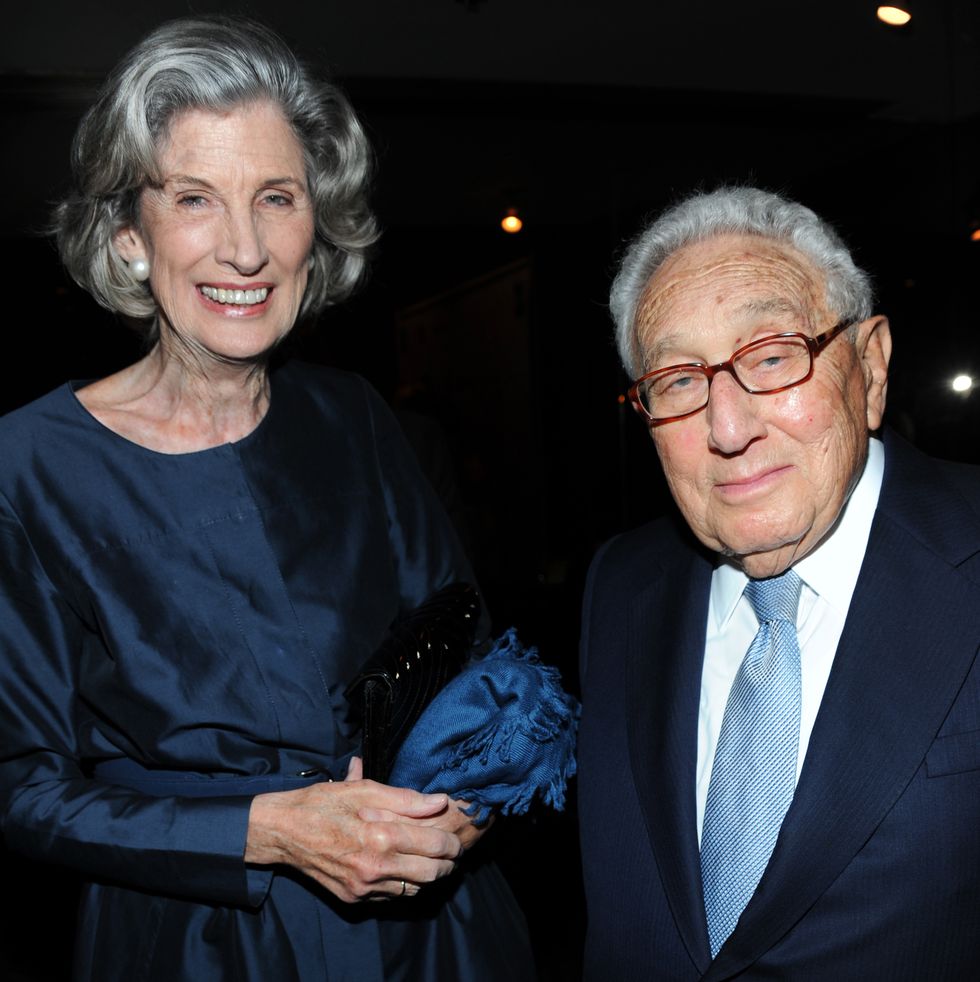
Kissinger married philanthropist Nancy Maginnes in 1974. They remained together until his death.
He had two children with his former wife, Ann Fleischer, whom he divorced in 1964. Their daughter, Elizabeth, was born in 1959, and their son, David, was born in 1961.
Fact Check: We strive for accuracy and fairness. If you see something that doesn’t look right, contact us!
The Biography.com staff is a team of people-obsessed and news-hungry editors with decades of collective experience. We have worked as daily newspaper reporters, major national magazine editors, and as editors-in-chief of regional media publications. Among our ranks are book authors and award-winning journalists. Our staff also works with freelance writers, researchers, and other contributors to produce the smart, compelling profiles and articles you see on our site. To meet the team, visit our About Us page: https://www.biography.com/about/a43602329/about-us