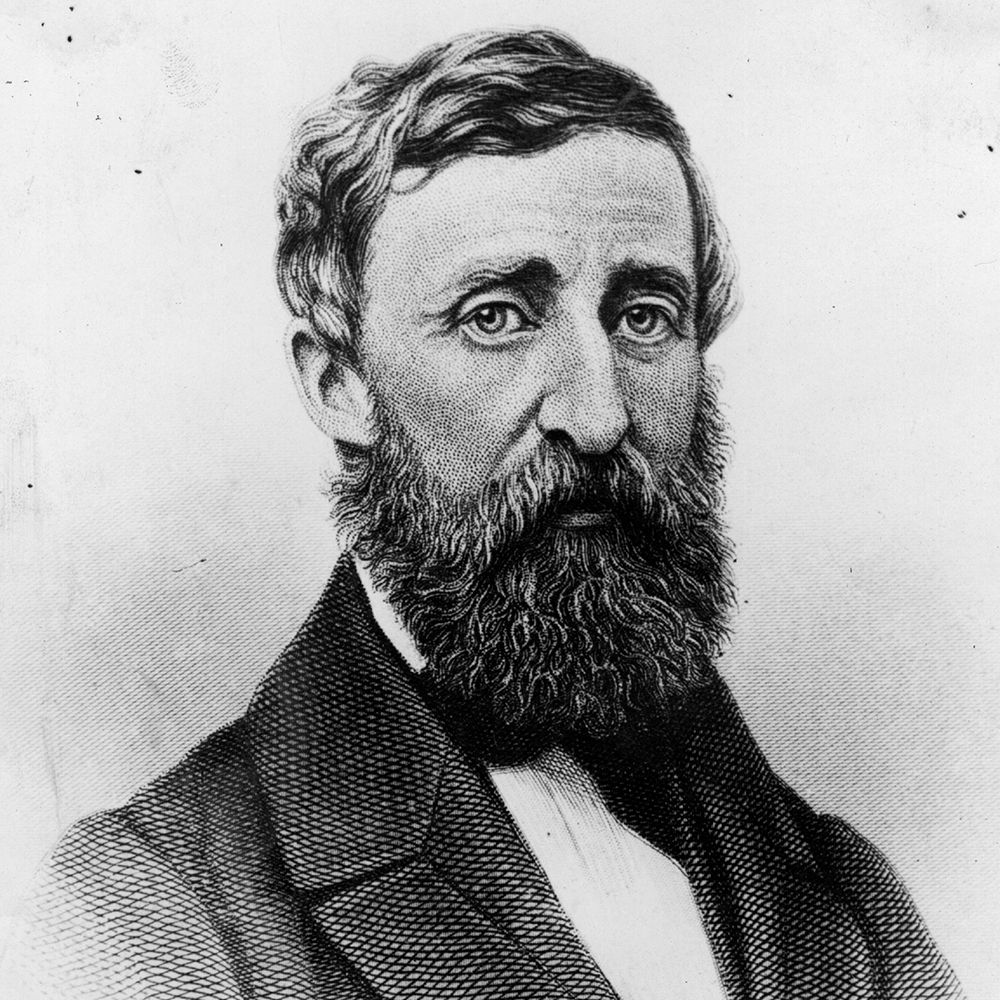
(1817-1862)
Who Was Henry David Thoreau?
Henry David Thoreau began writing nature poetry in the 1840s, with poet Ralph Waldo Emerson as a mentor and friend. In 1845 he began his famous two-year stay on Walden Pond, which he wrote about in his masterwork, Walden. He also became known for his beliefs in Transcendentalism and civil disobedience and was a dedicated abolitionist.
Early Life
One of America's most famous writers, Henry David Thoreau is remembered for his philosophical and naturalist writings. He was born and raised in Concord, Massachusetts, along with his older siblings John and Helen and younger sister Sophia. His father operated a local pencil factory, and his mother rented out parts of the family's home to boarders.
A bright student, Thoreau eventually went to Harvard College (now Harvard University). There he studied Greek and Latin as well as German. According to some reports, Thoreau had to take a break from his schooling for a time because of illness. He graduated from college in 1837 and struggled with what do to next. At the time, an educated man like Thoreau might pursue a career in law or medicine or in the church. Other college graduates went into education, a path he briefly followed. With his brother John, he set up a school in 1838. The venture collapsed a few years later after John became ill. Thoreau then went to work for his father for a time.
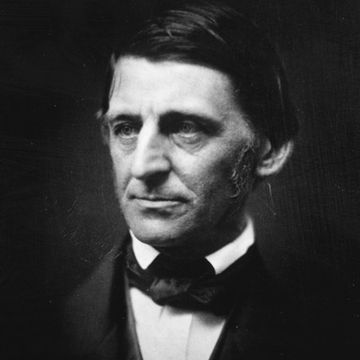
After college, Thoreau befriended writer and fellow Concord resident Ralph Waldo Emerson. Through Emerson, he became exposed to Transcendentalism, a school of thought that emphasized the importance of empirical thinking and of spiritual matters over the physical world. It encouraged scientific inquiry and observation. Thoreau came to know many of the movement's leading figures, including Bronson Alcott and Margaret Fuller.
Emerson acted as a mentor to Thoreau and supported him in many ways. For a time, Thoreau lived with Emerson as a caretaker for his home. Emerson also used his influence to promote Thoreau's literary efforts. Some of Thoreau's first works were published in The Dial, a Transcendentalist magazine. And Emerson gave Thoreau access to the lands that would inspire one of his greatest works.
Walden Pond
In 1845, Thoreau built a small home for himself on Walden Pond, on property owned by Emerson. He spent more than two years there. Seeking a simpler type of life, Thoreau flipped the standard routine of the times. He experimented with working as little as possible rather than engage in the pattern of six days on with one day off. Sometimes Thoreau worked as a land surveyor or in the pencil factory. He felt that this new approach helped him avoid the misery he saw around him. "The mass of men lead lives of quiet desperation," Thoreau once wrote.
His schedule gave him plenty of time to devote to his philosophical and literary interests. Thoreau worked on A Week on the Concord and Merrimack Rivers (1849). The book drew from a boating trip he took with his brother John in 1839. Thoreau eventually started writing about his Walden Pond experiment as well. Many were curious about his revolutionary lifestyle, and this interest provided the creative spark for a collection of essays. Published in 1854, Walden; or, Life in the Woods espoused living a life close to nature. The book was a modest success, but it wasn't until much later that the book reached a larger audience. Over the years, Walden has inspired and informed the work of naturalists, environmentalists and writers.
While living at Walden Pond, Thoreau also had an encounter with the law. He spent a night in jail after refusing to pay a poll tax. This experience led him to write one of his best-known and most influential essays, "Civil Disobedience" (also known as "Resistance to Civil Government"). Thoreau held deeply felt political views, opposing slavery and the Mexican-American War. He made a strong case for acting on one's individual conscience and not blindly following laws and government policy. "The only obligation which I have a right to assume is to do at any time what I think right," he wrote.
Since its publication in 1849, "Civil Disobedience" has inspired many leaders of protest movements around the world. This non-violent approach to political and social resistance has influenced American civil rights movement activist Martin Luther King Jr. and Mohandas Gandhi, who helped India win independence from Great Britain, among many others.
Later Years
After leaving Walden Pond, Thoreau spent some time looking after Emerson's house while he was on tour in England. Still fascinated with nature, Thoreau wrote down his observations on plant and wildlife in his native Concord and on his journeys. He visited the woods of Maine and the shoreline of Cape Cod several times.
Thoreau also remained a devoted abolitionist until the end of his life. To support his cause, he wrote several works, including the 1854 essay "Slavery in Massachusetts." Thoreau also took a brave stand for Captain John Brown, a radical abolitionist who led an uprising against slavery in Virginia. He and his supporters raided a federal arsenal in Harpers Ferry to arm themselves in October 1859, but their plan was thwarted. An injured Brown was later convicted of treason and put to death for his crime. Thoreau rose to defend him with the speech "A Plea for Capt. John Brown," calling him "an angel of light" and "the bravest and humanest man in all the country."
Death
In his later years, Thoreau battled an illness that had plagued him for decades. He had tuberculosis, which he had contracted decades earlier. To restore his health, Thoreau went to Minnesota in 1861, but the trip didn't improve his condition. He finally succumbed to the disease on May 6, 1862. Thoreau was heralded as "an original thinker" and "a man of simple tastes, hardy habits, and of preternatural powers of observation" in some of his obituaries.
While other writers from his time have faded into obscurity, Thoreau has endured because so much of what he wrote about is still relevant today. His writings on government were revolutionary, with some calling him an early anarchist. Thoreau's studies of nature were equally radical in their own way, earning him the moniker of "father of environmentalism." And his major work, Walden, has offered up an interesting antidote to living in the modern rat race.
QUICK FACTS
- Birth Year: 1817
- Birth date: July 12, 1817
- Birth State: Massachusetts
- Birth City: Concord
- Birth Country: United States
- Gender: Male
- Best Known For: American essayist, poet and practical philosopher, Henry David Thoreau was a New England Transcendentalist and author of the book 'Walden.'
- Industries
- Fiction and Poetry
- Journalism and Nonfiction
- Astrological Sign: Cancer
- Schools
- Concord Academy
- Harvard University
- Death Year: 1862
- Death date: May 6, 1862
- Death State: Massachusetts
- Death City: Concord
- Death Country: United States
Fact Check
We strive for accuracy and fairness.If you see something that doesn't look right,contact us!
CITATION INFORMATION
- Article Title: Henry David Thoreau Biography
- Author: Biography.com Editors
- Website Name: The Biography.com website
- Url: https://www.biography.com/authors-writers/henry-david-thoreau
- Access Date:
- Publisher: A&E; Television Networks
- Last Updated: May 27, 2021
- Original Published Date: April 2, 2014