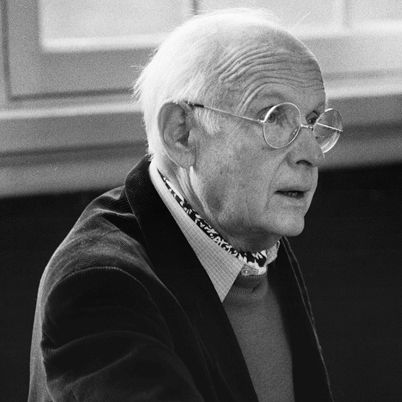
(1908-2004)
Synopsis
Henri Cartier-Bresson was born on August 22, 1908 in Chanteloup, France. A pioneer in photojournalism, Cartier-Bresson wandered around the world with his camera, becoming totally immersed in his current environment. Considered one of the major artists of the 20th century, he covered many of the world biggest events from the Spanish Civil War to the French uprisings in 1968.
Early Years
Widely considered one of the leading artistic forces of the 20th century, Henri Cartier-Bresson was born on August 22, 1908 in Chanteloup, France. The oldest of five children, his family was wealthy—his father made a fortune as a textile manufacturer—but Cartier-Bresson later joked that due to his parents' frugal ways, it often seemed as though his family was poor.
Educated in Paris, Cartier-Bresson developed an early love for literature and the arts. Creativity was certainly a part of his DNA. His great-grandfather had been artist and an uncle was a noted printer. Even his father dabbled in drawing.
As a teenager, Cartier-Bresson rebelled against his parents' formal ways. Early in his adult life he drifted toward communism. But it was art that remained at the center of his life. In 1927 he began a two-year stint studying painting under noted early Cubist, André Lhote, then moved to Cambridge University to immerse himself further in art and literature courses.
Sparked by the avant-garde scene enveloping Paris, and fresh from his release from the Army, which had stationed him just outside Paris, Cartier-Bresson traveled to Africa in 1931 to hunt antelope and boar. Uninterested in actually eating what he'd tracked down, Cartier-Bresson eventually grew tired of the sport and gave it up.
But Africa did fuel another interest in him: photography. He experimented with a simple Brownie he'd received as a gift, taking pictures of the new world around him. For Cartier-Bresson there were direct parallels between his old passion and his new one.
"I adore shooting photographs," he'd later note. "It's like being a hunter. But some hunters are vegetarians—which is my relationship to photography." In short, as his frustrated editors would soon discover, Cartier-Bresson preferred taking shots rather than making prints and showing his work.
Upon returning to France later that year, Cartier-Bresson purchased his first 35mm Leica, a camera whose simple style and stunning results would help define the photographer's work.
For the rest of his life, in fact, Cartier-Bresson's approach to photography would remain much the same. He made clear his disdain for the augmented image, one that had been enhanced by artificial light, dark room effects, even cropping. The naturalist in Cartier-Bresson believed that all edits should be done when the image was made. His equipment load was often light: a 50mm lens and if he needed it, a longer 90mm lens.
Commercial Success
Cartier-Bresson's rise as a photographer proved rapid. By the mid 1930s he'd shown his work in major exhibits in Mexico, New York, and Madrid. His images revealed the early raw possibilities of street photography and photojournalism in general.
During an exhibit of his prints in New York in 1935 Cartier-Bresson befriended another photographer, Paul Strand, who'd begun to experiment with film. Inspired by what he saw, Cartier-Bresson abandoned photography and returned to France where he took work as an assistant with French filmmaker Jean Renoir. Over the next three years, Cartier-Bresson worked on a handful of Renoir films, including his most critically acclaimed, La Règle Du Jeu (1939).
But the documentarian in Cartier-Bresson had no use or particular talent for directing feature films. Instead, he was drawn to showing real stories about real life.
His own life took a dramatic turn in 1940 following the German invasion of France. Cartier-Bresson joined the army but was soon captured by German forces and forced into prison-of-war camp for the next three years.
In 1943, after two failed attempts, Cartier-Bresson escaped for good and immediately returned to his photography and film work. He created a photo department for the resistance and following the end of the war, was commissioned by the United States to direct a documentary about the return of French prisoners.
Man of the World
Not long after the war, Cartier-Bresson traveled east, spending considerable time in India, where he met and photographed Mahatma Gandhi shortly before his assassination in 1948. Cartier-Bresson's subsequent work to document Gandhi's death and its immediate impact on the country became one of Life Magazine's most prized photo essays.
His work to solidify photojournalism as legitimate news and art form went beyond what he did behind the camera. In 1947 he teamed up Robert Capa, George Rodger, David 'Chim' Seymour, and William Vandivert, and founded Magnum Photos, one of the world's premier photo agency.
A wanderlust at heart, Cartier-Bresson's interest in the world led him on a three-year odyssey through Asia. When the photographer returned to France in 1952 he published his first book, The Decisive Moment, a rich collection of his work spanning two decades.
More importantly, perhaps, the book cemented Cartier-Bresson as a photographer with a heart. Over the course of his long career he hauled his Leica around the world to document and show triumph and tragedy in all its forms. He was there for the Spanish Civil War and the Chinese revolution. He documented George VI's coronation and told the story of Khrushchev's Russia. His subjects ranged from Che Guevara to Marilyn Monroe, while his magazine clients ran the gamut, including not just Life, but Harper's Bazaar, Vogue and many others.
Later Years
In 1966, Cartier-Bresson quit Magnum and began to turn his focus to where it had once been: on drawing and painting. He disdained doing interviews and refused to talk much about his previous career as a photographer, seemingly content to bury himself in his notebooks, sketching out landscapes and figurines.
In 2003, Cartier-Bresson, along with his wife and daughter, took an important step in securing his legacy as an artist with the creation of the Fondation Henri Cartier-Bresson in Paris in an effort to preserve his work. His later years would also see him awarded numerous awards and honorary doctorates for his work.
Just a few weeks shy of his 96th birthday, Henri Cartier-Bresson passed away at his home in Provence on August 3, 2004.
QUICK FACTS
- Name: Henri Cartier-Bresson
- Birth Year: 1908
- Birth date: August 22, 1908
- Birth City: Chanteloup
- Birth Country: France
- Gender: Male
- Best Known For: Henri Cartier-Bresson was a French photographer whose humane, spontaneous photographs helped establish photojournalism as an art form.
- Industries
- Documentary
- Art
- Astrological Sign: Leo
- Schools
- University of Cambridge
- Nacionalities
- French
- Occupations
- Filmmaker
- Photographer
- Death Year: 2004
- Death date: August 3, 2004
- Death City: Céreste
- Death Country: France
Fact Check
We strive for accuracy and fairness.If you see something that doesn't look right,contact us!
CITATION INFORMATION
- Article Title: Henri Cartier-Bresson Biography
- Author: Biography.com Editors
- Website Name: The Biography.com website
- Url: https://www.biography.com/artist/henri-cartier-bresson
- Access Date:
- Publisher: A&E; Television Networks
- Last Updated: April 13, 2019
- Original Published Date: April 2, 2014
QUOTES
- In photography, the smallest thing can be a great subject. The little, human detail can become a Leitmotiv.
- Photography is an immediate reaction, drawing is a meditation.