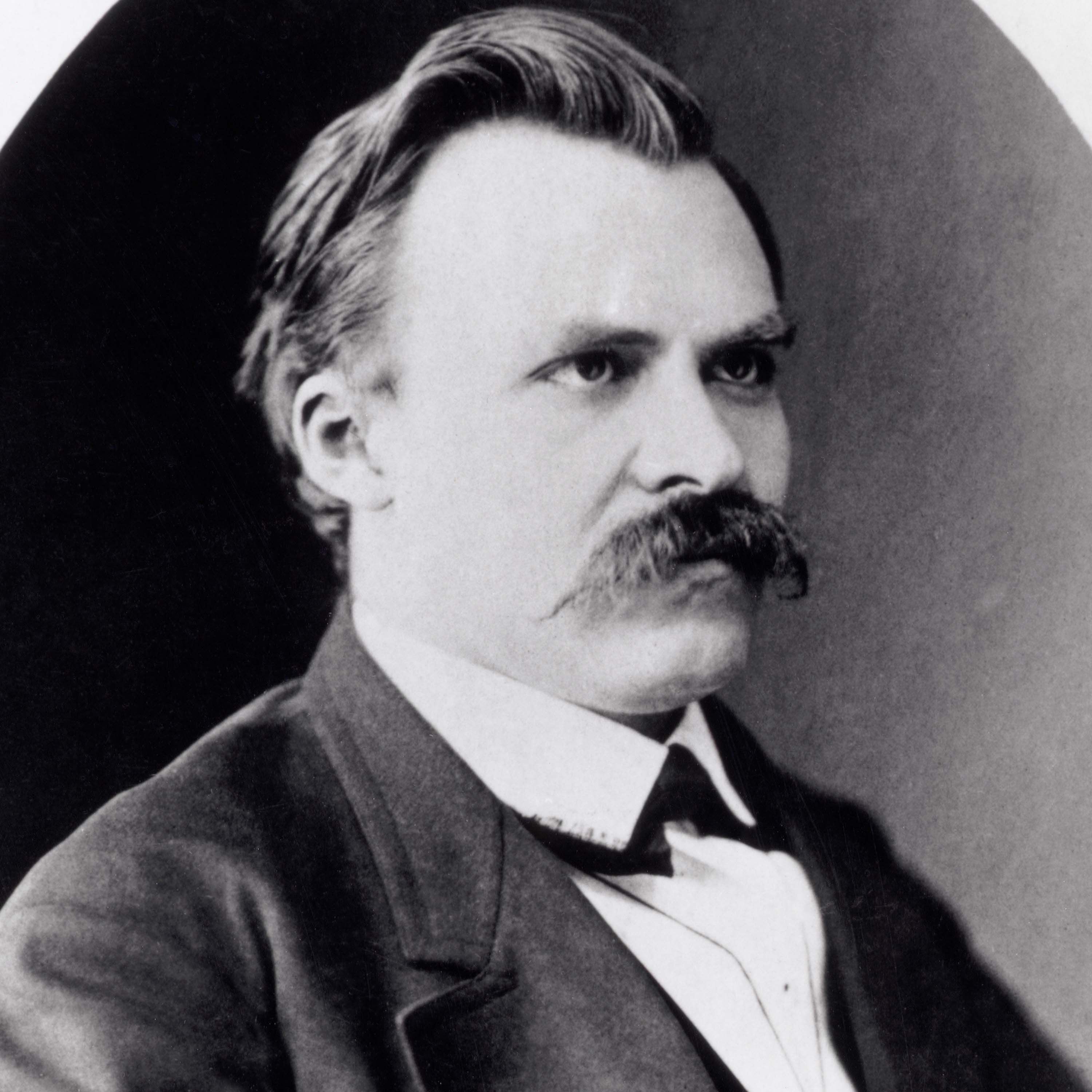
(1844-1900)
Who Was Friedrich Nietzsche?
In his brilliant but relatively brief career, Friedrich Nietzsche published numerous major works of philosophy, including Twilight of the Idols and Thus Spoke Zarathustra. In the last decade of his life, he suffered from insanity and died on August 25, 1900. His writings on individuality and morality in contemporary civilization influenced many major thinkers and writers of the 20th century.
Early Years and Education
Friedrich Wilhelm Nietzsche was born on October 15, 1844, in Röcken bei Lützen, a small village in Prussia (part of present-day Germany). His father, Carl Ludwig Nietzsche, was a Lutheran preacher; he died when Nietzsche was 4 years old. Nietzsche and his younger sister, Elisabeth, were raised by their mother, Franziska.
Nietzsche attended a private preparatory school in Naumburg and then received a classical education at the prestigious Schulpforta school. After graduating in 1864, he attended the University of Bonn for two semesters. He transferred to the University of Leipzig, where he studied philology, a combination of literature, linguistics and history. He was strongly influenced by the writings of philosopher Arthur Schopenhauer. During his time in Leipzig, he began a friendship with the composer Richard Wagner, whose music he greatly admired.
Teaching and Writing in the 1870s
In 1869, Nietzsche took a position as a professor of classical philology at the University of Basel in Switzerland. During his professorship, he published his first books, The Birth of Tragedy (1872) and Human, All Too Human (1878). He also began to distance himself from classical scholarship, as well as the teachings of Schopenhauer, and to take more interest in the values underlying modern-day civilization. By this time, his friendship with Wagner had deteriorated. Suffering from a nervous disorder, he resigned from his post at Basel in 1879.
Literary and Philosophical Work of the 1880s
For much of the following decade, Nietzsche lived in seclusion, moving from Switzerland to France to Italy when he was not staying at his mother's house in Naumburg. However, this was also a highly productive period for him as a thinker and writer. One of his most significant works, Thus Spoke Zarathustra, was published in four volumes between 1883 and 1885. He also wrote Beyond Good and Evil (published in 1886), The Genealogy of Morals (1887) and Twilight of the Idols (1889).
In these works of the 1880s, Nietzsche developed the central points of his philosophy. One of these was his famous statement that "God is dead," a rejection of Christianity as a meaningful force in contemporary life. Others were his endorsement of self-perfection through creative drive and a "will to power," and his concept of a "super-man" or "over-man" (Übermensch), an individual who strives to exist beyond conventional categories of good and evil, master and slave.
Later Years and Death
Nietzsche suffered a collapse in 1889 while living in Turin, Italy. The last decade of his life was spent in a state of mental incapacitation. The reason for his insanity is still unknown, although historians have attributed it to causes as varied as syphilis, an inherited brain disease, a tumor and overuse of sedative drugs. After a stay in an asylum, Nietzsche was cared for by his mother in Naumburg and his sister in Weimar, Germany. He died in Weimar on August 25, 1900.
Legacy and Influence
Nietzsche is regarded as a major influence on 20th-century philosophy, theology and art. His ideas on individuality, morality and the meaning of existence contributed to the thinking of philosophers Martin Heidegger, Jacques Derrida and Michel Foucault; Carl Jung and Sigmund Freud, two of the founding figures of psychiatry; and writers such as Albert Camus, Jean-Paul Sartre, Thomas Mann and Hermann Hesse.
Less beneficially, certain aspects of Nietzsche's work were used by the Nazi Party of the 1930s – '40s as justification for its activities; this selective and misleading use of his work has somewhat darkened his reputation for later audiences.
QUICK FACTS
- Name: Friedrich Bessette Nietzsche
- Birth Year: 1844
- Birth date: October 15, 1844
- Birth City: Röcken bei Lützen
- Birth Country: Germany
- Gender: Male
- Best Known For: German philosopher Friedrich Nietzsche is known for his writings on good and evil, the end of religion in modern society and the concept of a "super-man."
- Industries
- Education and Academia
- Astrological Sign: Libra
- Schools
- University of Bonn
- Schulpforta
- Domgymnasium
- University of Leipzig
- Nationalities
- German
- Death Year: 1900
- Death date: August 25, 1900
- Death City: Weimar
- Death Country: Germany
Fact Check
We strive for accuracy and fairness. If you see something that doesn't look right, contact us!
QUOTES
- There are no facts, only interpretations.
- What does not destroy me, makes me stronger.
- He who fights with monsters should look to it that he himself does not become a monster. And when you gaze long into an abyss, the abyss also gazes into you.