(1510-1554)
Who Was Francisco Vázquez de Coronado?
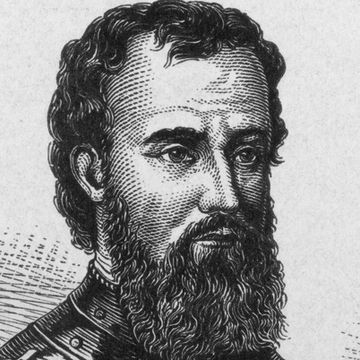
The expedition team of Francisco Vázquez de Coronado is credited with the discovery of the Grand Canyon and several other famous landmarks in the American Southwest while searching for the legendary Seven Golden Cities of Cíbola — which they never found.
Early Life
Vázquez de Coronado was born in Salamanca, Spain, around 1510. According to some reports, he was the younger son of a wealthy aristocrat. Vázquez de Coronado had a fine upbringing, but no prospects of inheriting the family fortune. He instead sought to make it on his own in the New World.
Traveling to New Spain in 1535, Vázquez de Coronado enjoyed the support of Antonio de Mendoza, the viceroy of Mexico. He landed a position with the government and managed to marry well. His wife, Dona Beatriz, was the daughter of Alonso de Estrada, the colonial treasurer. Vázquez de Coronado rose up within the colonial government, receiving an appointment to the governorship of Nueva Galicia.
Exploring American Southwest
Stories of gold and riches located to the north of Mexico had begun to circulate in the 1530s. Explorer Álvar Núñez Cabeza de Vaca told the tale of seven golden cities of Cíbola in 1536. A Spanish missionary, Marcos de Niza, also spoke of seeing golden cities when he followed in de Vaca's footsteps in 1539. The following year, Vázquez de Coronado was selected by the viceroy to lead a mission to further explore these claims.
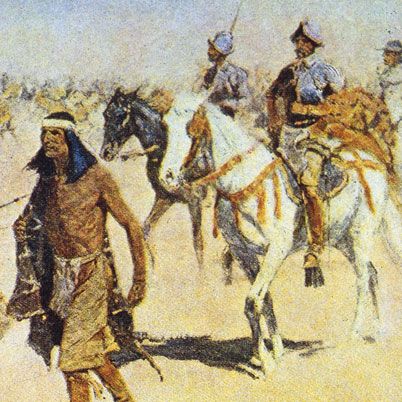
Vázquez de Coronado set out with about 300 Spanish soldiers and roughly 1,000 Native Americans. That July, the expedition encountered a group of Zuni Native Americans in what is now New Mexico. Vázquez de Coronado and his men soon clashed with the Zunis and took over the Zuni village. Disappointed by the expedition's failure to find a golden city, he decided to send his men out in different directions to investigate further. One group led by Pedro de Tovar traveled to the Colorado Plateau, while Garcia López de Cárdenas and his men became the first Europeans to see the Grand Canyon.
Vázquez de Coronado spent that winter in Tiguex, a community made of several Pueblo Native American villages. Before long, he and his expedition had a falling out with the local peoples over supplies. Vázquez de Coronado then moved on in the spring, heading east over the Pecos River. They continued their search through what is now Texas, Oklahoma and Kansas, before giving up their quest.
Final Years and Death
Back in New Spain in 1542, the disheartened Vázquez de Coronado returned to his duties as governor of Nueva Galicia. He was removed from his post two years later, during an investigation into his expedition. Charged with several offenses related to his conduct, including neglect of duty, Vázquez de Coronado was eventually cleared on all counts.
Vázquez de Coronado, according to some accounts, spent the remainder of his life in Mexico City. There, he served as a member of the city council. Vázquez de Coronado died on September 22, 1554. While he failed in his mission to discover the cities of gold, Vázquez de Coronado became one of the first European explorers to visit the American West. Remembrances of this accomplishment are noted widely; several cities and towns include Coronado in their name.
QUICK FACTS
- Name: Francisco Vázquez de Coronado
- Birth Year: 1510
- Birth City: Salamanca
- Birth Country: Spain
- Gender: Male
- Best Known For: The expedition team of Francisco Vázquez de Coronado discovered the Grand Canyon and many other famous landmarks.
- Nacionalities
- Spanish
- Death Year: 1554
- Death date: September 22, 1554
- Death City: Mexico City
- Death Country: Mexico
Fact Check
We strive for accuracy and fairness.If you see something that doesn't look right,contact us!
CITATION INFORMATION
- Article Title: Francisco Vázquez de Coronado Biography
- Author: Biography.com Editors
- Website Name: The Biography.com website
- Url: https://www.biography.com/history-culture/francisco-vazquez-de-coronado
- Access Date:
- Publisher: A&E; Television Networks
- Last Updated: October 21, 2020
- Original Published Date: April 2, 2014