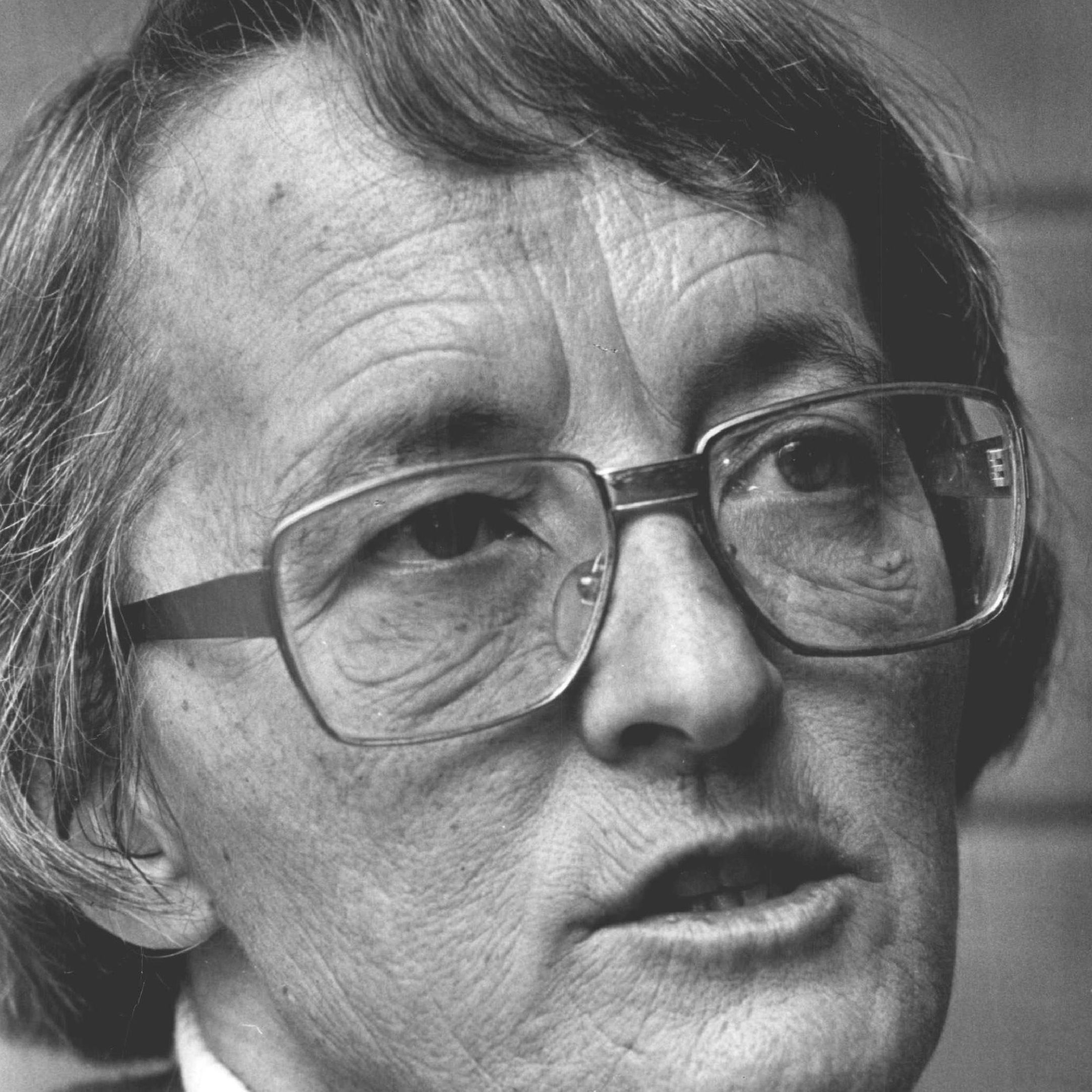
(1926-2004)
Who Was Elisabeth Kübler-Ross?
Born in 1926, Elisabeth Kübler-Ross wanted to be a doctor but her father forbade it. She left home at 16, was a hospital volunteer in WWII and finally entered medical school in 1951. She studied terminal illness, publishing her groundbreaking book On Death and Dying in 1969. The book outlines the five stages that dying patients experience: denial, anger, bargaining, depression and acceptance.
Early Life
Kübler-Ross was born on July 8, 1926, in Zurich, Switzerland. She had a fragile start in life as a triplet, weighing only two pounds when she and her two other siblings were born. Developing an interest in medicine at a young age, Kübler-Ross encountered intense resistance from her father about her career aspirations. He told her that she could be a secretary in his business or go become a maid.
Defying her family, Kübler-Ross left home at the age of 16 and worked a series of jobs. She also served as a volunteer during World War II, helping out in hospitals and caring for refugees. After the war, Kübler-Ross volunteered to help in numerous war-torn communities. She was profoundly affected by a visit to the Maidanek concentration camp in Poland and the images of hundreds of butterflies carved into some of the walls there. To Kübler-Ross, the butterflies—these final works of art by those facing death—stayed with her for years and influenced her thinking about the end of life.
Kübler-Ross began pursuing her dreams to become a doctor in 1951 as a medical student at the University of Zurich. While there, she met Emanuel Robert Ross, an American medical student. They married in 1958, a year after she graduated, and moved to the United States where they both had internships at Community Hospital in Glen Cove, Long Island. (In 1976, she and her husband divorced, and he died in 1992.) Then she went on to specialize in psychiatry, becoming a resident at Manhattan State Hospital.
Pioneering Psychiatrist
In 1962, Kübler-Ross and her husband moved to Denver, Colorado, to teach at the University of Colorado Medical School. She had been disturbed by the treatment of the dying throughout her time in the United States and found nothing in the medical school curriculum at the time that addressed death and dying. Filling in for a colleague one time, Kübler-Ross brought in a 16-year-old girl who was dying from leukemia into the classroom. She told the students to ask the girl any questions they wanted. But after receiving numerous questions about her condition, the girl erupted in anger and started asking the questions that mattered to her as a person, such as what was it like to not be able to dream about growing up or going to the prom, according to an article in The New York Times.
Moving to Chicago in 1965, Kübler-Ross became an instructor at the University of Chicago’s medical school. A small project about death with a group of theology students evolved into a series of well-attended seminars featuring candid interviews with people who were dying. Building upon her interviews and research, Kübler-Ross wrote On Death and Dying (1969), which identified the five stages that most terminally ill patients experience: denial, anger, bargaining, depression, and acceptance. The identification of these stages was a revolutionary concept at the time, but has since become widely accepted.
A Life magazine ran an article on Kübler-Ross in November 1969, bringing public awareness to her work outside of the medical community. The response was enormous and influenced Kübler-Ross’s decision to focus on her career on working with the terminally ill and their families. The intense scrutiny her work received also had an impact on her career path. Kübler-Ross stopped teaching at the university to work privately on what she called the “greatest mystery in science”—death.
Writing and Criticism
During her career, Kübler-Ross wrote more than 20 books on death and related subjects, including To Live Until We Say Goodbye (1978), Living with Death and Dying (1981), and The Tunnel and the Light (1999). She also traveled around the world, giving her “Life, Death, and Transition” workshops. Funded by the profits from her books, workshops, and talks, she established Shanti Nilaya, an educational retreat, in Escondido, California, in 1977. Around that same time, she formed the Elisabeth Kübler-Ross Center, which was later moved to her Virginia farm in the mid-1980s. Working with AIDS patients during the early days of the epidemic, she tried to create a hospice for AIDS-afflicted children, but dropped the plan after encountering much opposition.
In the later part of her career, Kübler-Ross became increasingly interested in the issues of life after death, spirit guides, and spirit channeling, which was met with skepticism and scorn by her peers in the medical and psychiatric circles.
Death and Legacy
For one who wrote so extensively on dying and death, Kübler-Ross’s transition from this life was not a smooth one. She retired to Arizona after series of strokes in 1995 left her partially paralyzed and in a wheelchair. “I am like a plane that has left the gate and not taken off,” she said, according to an article in the Los Angeles Times. “I would rather go back to the gate or fly away.”
In 2002, Kübler-Ross moved into a hospice. She died on August 24, 2004, of natural causes, surrounded by friends and family. Not long before her death, she had finished work on her final book, On Grief and Grieving (2005), which she wrote with David Kessler. Kübler-Ross was survived by her two children and two grandchildren. In 2007, she was inducted into the National Women’s Hall of Fame for her work. Kübler-Ross helped start the public discussion on death and dying and campaigned vigorously for better treatment and care for the terminally ill.
QUICK FACTS
- Name: Elisabeth Kübler-Ross
- Birth Year: 1926
- Birth date: July 8, 1926
- Birth City: Zurich
- Birth Country: Switzerland
- Gender: Female
- Best Known For: Psychiatrist Elisabeth Kübler-Ross wrote the book 'On Death And Dying,' which outlined the five stages that terminally ill patients experience.
- Industries
- Journalism and Nonfiction
- Science and Medicine
- Astrological Sign: Cancer
- Schools
- University of Zurich
- Nacionalities
- Swiss
- Death Year: 2004
- Death date: August 24, 2004
- Death State: Arizona
- Death City: Scottsdale
- Death Country: United States
Fact Check
We strive for accuracy and fairness.If you see something that doesn't look right,contact us!
CITATION INFORMATION
- Article Title: Elisabeth Kubler-Ross Biography
- Author: Biography.com Editors
- Website Name: The Biography.com website
- Url: https://www.biography.com/scientists/elisabeth-kubler-ross
- Access Date:
- Publisher: A&E; Television Networks
- Last Updated: April 7, 2021
- Original Published Date: April 2, 2014
QUOTES
- She called death the “greatest mystery in science”
- On her own paralysis late in life: “I am like a plane that has left the gate and not taken off. I would rather go back to the gate or fly away.”