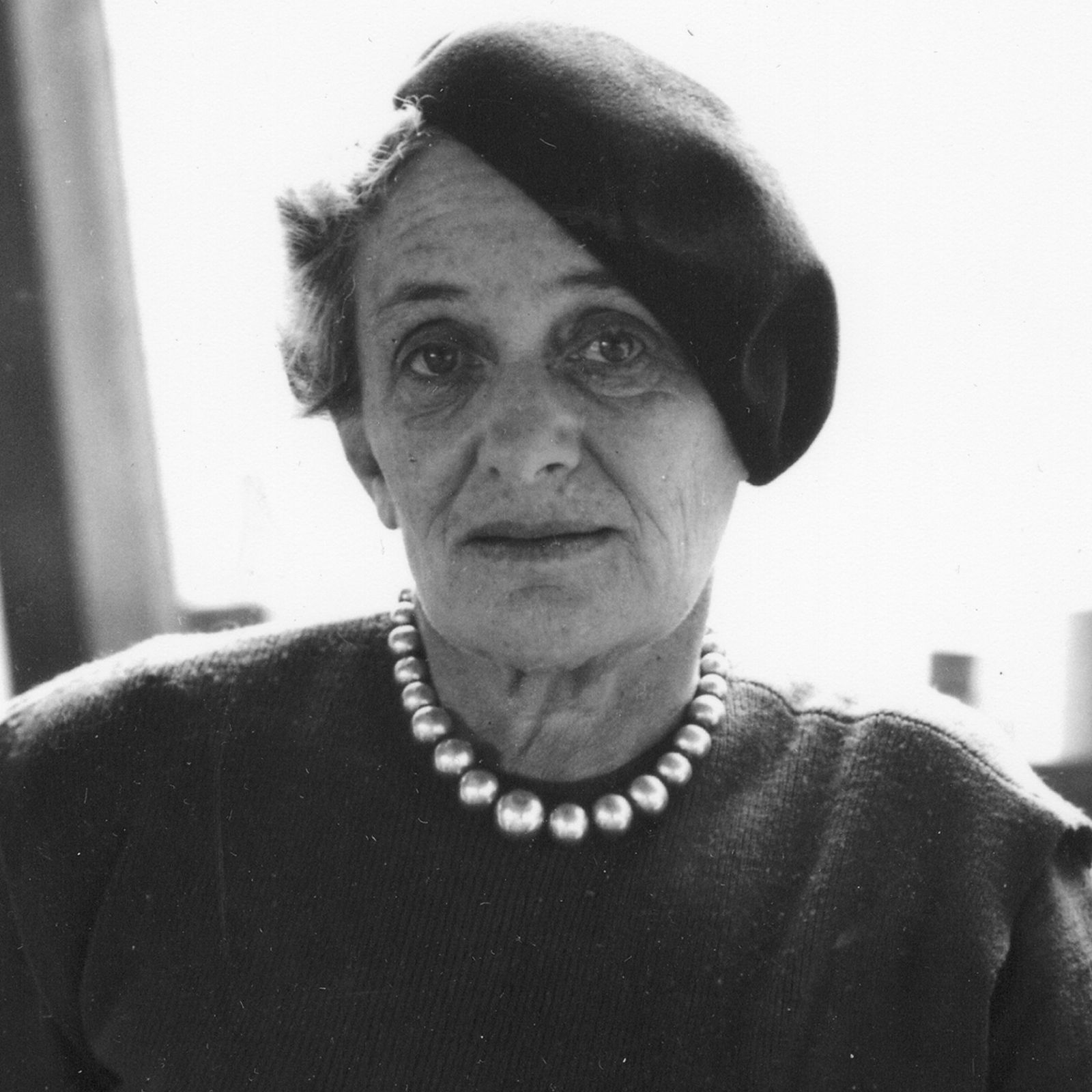
(1895-1965)
Who Was Dorothea Lange?
During the Great Depression, Dorothea Lange photographed the unemployed men who wandered the streets. Her photographs of migrant workers were often presented with captions featuring the words of the workers themselves. Lange’s first exhibition, held in 1934, established her reputation as a skilled documentary photographer. In 1940, she received the Guggenheim Fellowship.
Early Years
One of the preeminent and pioneering documentary photographers of the 20th century, Lange was born Dorothea Nutzhorn on May 26, 1895, in Hoboken, New Jersey. Her father, Heinrich Nutzhorn, was a lawyer, and her mother, Johanna, stayed at home to raise Dorothea and her brother, Martin.
When she was 7, Lange contracted polio, which left her right leg and foot noticeably weakened. Later, however, she’d feel almost appreciative of the effects the illness had on her life. “[It] was the most important thing that happened to me, and formed me, guided me, instructed me, helped me and humiliated me,” she said.
Just before Lange reached her teen years, her parents divorced. Lange grew to blame the separation on her father and eventually dropped his surname and took her mother’s maiden name, Lange, as her own.
Art and literature were big parts of Lange’s upbringing. Her parents were both strong advocates for her education, and exposure to creative works filled her childhood.
Following high school, she attended the New York Training School for Teachers in 1913. Lange, who’d never shown much interest in academics, decided to pursue photography as a profession after a stint working in an NYC photo studio. She went on to study the art form at Columbia University, and then, over the next several years, cut her teeth as an apprentice, working for several different photographers, including Arnold Genthe, a leading portrait photographer. In 1917, she also studied with Clarence Hudson White at his prestigious school of photography.
By 1918, Lange was living in San Francisco and soon running a successful portrait studio. With her husband, muralist Maynard Dixon, she had two sons and settled into the comfortable middle-class life she’d known as a child.
Change of Focus
Lange’s first real taste of documentary photography came in the 1920s when she traveled around the Southwest with Dixon, mostly photographing Native Americans. With the onslaught of the Great Depression in the 1930s, she trained her camera on what she started to see in her own San Francisco neighborhoods: labor strikes and breadlines.
In the early 1930s, Lange, mired in an unhappy marriage, met Paul Taylor, a university professor and labor economist. Their attraction was immediate, and by 1935, both had left their respective spouses to be with each other.
Over the next five years, the couple traveled extensively together, documenting the rural hardship they encountered for the Farm Security Administration, established by the U.S. Agriculture Department. Taylor wrote reports, and Lange photographed the people they met. This body of work included Lange’s most well-known portrait, “Migrant Mother,” an iconic image from this period that gently and beautifully captured the hardship and pain of what so many Americans were experiencing. The work now hangs in the Library of Congress.
As Taylor would later note, Lange’s access to the inner lives of these struggling Americans was the result of patience and careful consideration of the people she photographed. “Her method of work,” Taylor later said, “was often to just saunter up to the people and look around, and then when she saw something that she wanted to photograph, to quietly take her camera, look at it, and if she saw that they objected, why, she would close it up and not take a photograph, or perhaps she would wait until… they were used to her.”
In 1940, Lange became the first woman awarded a Guggenheim fellowship.
Final Years and Death
Following America’s entrance into World War II, Lange was hired by the Office of War Information (OWI) to photograph the internment of Japanese Americans. In 1945, she was employed again by the OWI, this time to document the San Francisco conference that created the United Nations.
While she battled increasing health problems over the last two decades of her life, Lange stayed active. She co-founded Aperture, a small publishing house that produces a periodical and high-end photography books. She took on assignments for Life magazine, traveling through Utah, Ireland and Death Valley. She also accompanied her husband on his work-related assignments in Pakistan, Korea and Vietnam, among other places, documenting what she saw along the way.
Lange passed away from esophageal cancer in October 1965.
QUICK FACTS
- Name: Dorothea Lange
- Birth Year: 1895
- Birth date: May 26, 1895
- Birth State: New Jersey
- Birth City: Hoboken
- Birth Country: United States
- Gender: Female
- Best Known For: Dorothea Lange was a photographer whose portraits of displaced farmers during the Great Depression greatly influenced later documentary photography.
- Industries
- Art
- Astrological Sign: Gemini
- Schools
- Columbia University
- Death Year: 1965
- Death date: October 11, 1965
- Death State: California
- Death City: San Franciso
- Death Country: United States
Fact Check
We strive for accuracy and fairness.If you see something that doesn't look right,contact us!
CITATION INFORMATION
- Article Title: Dorothea Lange Biography
- Author: Biography.com Editors
- Website Name: The Biography.com website
- Url: https://www.biography.com/artists/dorothea-lange
- Access Date:
- Publisher: A&E; Television Networks
- Last Updated: June 16, 2020
- Original Published Date: April 2, 2014
QUOTES
- One should really use the camera as though tomorrow you’d be stricken blind.