(1930-2013)
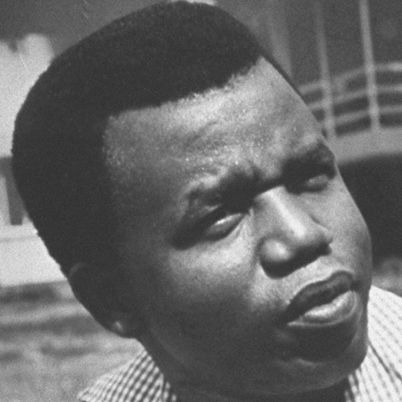
Who Was Chinua Achebe?
Chinua Achebe made a splash with the publication of his first novel, Things Fall Apart, in 1958. Renowned as one of the seminal works of African literature, it has since sold more than 20 million copies and been translated into more than 50 languages. Achebe followed with novels such as No Longer at Ease (1960), Arrow of God (1964) and Anthills of the Savannah (1987), and served as a faculty member at renowned universities in the U.S. and Nigeria. He died on March 21, 2013, at age 82, in Boston, Massachusetts.
Early Years and Career
Famed writer and educator Chinua Achebe was born Albert Chinualumogu Achebe on November 16, 1930, in the Igbo town of Ogidi in eastern Nigeria. After becoming educated in English at University College (now the University of Ibadan) and a subsequent teaching stint, Achebe joined the Nigerian Broadcasting Corporation in 1961 as director of external broadcasting. He would serve in that role until 1966.
'Things Fall Apart'
In 1958, Achebe published his first novel: Things Fall Apart. The groundbreaking novel centers on the clash between native African culture and the influence of white Christian missionaries and the colonial government in Nigeria. An unflinching look at the discord, the book was a startling success and became required reading in many schools across the world.
'No Longer at Ease' and Teaching Positions
The 1960s proved to be a productive period for Achebe. In 1961, he married Christie Chinwe Okoli, with whom he would go on to have four children, and it was during this decade he wrote the follow-up novels to Things Fall Apart: No Longer at Ease (1960) and Arrow of God (1964), as well as A Man of the People (1966). All address the issue of traditional ways of life coming into conflict with new, often colonial, points of view.
In 1967, Achebe and poet Christopher Okigbo co-founded the Citadel Press, intended to serve as an outlet for a new kind of African-oriented children's books. Okigbo was killed shortly afterward in the Nigerian civil war, and two years later, Achebe toured the United States with fellow writers Gabriel Okara and Cyprian Ekwensi to raise awareness of the conflict back home, giving lectures at various universities.
Through the 1970s, Achebe served in faculty positions at the University of Massachusetts, the University of Connecticut and the University of Nigeria. During this time, he also served as director of two Nigerian publishing houses, Heinemann Educational Books Ltd. and Nwankwo-Ifejika Ltd.
On the writing front, Achebe remained highly productive in the early part of the decade, publishing several collections of short stories and a children's book: How the Leopard Got His Claws (1972). Also released around this time were the poetry collection Beware, Soul Brother (1971) and Achebe's first book of essays, Morning Yet on Creation Day (1975).
In 1975, Achebe delivered a lecture at UMass titled "An Image of Africa: Racism in Conrad's Heart of Darkness," in which he asserted that Joseph Conrad's famous novel dehumanizes Africans. When published in essay form, it went on to become a seminal postcolonial African work.
Later Work and Accolades
The year 1987 brought the release of Achebe's Anthills of the Savannah. His first novel in more than 20 years, it was shortlisted for the Booker McConnell Prize. The following year, he published Hopes and Impediments.
The 1990s began with tragedy: Achebe was in a car accident in Nigeria that left him paralyzed from the waist down and would confine him to a wheelchair for the rest of his life. Soon after, he moved to the United States and taught at Bard College, just north of New York City, where he remained for 15 years. In 2009, Achebe left Bard to join the faculty of Brown University in Providence, Rhode Island, as the David and Marianna Fisher University professor and professor of Africana studies.
Achebe won several awards over the course of his writing career, including the Man Booker International Prize (2007) and the Dorothy and Lillian Gish Prize (2010). Additionally, he received honorary degrees from more than 30 universities around the world.
Death
Achebe died on March 21, 2013, at the age of 82, in Boston, Massachusetts.
QUICK FACTS
- Name: Chinua Achebe
- Birth Year: 1930
- Birth date: November 16, 1930
- Birth City: Ogidi, Anambra
- Birth Country: Nigeria
- Gender: Male
- Best Known For: Chinua Achebe was a Nigerian novelist and author of 'Things Fall Apart,' a work that in part led to his being called the 'patriarch of the African novel.'
- Industries
- Education and Academia
- Fiction and Poetry
- Astrological Sign: Scorpio
- Schools
- University of Ibadan
- Nacionalities
- Nigerian
- Death Year: 2013
- Death date: March 21, 2013
- Death State: Massachusetts
- Death City: Boston
- Death Country: United States
Fact Check
We strive for accuracy and fairness.If you see something that doesn't look right,contact us!
CITATION INFORMATION
- Article Title: Chinua Achebe Biography
- Author: Biography.com Editors
- Website Name: The Biography.com website
- Url: https://www.biography.com/writer/chinua-achebe
- Access Date:
- Publisher: A&E; Television Networks
- Last Updated: January 19, 2021
- Original Published Date: April 2, 2014
QUOTES
- Art is man's constant effort to create for himself a different order of reality from that which is given to him.
- When suffering knocks at your door and you say there is no seat for him, he tells you not to worry because he has brought his own stool.
- One of the truest tests of integrity is its blunt refusal to be compromised.