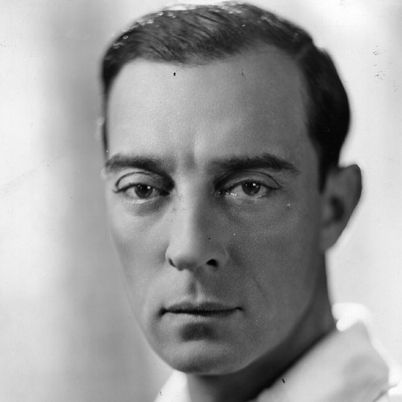
(1895-1966)
Who Was Buster Keaton?
Born to vaudeville performers, Buster Keaton began performing at age 3. He was introduced to film when he was 21 and eventually directed and starred in films in the 1920s. The talkies eventually pushed him out of demand, but he made a comeback in the 1940s and '50s when he starred as himself in films such as Sunset Boulevard.
Early Years
Joseph Frank Keaton IV was born October 4, 1895, in Piqua, Kansas. His parents, Joe and Myra, were both veteran vaudevillian actors, and Keaton himself first began performing at the age of 3 when he was incorporated into their act.
As legend has it, he earned the name of "Buster" when he was 18 months old, after falling down a flight of stairs. Magician Harry Houdini scooped up the child and turning to the boy's parents quipped, "That was a real buster!"
Keaton quickly grew used to being knocked around a bit. Working with his parents in an act that prided itself on being as rough as it was funny, Keaton was frequently tossed around by his father. During these performances, Keaton would learn to display the deadpan look that would later become a hallmark of his comedy career.
"It was the roughest knockout act that was ever in the history of the theater," he later said of the performances he did with his parents.
Beginning in 1907, Keaton spent many childhood summers in Muskegon, Michigan, where his father had helped established The Actors Colony. At the time, the area had become a destination for vaudevillian performers and the community inspired the young entertainer.
The Filmmaker
Even in his first film, a 1917 two-reeler called The Butcher Boy starring Roscoe ("Fatty") Arbuckle, Keaton was extreme slapstick, with the young actor being subjected to a range of abuses, from being submerged in molasses to getting bit by a dog.
Still, film called to Keaton, and for the next two years, he continued to work closely with Arbuckle for $40 a week. It was an apprenticeship of sorts and through it, Keaton was given full access to the movie-making process.
In 1920 Keaton struck out on his own as a filmmaker, first with a series of two-reelers that included the now-classic One Week (1920), The Playhouse (1921) and Cops (1922). In 1923 Keaton started making full-length features such as The Three Ages (1923) and Sherlock, Jr. (1924). The lineup also included what is perhaps his finest creation, The General (1927), which starred Keaton as a train engineer in the Civil War. Keaton was the full force behind the film, writing and directing it. But while the movie initially proved to be a commercial disappointment, it was later hailed as a pioneering piece of filmmaking.
Woven into his films, of course, was Keaton's trademark comedy, brilliant timing and patented facial expressions. In his early two-reelers the laugh-making included a mastery of the slapstick pie. His work also featured Keaton's penchant for doing his own stunts, and he became somewhat of a Hollywood legend not just for his falls but for his lack of injuries.
At the height of his career, in the mid-1920s, Keaton experienced some of the same celebrity as another silent-film star, Charlie Chaplin. His salary reached $3,500 a week, and he eventually built a $300,000 home in Beverly Hills.
Career Undone
In 1928 Keaton made the move that he would later call the mistake of his life. With the advent of talkies, Keaton signed on with MGM, where he proceeded to make a string of new sound comedies that fared decently at the box office but lacked the kind of Keaton punch the filmmaker had come to expect from his work.
The reason for that largely stemmed from the fact that in signing in the deal, Keaton had surrendered portions of creative control over his films to his bosses. His life quickly spiraled downward. His marriage to actress Natalie Talmadge, with whom he had two sons, fell apart, and he became plagued with issues related to alcoholism and depression.
In 1934, with his MGM contract now terminated, Keaton filed for bankruptcy. His listed assets totaled just $12,000. One year later he divorced his second wife, Mae Scriven.
Career Rebound
In 1940 Keaton's life began to make a turn for the better. He was married for a third time, to a 21-year-old dancer named Eleanor Morris, who many credited with bringing him stability. The two would remain together until Keaton's death in 1966.
A return to fame came in the 1950s, a revival that was sparked by British television, where the aging comedian appeared on a string of programs. In the States, too, American audiences became reacquainted with Keaton after he played himself in Billy Wilder's Sunset Boulevard (1950) and then in Chaplin's Limelight (1952).
He also raised his profile through a string of American programs and commercials. In 1956 he was paid $50,000 by Paramount for the film rights to The Buster Keaton Story, which follows the performer's life (albeit inaccurately) from his vaudeville days through his work in Hollywood.
During this time, film fans also rediscovered Keaton's work from the silent-film era. In 1962, Keaton, who'd retained full rights to his older films, reissued The General and watched with awe as it drew praise from fans and critics from all over Europe.
In October 1965 the Keaton comeback reached its height after he was invited to the Venice Film Festival, where he showed his latest project, Film, a 22-minute silent movie based on a Samuel Beckett screenplay that Keaton had made in New York the year before. When his presentation concluded, Keaton received a five-minute standing ovation from the audience.
"This is the first time I've been invited to a film festival," a teary-eyed Keaton proclaimed. "But I hope it won't be the last."
A survivor to the end, the hardworking Keaton was toward the end of his life making more than $100,000 a year just from doing commercials. In all, Keaton, who was honored in 1959 with a special Academy Award, claimed he had more work than he could handle.
Death
On February 1, 1966, Keaton died in his sleep from complications of lung cancer at his home in Woodland Hills, California. He is buried at the Forest Lawn Memorial Park Cemetery.
QUICK FACTS
- Name: Buster Keaton
- Birth Year: 1895
- Birth date: October 4, 1895
- Birth State: Kansas
- Birth City: Piqua
- Birth Country: United States
- Gender: Male
- Best Known For: Comedian and director Buster Keaton was popular for his pioneering silent comedies in the 1920s.
- Industries
- Comedy
- Astrological Sign: Libra
- Death Year: 1966
- Death date: February 1, 1966
- Death State: California
- Death City: Woodland Hills
- Death Country: United States
Fact Check
We strive for accuracy and fairness.If you see something that doesn't look right,contact us!
CITATION INFORMATION
- Article Title: Buster Keaton Biography
- Author: Biography.com Editors
- Website Name: The Biography.com website
- Url: https://www.biography.com/actors/buster-keaton
- Access Date:
- Publisher: A&E; Television Networks
- Last Updated: November 19, 2020
- Original Published Date: April 2, 2014
QUOTES
- Tragedy is a close-up; comedy, a long shot.


