1741-1801
Who Was Benedict Arnold?
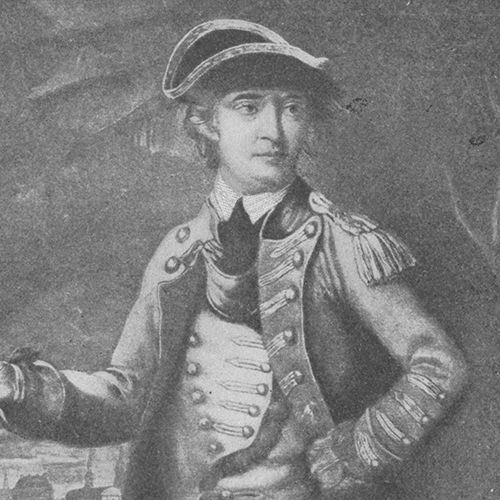
A member of the Sons of Liberty, Benedict Arnold rose to the rank of general in the Continental Army during the Revolutionary War. Frustrated by the lack of recognition, he subsequently switched sides to the British and plotted the surrender of West Point. When his traitorous plans came to light, Arnold escaped capture and eventually made his way to England.
Early Life
Arnold was born in Norwich, Connecticut, on January 14, 1741. His father was a successful businessman and young Arnold was educated in private schools. Following the deaths of three of his children from yellow fever, his father began to drink heavily and fell on difficult financial times. Arnold left school and apprenticed at an apothecary.
In 1757, at age 16, Arnold enlisted in the militia and traveled to upstate New York to fight the French. Two years later, he assumed responsibility for his father and sister following his mother’s death of yellow fever. His grieving father fell apart and was arrested repeatedly for drunkenness before his death in 1761.
Successful Merchant and Son of Liberty
Arnold settled in New Haven, Connecticut, working as a pharmacist and bookseller. In 1764, he formed a partnership with merchant Adam Babcock. The pair bought three trading ships and established trade connections with the West Indies. Arnold became prosperous but grew frustrated with the British trade restrictions and taxes.
The Sugar Act of 1764 and the Stamp Act the following year restricted mercantile trade and ignited Colonists’ claims of taxation without representation. Arnold joined the Sons of Liberty, a secret organization opposed to Parliament’s taxing laws.
In 1767, Arnold married Margaret Mansfield, the daughter of the sheriff of New Haven. The couple had three sons over the following five years.
Controversial War Hero
Arnold began the war as a militia captain. Following the fighting at Lexington and Concord, his company marched from Connecticut northeast toward Boston. On May 10, 1775, Arnold partnered with frontiersman Ethan Allen to seize New York’s Fort Ticonderoga. Returning home after the battle, he learned that his wife had died earlier in the month.
On June 27, 1775, the Continental Congress authorized the invasion of Quebec partly at the urging of Arnold. But Congress gave General Philip Schuyler the command. Arnold was passed over but not pacified. He proposed a second invasion of Canada to General George Washington to lead a second expedition to attack via a wilderness route. The ill-fated mission ran into problems from the outset—discovered plans, inclement weather and poor timing caused the battle to fail. Early on, Arnold received a severe leg wound and was carried off the field. The battle raged on but ultimately led to a humiliating defeat for the Americans.
Adding to his problems, Arnold proved to be a divisive figure. Though he fought heroically in conflicts, including the Battle of Lake Champlain in 1776 and Battle of Saratoga in October 1777, he made many enemies including some of his superior officers. He often felt he did not receive the recognition he deserved and by the end of the year, he had threatened to resign from the Continental Army. After the British withdrawal from Philadelphia in the spring of 1778, Washington appointed Arnold the military commander of the city.
The Turn of the Coat
While commanding in Philadelphia, Arnold met and married Peggy Shippen, 20 years his junior, the daughter of a Loyalist sympathizer. The marriage brought him the social status he craved, but not the wealth to match it. He lived lavishly in debt and his lifestyle attracted the Continental Congress’ attention. He was brought up on charges and court-martialed in May 1779. He was acquitted of most charges and received a mild reprimand from General Washington.
Shippen had met British Major John André during the British occupation and had developed ways of maintaining contact with British soldiers across the battle lines. Arnold and André began a correspondence, sometimes using Shippen as an intermediary. By the following summer, Arnold was providing the British with troop locations, as well as the locations of supply depots.
Arnold gained access to even more sensitive information when he assumed command of West Point in August 1780. He began systematically weakening the fort’s defenses, refusing to order necessary repairs and draining its supplies. At the same time, Arnold began transferring his personal assets from Connecticut to England.
Arnold and André met in person on September 21, 1780, to discuss the operation. Several days later, André was captured carrying papers detailing revealing Arnold’s role in the West Point surrender plot. This evidence was sent to General Washington.
Learning of André's capture, Arnold fled downriver and crossed British lines. André was hanged at Tappan, New York, on October 2. Although Washington sent men into New York to apprehend Arnold, the effort was unsuccessful. Arnold’s treason actually helped serve the floundering American war effort by re-energizing the Patriot’s declining morale.
Later Life and Legacy
Arnold soon began openly fighting for the British. Although he was paid well for his services, he was never fully trusted by the British and was passed over for important military commands. When word of British surrender reached New York, Arnold requested leave to return to England with his family, which he did in December 1781. Over the following years, he repeatedly attempted to gain positions with the British East India Company and the British military, but was unable to find a place for himself.
In 1785, Arnold and his son Richard moved to New Brunswick, Canada, where they established a West Indies trade. Following a series of business dealings that resulted in a crowd burning Arnold in effigy, the family returned to London. Arnold continued to trade with the West Indies during the French Revolution and was imprisoned by French authorities for a short time on suspicion of spying.
In January 1801, Arnold's health began to decline. He died on June 14, 1801, at the age of 60, and was buried at St. Mary’s Church in Battersea, London.
The treasonous actions of Arnold are legendary in the United States. Arnold’s name is omitted from a number of Revolutionary War monuments and has been colloquially invoked as an accusation of traitorous behavior against individuals as disparate as John Brown and Jefferson Davis.
Watch "Benedict Arnold: Triumph and Treason" on HISTORY Vault

QUICK FACTS
- Birth date: January 14, 1741
- Birth State: Connecticut
- Birth City: Norwich
- Birth Country: United States
- Gender: Male
- Best Known For: Benedict Arnold was an American Revolutionary War general best known for his defection from the Continental Army to the British side of the conflict in 1780.
- Astrological Sign: Capricorn
- Death date: June 14, 1801
- Death City: London
- Death Country: United Kingdom
Fact Check: We strive for accuracy and fairness. If you see something that doesn’t look right, contact us!