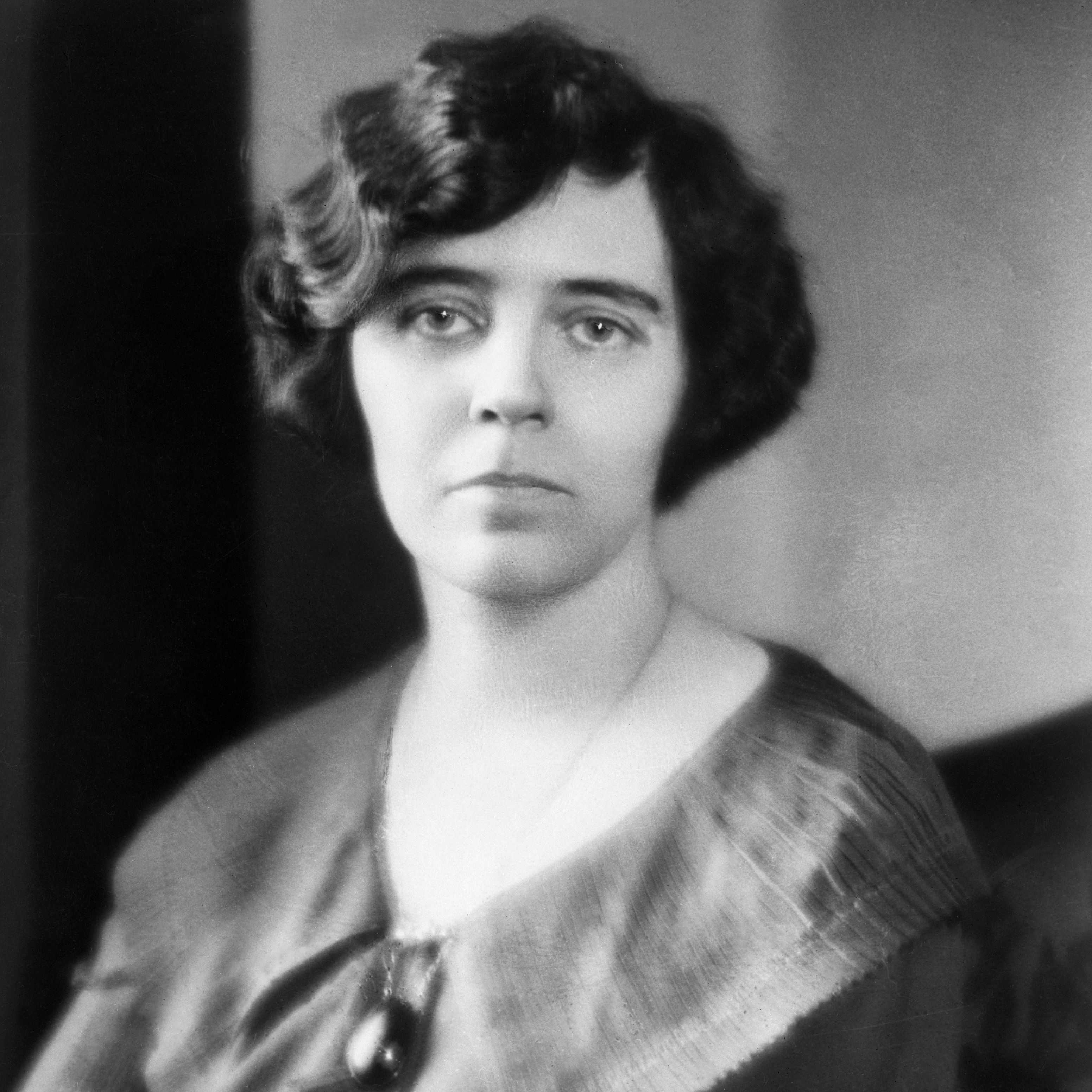
1885–1977
Who Was Alice Paul?
Alice Paul grew up with a Quaker background and attended Swarthmore College before living in England and pushing for women’s voting rights. When she returned to the United States in 1910, she became a leader in the American suffragist movement, eventually forming the National Woman’s Party with Lucy Burns and becoming a key figure in the voices that led to the passage of the 19th Amendment. In later years she advocated for the passage of an Equal Rights Amendment as well. She died in in July 1977 at age TK.
Quick Facts
FULL NAME: Alice Paul
BORN: January 11, 1885
DIED: July 9, 1977
BIRTHPLACE: Mt. Laurel, New Jersey
ASTROLOGICAL SIGN: Capricorn
Early Years and Education
Alice Paul was born on January 11, 1885, in Mt. Laurel, New Jersey. She was the eldest child of William Mickle Paul I and Tacie Paul, who had three more children after Alice. One of the family’s distant relatives was William Penn, who founded Pennsylvania. Like Penn, the Pauls were Quaker.
After attending school in Moorestown, New Jersey, Alice continued her studies at Swarthmore College in Pennsylvania in 1905. She went on to do graduate work in New York City and the United Kingdom at the University of Birmingham. Her early years as an activist propelled her to earn a doctorate degree from the University of Pennsylvania in 1912. She hoped to use her education to change laws that affected women.
Women’s Rights Activist: Suffrage and ERA
While in London from 1906 to 1909, Paul became politically active and unafraid to use dramatic tactics in support of a cause. She joined the women’s suffrage movement in the United Kingdom and was arrested on several occasions, serving time in jail and going on a hunger strike.
When she returned to the United States in 1910, Paul became involved in the women’s suffrage movement of her home country. She joined the National American Woman Suffrage Association and served as the chair of its congressional committee. Out of frustration with NAWSA’s policies, however, Paul left to form the more militant Congressional Union for Woman Suffrage with Lucy Burns. The group was later renamed the National Woman’s Party with the goal of implementing change on a federal level.
Known for using provocative visual media to make their point, NWP members were nicknamed the “Silent Sentinels” as they picketed the White House under the Woodrow Wilson administration in 1917. They were the first group to take such action. Paul was jailed that October and November as a result of the protests.
After women won the right to vote with the 19th Amendment in 1920, Paul devoted herself to working on additional empowerment measures. She introduced the first Equal Rights Amendment in Congress in 1923 and, in later decades, worked on a civil rights bill and fair employment practices. Although she didn’t live to see the E.R.A. added to the U.S. Constitution (to date it remains unratified), she did get an equal rights affirmation included in the preamble to the United Nations charter.
Death
Until she was debilitated by a stroke in 1974, Paul continued her fight for women’s rights. She died on July 9, 1977, in Moorestown, New Jersey. The long-time activist was 92.
Fact Check: We strive for accuracy and fairness. If you see something that doesn’t look right, contact us!
The Biography.com staff is a team of people-obsessed and news-hungry editors with decades of collective experience. We have worked as daily newspaper reporters, major national magazine editors, and as editors-in-chief of regional media publications. Among our ranks are book authors and award-winning journalists. Our staff also works with freelance writers, researchers, and other contributors to produce the smart, compelling profiles and articles you see on our site. To meet the team, visit our About Us page: https://www.biography.com/about/a43602329/about-us